
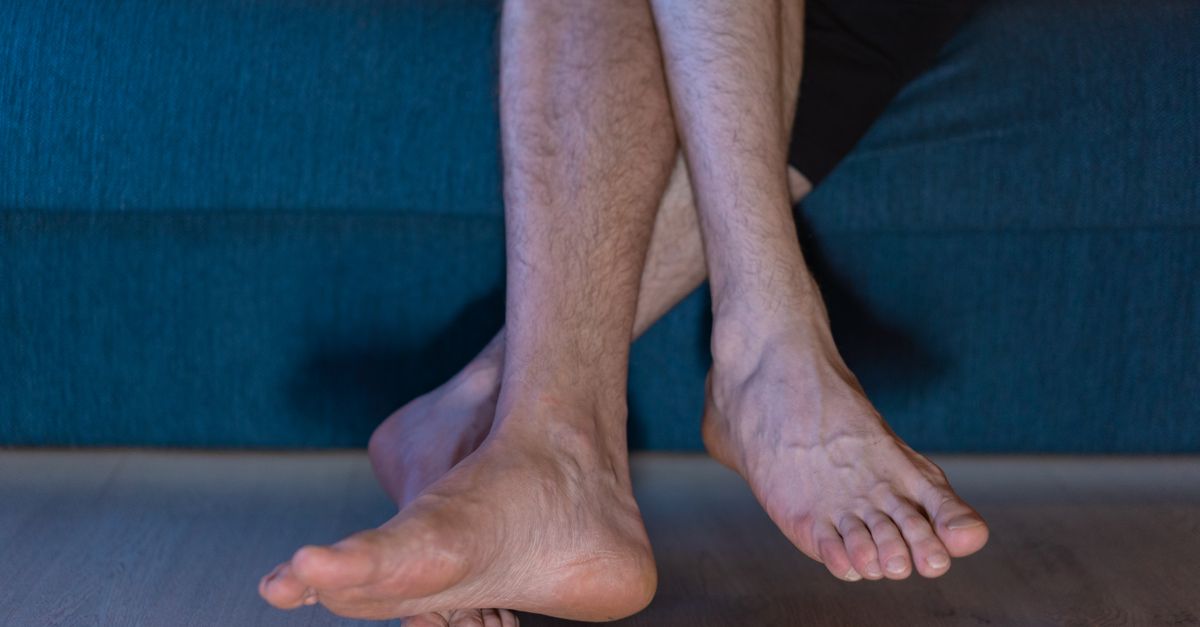
An ankle massager is a device designed to reduce swelling, ease stiffness, and improve circulation in and around the ankle joint. The most common types include compression wraps, pneumatic sleeves, and open-platform foot massagers — each working through a different mechanism. For swelling specifically, research on lymphatic and venous return shows that activating the calf muscle pump is more effective at moving fluid out of the ankle than applying local pressure directly to the joint. An open-platform oscillating foot massager addresses ankle swelling by engaging the calf pump from below, making it a more practical choice than most dedicated ankle wraps for daily use.
You've searched "ankle massager" and landed on a page full of compression sleeves, heated wraps, pneumatic cuffs, and foot platforms — all listed under the same label. The target is clear: you want something that actually helps, whether that's persistent puffiness at the end of the day, post-activity stiffness, or chronic aching tied to conditions like edema or poor circulation. Finding the right ankle massager, though, requires understanding what's driving your discomfort and which device type is built to address it.
This guide breaks down every major category of ankle massager on the market, explains the physiological reason why some work better than others for swelling, and identifies where an oscillating foot massager fits — including when it's the stronger choice and when another device type makes more sense.
Why Ankle Swelling Is a Circulation Problem
Most people searching for an ankle massager are dealing with some degree of swelling. Understanding why ankles swell in the first place changes how you evaluate every device on the market.
The Mechanics of Ankle Swelling
The ankle is the lowest major joint in the body, which makes it the natural collection point for fluid the circulatory system fails to return upward. Venous blood and lymphatic fluid both rely on muscle contraction — particularly in the calf — to push fluid back up toward the heart. When you sit or stand for extended periods without movement, that pump goes quiet. Fluid accumulates in the soft tissue around the ankle, producing the puffiness and tightness most people recognize as typical end-of-day swelling.
According to the Mayo Clinic, peripheral edema — swelling in the legs, ankles, and feet — is commonly caused by prolonged sitting or standing, venous insufficiency, and conditions that impair circulatory function. The underlying mechanism in most non-pathological cases is the same: the calf muscle pump isn't moving enough fluid.
Why Local Pressure Isn't Always the Answer
This is where device selection matters. Many products marketed as ankle massagers apply pressure or vibration directly to the ankle joint itself. That feels good in the moment, but it doesn't activate the calf pump — the primary mechanism responsible for draining fluid from the ankle region.
Think of it this way: the ankle is the drain, but the calf is the pump. Applying a wrap to the drain without activating the pump addresses the symptom locally without addressing the cause. For swelling driven by poor venous return, you need something that gets the calf muscle moving repeatedly — not just something that squeezes the ankle itself.
When Direct Ankle Contact Is Appropriate
Local ankle devices do have legitimate uses. Post-injury stiffness, joint soreness after activity, and targeted soft-tissue work around the ankle ligaments all respond to direct contact. The key distinction:
- Swelling from poor circulation → calf pump activation is the priority
- Joint stiffness or localized soreness → direct contact devices are appropriate
- Post-injury recovery (under medical guidance) → compression and targeted movement both play a role
Keep this distinction in mind as you work through the device categories below.
Types of Ankle Massager Devices
The ankle massager market includes several distinct device categories. They're often grouped under the same search term, but they work very differently — and those differences matter for results.
Compression Wraps and Heated Sleeves
These are the most basic entry point. Compression wraps apply static or gentle graduated pressure around the ankle joint, while heated versions add warmth to help relax soft tissue. They're inexpensive, portable, and appropriate for mild joint soreness or as a recovery aid after activity.
The limitation is that most compression wraps are passive — they don't generate movement. Static compression can help prevent additional fluid accumulation, but it doesn't actively pump fluid back through the venous or lymphatic system the way dynamic movement does. For chronic ankle swelling, a static wrap is more of a holding measure than a solution.
Pneumatic Compression Devices
Pneumatic or air compression devices inflate and deflate chambers around the ankle and lower leg in a sequential pattern, mimicking the calf pump mechanically. These are widely used in clinical and post-surgical settings and are among the most evidence-supported options for managing lower limb edema.
They work well for their intended purpose, but come with real trade-offs:
- Bulky and expensive — clinical-grade units can run several hundred dollars
- Require you to sit still while attached, limiting daily use flexibility
- Designed for passive clinical use, not ongoing maintenance routines
- Often overkill for mild-to-moderate swelling that responds to regular movement stimulation
Vibrating Ankle Wraps and Handheld Massagers
Vibrating ankle wraps are a newer category — sleeves with embedded motors that apply oscillating or percussive stimulation directly to the ankle. These feel more active than a static compression wrap, and vibration at the joint level can help ease stiffness and stimulate superficial tissue.
For joint soreness and localized tension, vibrating ankle wraps can be genuinely useful. For circulatory swelling, however, they share the same limitation as static wraps: the vibration targets the ankle itself, not the calf muscle group that drives venous return. Handheld massagers applied around the ankle face the same constraint — they require manual operation and are difficult to use consistently for the 15–30 minutes that circulatory support typically demands.
Open-Platform Oscillating Foot Massagers
This is where the device category shifts. An open-platform oscillating foot massager places your entire foot on an oscillating surface, driving repeated movement through the arch, heel, and ball of the foot. Sustained over a meaningful session, that movement activates the calf muscles through natural mechanical response.
The calf activation is the key differentiator. Because the foot is in continuous oscillating motion, the muscles of the lower leg contract and release repeatedly — functioning as the pump that moves blood and lymphatic fluid upward. This isn't local ankle pressure. It's full calf pump activation through foot-level oscillation, which directly targets the root mechanism behind most ankle swelling.
How Oscillating Foot Massagers Support Ankle Circulation
Understanding why an oscillating platform outperforms most ankle-specific devices for swelling requires a closer look at the mechanism involved.
The Calf Pump in Practice
The soleus and gastrocnemius — the two primary calf muscles — act as a second heart for the lower body. Every time they contract, they compress the deep veins of the lower leg and push blood upward toward the heart. When those contractions stop, as they do during prolonged sitting or standing, venous blood and lymphatic fluid pool in the lower extremities, particularly around the ankle.
An oscillating foot massager creates repeated foot motion that reflexively engages the calf musculature. That engagement is continuous throughout the session — not just isolated bursts — which sustains the pump action long enough to meaningfully move accumulated fluid.
Oscillation vs. Standard Vibration
Most consumer-grade ankle massagers and foot platforms use simple vibration — a motor spinning eccentrically to create surface buzz. MedMassager uses oscillating technology to deliver deeper, more controlled vibration than conventional massagers. True oscillation produces a more consistent wave of movement through the foot and lower leg, engaging more muscle fiber over the course of a session than surface-level vibration alone.
The practical difference shows up in how the calf responds. Shallow vibration tends to activate superficial tissue; deeper oscillation engages the calf more fully, producing better circulation support over a 15–20 minute session.
What This Means for Ankle Swelling
For someone whose ankle swelling is driven by prolonged sitting, venous insufficiency, or conditions like peripheral edema — rather than acute injury — an open-platform oscillating device addresses the physiological root cause more directly than any device that applies pressure or vibration only to the ankle joint.
The MedMassager Foot Massager operates at clinic-grade intensity with multiple speed settings, allowing users to adjust calf activation based on tolerance and needs. It's built for people managing conditions like swollen ankles and poor circulation — not just foot soreness after exercise.
Buying Guide: Choosing the Right Ankle Massager
With several device types available, the right choice depends on what's driving your ankle discomfort. Here's how to match the device to the problem.
For Chronic Ankle Swelling and Poor Circulation
If your ankles swell regularly — after sitting at a desk, flying, or standing for long periods — calf pump activation is your priority. An open-platform oscillating foot massager is the most practical daily-use device in this category. Look for:
- Variable speed settings (at least 5–10 levels) to adjust intensity
- A platform large enough to accommodate your full foot and heel
- Clinic-grade oscillation intensity, not just surface vibration
- Continuous operation capability for 15–30 minute sessions
- FDA-registered Class I medical device status for therapeutic use
The MedMassager Foot Massager meets all of these criteria and is designed specifically for circulatory use cases. It's well-suited for people managing peripheral edema, venous insufficiency, and diabetic circulation concerns — always with physician guidance for condition-specific use.
For Post-Activity Joint Soreness
If your ankle discomfort is more about stiffness after exercise than swelling, a vibrating ankle wrap or heated compression sleeve can be a practical supplemental tool. Look for adjustable compression and a heat setting with temperature control. For more comprehensive coverage, the MedMassager Body Massager can be positioned along the calf, shin, and around the ankle for targeted soft-tissue work — its professional-grade oscillation penetrates deeper than most portable ankle devices.
For Post-Injury Recovery
Ankle sprains, ligament injuries, and post-surgical recovery require medical supervision. Device selection should follow your physician's or physical therapist's guidance. Pneumatic compression devices are commonly used in clinical protocols. An oscillating foot massager may be introduced later in recovery as part of a return-to-movement program — again, only under professional direction.
Do not use any massaging device on an acutely injured, inflamed, or recently operated joint without explicit medical clearance.
Device Comparison at a Glance
| Device Type | Best For | Calf Pump Activation | Daily Use Practical |
|---|---|---|---|
| Compression wrap | Mild soreness, prevention | No | Yes |
| Heated sleeve | Stiffness, joint warmth | No | Yes |
| Pneumatic compression | Clinical edema management | Mechanically (passive) | Less practical, high cost |
| Vibrating ankle wrap | Local joint soreness | No | Yes |
| Oscillating foot platform | Circulation, swelling, daily maintenance | Yes (primary mechanism) | Yes |
Using an Oscillating Foot Massager for Ankle Swelling
Getting consistent results from a foot massager for ankle circulation requires more than just turning the device on. A repeatable setup and realistic session expectations make the difference.
Session Setup
- Sit in a supportive chair with your knees at roughly a 90-degree angle. Avoid reclining so far back that your legs are elevated above your hips during the session.
- Place both feet flat on the oscillating platform, with your heels making contact with the surface.
- Start at a lower speed setting and allow 2–3 minutes for your feet and calves to acclimate before increasing intensity.
- Work up to a speed that produces noticeable calf engagement — you should feel the muscles of the lower leg responding to the foot movement.
Duration and Frequency
For circulation support targeting ankle swelling, sessions of 15–30 minutes tend to produce the most consistent results. Shorter sessions under 10 minutes may not sustain calf pump activation long enough to meaningfully move accumulated fluid.
Daily use is appropriate for most people with chronic ankle swelling related to circulatory causes. Morning use before prolonged sitting, or evening use after a long day on your feet, are both effective timing strategies. Some users with more pronounced swelling benefit from two sessions per day — one morning, one evening — particularly during extended travel or sedentary work periods.
Positioning Notes for Ankle Targeting
While the foot platform drives the primary mechanism, you can increase sensation around the ankle specifically by allowing the heel and mid-foot to rock slightly with the oscillation rather than holding the foot rigid. A relaxed foot transfers more movement energy into the calf and ankle region than a tense, locked position.
After your session, brief elevation — 5–10 minutes with your feet above heart level — can help reinforce the fluid movement your calf pump activation started. This isn't required, but it can amplify the circulatory benefit.
Special Considerations by Population
Certain groups need to approach ankle massager use with additional care. Here's what to know before starting a routine.
People with Diabetes
Diabetic peripheral neuropathy reduces sensation in the feet and lower legs, which means tissue damage from heat, pressure, or excessive intensity can go unnoticed during a session. For people managing diabetes, an oscillating foot massager built for therapeutic use should be used at conservative speed settings with physician clearance. The oscillating mechanism directly supports the kind of circulatory maintenance that's especially important for diabetic foot health — but use must be guided by your healthcare team.
Seniors and People with Venous Insufficiency
Venous insufficiency becomes more common with age, and ankle swelling is one of its most consistent symptoms. An oscillating foot massager can be a practical daily tool for older adults or those with diagnosed venous insufficiency — but it should complement, not replace, medical management. Compression stockings prescribed by a physician, medication adjustments, and regular walking all remain important alongside device use.
Pregnant Women
Ankle swelling during pregnancy is extremely common, typically driven by increased blood volume and mechanical pressure on pelvic veins. While gentle foot massage is often safe during pregnancy, any device-based approach should be cleared with an OB or midwife first. Certain acupressure points on the foot are traditionally avoided during pregnancy, and any circulation-focused device should be used only with explicit medical approval.
Post-Surgical Patients
Anyone recovering from ankle, lower leg, or foot surgery should not use a massager device without direct guidance from their surgeon or physical therapist. Healing tissue, surgical hardware, and active inflammation can all be aggravated by movement or pressure — even gentle oscillation. Wait for medical clearance before reintroducing any device-based ankle therapy.
Frequently Asked Questions
What is the best type of ankle massager for swollen ankles?
For swelling driven by poor circulation or prolonged sitting, an open-platform oscillating foot massager is generally the most effective daily-use device because it activates the calf muscle pump — the primary mechanism responsible for moving fluid out of the ankle region. Compression wraps and heated sleeves can help with comfort and mild soreness but don't generate the calf activation needed to address circulatory swelling. For clinically significant edema, a physician may recommend a pneumatic compression device alongside lifestyle and medical management.
Can a foot massager help with ankle swelling?
Yes — an oscillating foot massager can support ankle swelling by engaging the calf muscle pump, which pushes venous blood and lymphatic fluid upward rather than allowing it to accumulate around the ankle joint. The continuous foot motion during a session drives repeated calf contraction and release, making it more effective for circulatory swelling than devices that apply pressure directly to the ankle without activating the calf.
How long should I use an ankle or foot massager for circulation?
Sessions of 15 to 30 minutes are generally recommended for meaningful circulatory benefit. Sessions shorter than 10 minutes may not sustain calf pump activation long enough to move accumulated fluid effectively. Daily use — either in the morning before prolonged sitting or in the evening after a long day — tends to produce the most consistent results for people managing chronic ankle swelling.
Is it safe to use a massager on a swollen ankle?
It depends on the cause of the swelling. Swelling from everyday circulatory causes — prolonged sitting, travel, or venous insufficiency — generally responds well to an oscillating foot massager used as directed. Swelling from acute injury, infection, gout flare, deep vein thrombosis, or post-surgical inflammation should not be treated with any massager device without medical clearance. When in doubt, consult a physician before using any device on a swollen ankle.
What is the difference between a vibrating ankle wrap and an oscillating foot massager?
A vibrating ankle wrap applies surface-level vibration directly to the ankle joint, which can ease localized soreness and stiffness but does not activate the calf muscle pump. An oscillating foot massager drives full-foot movement that engages the calf muscles through natural mechanical response, supporting blood and lymphatic fluid return up the lower leg. For joint soreness and post-activity recovery, a vibrating wrap can be a useful supplemental tool; for circulatory swelling, an oscillating foot platform addresses the root mechanism more directly.
Can I use a foot massager on my ankle every day?
Daily use of an oscillating foot massager for circulation support is appropriate for most people with chronic ankle swelling from circulatory causes. People managing specific conditions — including diabetes, venous insufficiency, or peripheral arterial disease — should confirm frequency and intensity with their healthcare provider. Starting at a lower intensity and gradually increasing over the first week helps the body acclimate to regular oscillation-based calf activation.
Do ankle massagers help with ankle pain from arthritis or joint conditions?
Gentle massage and movement around arthritic joints can help ease stiffness and support local blood flow, and many people with ankle arthritis find foot and ankle massage helpful for managing daily discomfort. An oscillating foot massager provides continuous low-impact movement that keeps circulation active without stressing the joint directly. Arthritis management should still be guided by a rheumatologist or orthopedic specialist, particularly during flares or periods of increased inflammation.
Matching the Device to the Problem
The ankle massager market covers a wide range of devices, and most are marketed interchangeably — but they don't work interchangeably. If your primary concern is ankle swelling from circulatory causes, an open-platform oscillating foot massager is the most practical daily-use device that directly addresses the calf pump mechanism driving the problem. Compression wraps and vibrating sleeves have their place for local soreness and joint stiffness, but they don't activate the pump that moves fluid out of the ankle.
For people managing chronic ankle swelling, poor circulation, venous insufficiency, or conditions like peripheral edema and diabetic circulation concerns, the MedMassager Foot Massager — an FDA-registered Class I medical device built for therapeutic daily use — is designed specifically for this type of circulatory support. Explore the full range of therapeutic foot massagers at MedMassager, or browse the complete MedMassager product collection to find the right device for your needs.
Always consult your healthcare provider before starting a new device-based therapy, especially if your ankle swelling is related to a diagnosed medical condition.
This content is for informational purposes only and is not intended as medical advice, diagnosis, or treatment. Always consult a qualified healthcare professional before starting any new treatment or therapy. MedMassager products are FDA-registered Class I medical devices.


