
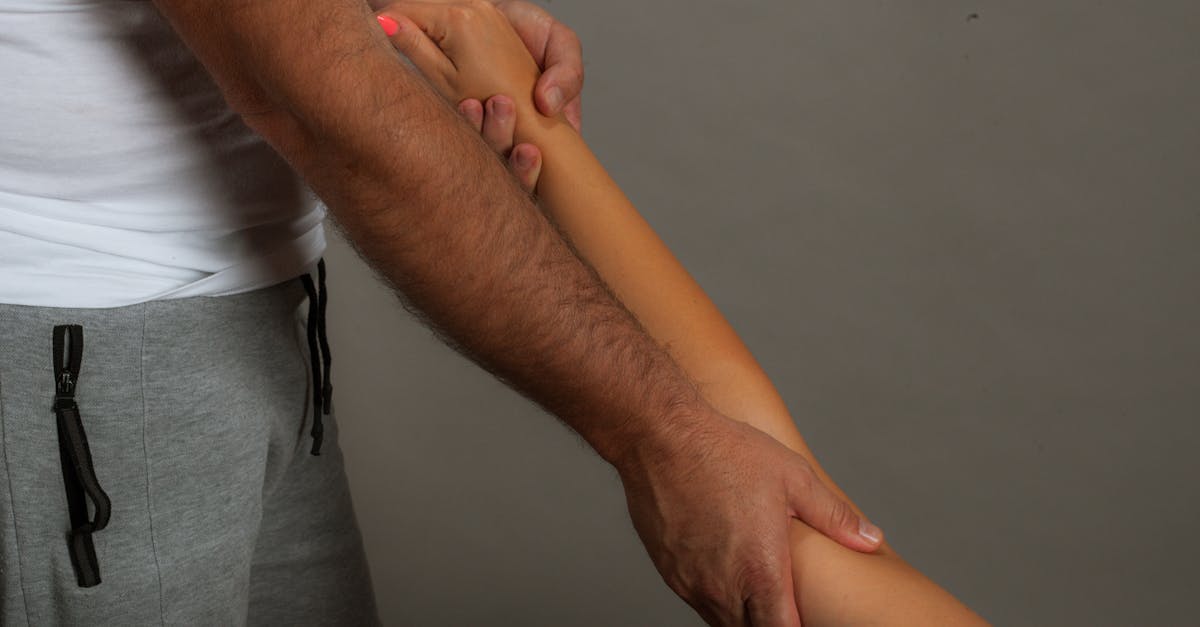
Arm massage techniques include effleurage (long gliding strokes), petrissage (kneading and squeezing of muscle tissue), friction massage (deep circular pressure on specific points), and tapotement (rhythmic tapping). These techniques work by increasing local blood flow, reducing muscle tension, and encouraging lymphatic drainage through the arm. Each technique targets a different tissue depth and is suited to different conditions — from general arm fatigue to overuse injuries affecting the forearm, bicep, and shoulder.
You've probably noticed it after a long day at a keyboard, or halfway through a workout that pushed your arms harder than expected — a dull, heavy ache that settles into your forearms, biceps, or the space between your shoulder and elbow. Arm massage techniques have been used for decades by physical therapists and athletic trainers to address exactly this kind of tension, and many of the same methods are accessible at home with the right guidance. Whether you're managing muscle fatigue, recovering from repetitive strain, or simply dealing with the kind of stiffness that comes with desk work, understanding how to massage the arm correctly makes a real difference in how fast you recover. This guide covers the major arm massage techniques, how each one works, when to use them, and how to build a practical routine.
Why Arms Hold So Much Tension
The arm isn't a single muscle — it's a layered system of muscles, tendons, fascia, and nerves running from the shoulder to the fingertips, all of which can become restricted independently. Understanding what's actually happening inside the arm when tension builds makes it much easier to choose the right technique to address it.
The Anatomy Behind Arm Tightness
The forearm alone contains more than 20 muscles responsible for wrist flexion, extension, and finger control. These muscles are dense and close together, which means tension in one can compress or irritate a neighboring muscle or nerve. The carpal tunnel — a narrow passage at the wrist — houses the median nerve alongside nine flexor tendons, making it especially vulnerable to swelling from repetitive motion.
Higher up the arm, the biceps brachii and brachialis control elbow flexion, while the triceps manage extension. These larger muscles are susceptible to overuse fatigue from both lifting and sustained low-level contraction — the kind that occurs when you hold your arms in a fixed position during typing or driving.
Common Causes of Arm Muscle Tension
- Prolonged keyboard and mouse use, which creates sustained forearm flexor contraction
- Repetitive gripping motions in trades, sports, or manual labor
- Poor posture that shifts load onto the shoulder and upper arm
- Overuse from exercise, particularly push-pull movements
- Reduced circulation from extended sitting or immobility
Research published through the National Institute of Occupational Safety and Health identifies musculoskeletal disorders of the upper extremity — including forearm strain and tendinopathy — as among the most common work-related injuries reported in office and manual labor environments.
Core Arm Massage Techniques Explained
There are four foundational techniques used in therapeutic arm massage. Each one affects tissue differently, and they're typically applied in sequence — from lightest to deepest — to warm up the tissue before applying more concentrated pressure.
Effleurage: The Foundation Stroke
Effleurage is a long, gliding stroke applied with the flat of the hand or the pads of the fingers. It's always the starting and ending technique in any arm massage because it warms the tissue, increases surface circulation, and signals to the nervous system that deeper work is coming. Pressure is light to moderate — enough to move the skin over the underlying muscle, not to compress the muscle itself.
On the forearm, effleurage runs from the wrist to the elbow in a single fluid motion. On the upper arm, strokes move from the elbow up toward the shoulder. Always stroke toward the heart to support venous blood return. Spend two to three minutes here before moving to deeper techniques.
Petrissage: Kneading the Muscle
Petrissage involves lifting, squeezing, and rolling muscle tissue between the thumb and fingers — a slow, deliberate kneading motion applied to muscle. This technique reaches deeper than effleurage and is particularly effective at breaking up adhesions, releasing fascia, and improving circulation in the belly of the muscle.
The forearm extensors and flexors respond especially well to petrissage. Work along the outer edge of the forearm (extensors) and then the inner edge (flexors), kneading slowly across the full length from wrist to elbow. For the bicep, use a full-hand grip to gently squeeze and release along the length of the muscle belly. Avoid bony areas — petrissage works on muscle tissue only.
Friction Massage: Targeted Deep Work
Friction massage uses small, circular or cross-fiber movements applied with firm thumb or fingertip pressure to a specific point. It addresses localized adhesions, tendon insertions, and areas of chronic tightness. Unlike the broader strokes of effleurage and petrissage, friction is stationary — you work in one spot for 20 to 30 seconds before moving to the next.
Common friction points on the arm include the lateral epicondyle (the bony prominence on the outer elbow, often involved in tennis elbow), the medial epicondyle on the inner elbow, and the muscle-tendon junction where the forearm extensors meet the wrist. Cross-fiber friction — moving perpendicular to the direction of the tendon fibers — is particularly effective at stimulating remodeling in chronically irritated tendons, according to principles outlined in sports medicine literature.
Tapotement: Rhythmic Stimulation
Tapotement involves light, rapid rhythmic tapping or cupping motions applied with the fingertips, loosely cupped palms, or the edge of the hand. It's primarily a stimulating technique used at the end of a massage session to increase circulation and muscle responsiveness. A light fingertip tapotement along the forearm and upper arm can increase blood flow quickly before activity.
Keep tapotement brief on the arm — 30 to 60 seconds is typically sufficient. Avoid bony areas like the elbow and wrist.
Targeting Specific Areas of the Arm
A good arm massage routine doesn't treat the entire arm as one uniform structure. Different areas have different tissue densities, vulnerabilities, and massage approaches. Here's how to adapt your technique by region.
Forearm and Wrist
The forearm is the most commonly tight region in the arm, particularly for anyone who types, grips, or performs repetitive hand motions. Start with effleurage from wrist to elbow for two to three minutes, then transition to petrissage along the flexor group (inner forearm) and extensor group (outer forearm) separately. Follow with friction work at the wrist tendons and the elbow attachment if needed.
A useful forearm self-massage technique: rest your arm palm-up on a table and use the opposite thumb to trace slow, firm lines along the inner forearm from wrist to elbow, pausing on any points of tightness. Then flip the arm and repeat along the outer forearm. This covers both the flexor and extensor compartments in under five minutes.
Upper Arm: Biceps and Triceps
The upper arm responds well to full-hand petrissage. For the bicep, sit with the arm relaxed and use the opposite hand to squeeze and release slowly along the length of the muscle from elbow to shoulder. For the tricep — which is harder to self-massage — press the back of the upper arm against a firm surface like a foam roller or the edge of a chair back. Use your body weight to apply sustained pressure to the tricep belly while slowly bending and extending the elbow.
Shoulder and Upper Arm Junction
The deltoid and the tendons of the rotator cuff at the shoulder cap are often implicated in arm fatigue that doesn't resolve with forearm-only massage. The anterior (front) deltoid is accessible to self-massage using the opposite hand's fingers in a petrissage motion. The posterior deltoid is harder to reach alone — this is an area where a body massager or the assistance of another person becomes genuinely useful.
For people managing upper arm and shoulder tension, therapeutic body massagers designed for deeper tissue reach can address the posterior shoulder and upper arm more effectively than hands alone.
Using a Massager to Extend Your Routine
Manual massage techniques are effective, but they have a practical limitation: you can't apply sustained, consistent pressure with your own hands for more than a few minutes without fatiguing. A therapeutic massager extends the duration and consistency of your arm massage without that trade-off.
How Oscillating Massage Works on Arm Tissue
MedMassager's Body Massager uses oscillating technology to deliver deep, controlled movement through muscle tissue. Oscillation — a back-and-forth sweeping motion — penetrates deeper than surface vibration and engages the muscle belly more consistently than manual strokes can sustain. For arm use, oscillation increases local blood flow in muscles affected by prolonged repetitive motion, helping deliver oxygen and clear metabolic byproducts that contribute to post-use soreness.
The mechanism matters: it's the continuous, rhythmic movement of the oscillation that keeps blood circulating through tight arm tissue rather than simply providing surface sensation. This is particularly relevant for people managing forearm tension from extended desk work, where blood flow to the forearm extensors can become restricted from sustained low-level contraction.
Applying a Body Massager to the Arm
For the forearm and upper arm, the MedMassager Body Massager is best used with the arm resting on a flat surface. Position the massager head on the forearm and allow it to work slowly along the muscle belly — don't press hard. The oscillating action does the work; excess pressure can compress superficial nerves. Move the massager in the same wrist-to-elbow direction as effleurage strokes, spending 60 to 90 seconds on each muscle compartment.
For the posterior shoulder and tricep, position the massager behind the upper arm while the elbow is slightly bent. Work slowly along the tricep belly toward the shoulder. Start on a lower setting and increase only if needed — the upper arm has less overlying tissue than the back, and the oscillation reaches the muscle quickly.
When Manual Technique and a Massager Work Best Together
- Start with 2-3 minutes of manual effleurage to warm the tissue
- Apply the massager to the muscle belly for 3-5 minutes per region
- Follow with manual petrissage in areas that still feel knotted
- Finish with effleurage strokes by hand to promote venous return
This combined approach uses each method where it's strongest: manual technique for precision and tactile feedback, the massager for sustained, even pressure across larger muscle surfaces.
Building a Practical Arm Massage Routine
Consistency matters more than duration. A five-minute daily arm massage routine produces better results over time than a 30-minute session once a week. Here's a straightforward structure you can repeat daily.
Daily Arm Massage Sequence (5-10 Minutes)
- Effleurage warm-up: 2 minutes of light gliding strokes along the full arm, wrist to shoulder, using moderate pressure and stroking toward the heart.
- Forearm petrissage: 2 minutes of slow kneading along the flexor group (inner forearm) and extensor group (outer forearm), squeezing and releasing the muscle tissue.
- Friction at key points: 30 seconds of circular friction at the lateral epicondyle, medial epicondyle, and wrist tendon insertions if these areas are tender.
- Upper arm petrissage: 1-2 minutes of full-hand kneading along the bicep and, if reachable, the tricep.
- Effleurage cool-down: 1 minute of light gliding strokes from wrist to shoulder to finish.
When to Massage and When to Rest
Arm massage is most effective either immediately before activity (to increase circulation and warm tissue) or within an hour after activity (to aid recovery). Avoid deep friction or petrissage during an acute injury — the first 48 to 72 hours after a strain or pull call for rest, ice, and compression before any massage is introduced. Once acute inflammation has passed, gentle effleurage is typically the appropriate starting point.
If arm pain is persistent, sharp, radiating into the hand, or accompanied by numbness or tingling, stop massage and consult a healthcare provider. These symptoms may indicate nerve involvement — including conditions like carpal tunnel syndrome or cervical radiculopathy — that require clinical evaluation before self-massage is appropriate.
Special Considerations for Specific Populations
Office Workers and Repetitive Strain
For people spending six or more hours daily at a keyboard, forearm extensor tension is nearly universal. The extensor digitorum — the muscle running along the top of the forearm that controls finger extension — is constantly active during typing and rarely gets a sustained stretch or rest. Daily petrissage along the extensor compartment, combined with regular wrist extension stretches, addresses the most common pattern of desk-worker arm tension.
People Managing Tendinopathy
Conditions like lateral epicondylitis (tennis elbow) and medial epicondylitis (golfer's elbow) involve degeneration of the tendon tissue at the elbow. Research in sports medicine supports cross-fiber friction massage at the tendon insertion as part of a rehabilitation approach — but only after the acute phase has passed and with guidance from a physical therapist. Oscillating body massagers used on the forearm muscle belly — not directly on the inflamed tendon — can help maintain local circulation in the surrounding tissue during recovery.
Older Adults
Skin and connective tissue become more fragile with age, and the pressure used in petrissage and friction should be reduced accordingly. Effleurage-dominant massage with lighter overall pressure is the appropriate approach for older adults, particularly those taking blood thinners or with a history of skin fragility. Shorter sessions of five minutes repeated more frequently throughout the day may be more practical and comfortable than single longer sessions.
Frequently Asked Questions
How often should you massage your arms?
Daily massage of five to ten minutes is appropriate for general muscle maintenance and fatigue recovery. For people managing repetitive strain or tendinopathy, two to three targeted sessions per day — kept short at three to five minutes each — tend to be more effective than one long session. Avoid deep pressure techniques like friction massage more than once daily on any given point, as overstimulation can increase rather than reduce soreness.
What is the best arm massage technique for forearm pain?
Petrissage along the forearm muscle belly is generally the most effective technique for forearm pain related to muscle tension or repetitive use. Start with two to three minutes of effleurage to warm the tissue, then apply slow, deliberate kneading along both the flexor group (inner forearm) and extensor group (outer forearm). If the pain is concentrated near the elbow or wrist joint, cross-fiber friction at the tendon attachment points adds targeted relief.
Can arm massage help with carpal tunnel symptoms?
Arm massage targeting the forearm flexors may help reduce the muscular tension that contributes to compression in the carpal tunnel region, but it does not treat carpal tunnel syndrome itself. The condition involves nerve compression within a bony canal at the wrist, and massage to the surrounding forearm tissue is a supportive measure rather than a primary intervention. Anyone with persistent numbness, tingling, or weakness in the hand should consult a healthcare provider for proper evaluation and diagnosis.
Should you massage sore arms after a workout?
Light to moderate massage within the first hour after exercise can help reduce delayed onset muscle soreness (DOMS) by supporting blood flow and lymphatic clearance in fatigued muscle tissue. Effleurage and gentle petrissage are the most appropriate techniques in the immediate post-exercise window. Avoid deep friction massage on muscles that are acutely sore, as this can increase localized inflammation in the short term.
What areas of the arm should you avoid when massaging?
Avoid applying direct pressure over bony prominences — including the elbow joint, lateral and medial epicondyles during acute inflammation, and the wrist bones. Avoid the inner upper arm, where the brachial artery and median nerve run close to the surface with little overlying muscle for protection. If any area produces sharp pain, radiating sensation, or tingling during massage, stop immediately and consult a healthcare professional.
Does massage help with arm muscle recovery after exercise?
Research suggests that massage supports recovery by increasing local blood flow, reducing markers of muscle damage, and decreasing perceived soreness in the hours and days following intense exercise. These effects are most pronounced with moderate-pressure techniques like petrissage rather than light effleurage alone. Applying massage within two hours post-exercise appears to show the most consistent benefit for delayed onset muscle soreness, based on reviews in sports medicine literature.
How is self-arm massage different from professional massage?
Self-massage has clear limitations: you can only access one arm at a time, it's difficult to reach the posterior upper arm and shoulder effectively, and hand fatigue limits how long you can sustain pressure. A professional therapist can apply bilateral techniques, use body weight for deeper sustained pressure, and assess tissue quality in ways that are difficult to replicate alone. For daily maintenance and mild fatigue, self-massage is effective. For complex presentations like tendinopathy, nerve-related symptoms, or post-injury recovery, working with a licensed massage therapist or physical therapist produces better outcomes.
The Bottom Line
Arm massage techniques — from foundational effleurage to targeted cross-fiber friction — work because they address the specific anatomy that makes the arm prone to tension and fatigue. Applying them in the right sequence, at the right depth, and with appropriate frequency produces meaningful results for both daily stiffness and longer-term repetitive strain.
For most people, a consistent five-to-ten-minute daily routine using these techniques will do more than an occasional deep-tissue session. Start light, progress gradually, and pay attention to how different areas of your arm respond. When manual technique alone falls short — particularly for the posterior shoulder, upper arm, and forearm after sustained desk work — a registered therapeutic body massager can extend both the duration and depth of your routine without hand fatigue.
Whether you're managing overuse tension, recovering from a demanding workout, or simply trying to undo the effects of a long day at a keyboard, the right arm massage approach is one of the most accessible and effective tools available. Explore MedMassager's full range of therapeutic massagers to find the right fit for your routine.
This content is for informational purposes only and is not intended as medical advice, diagnosis, or treatment. Always consult a qualified healthcare professional before starting any new treatment or therapy. MedMassager products are FDA-registered Class I medical devices.


