
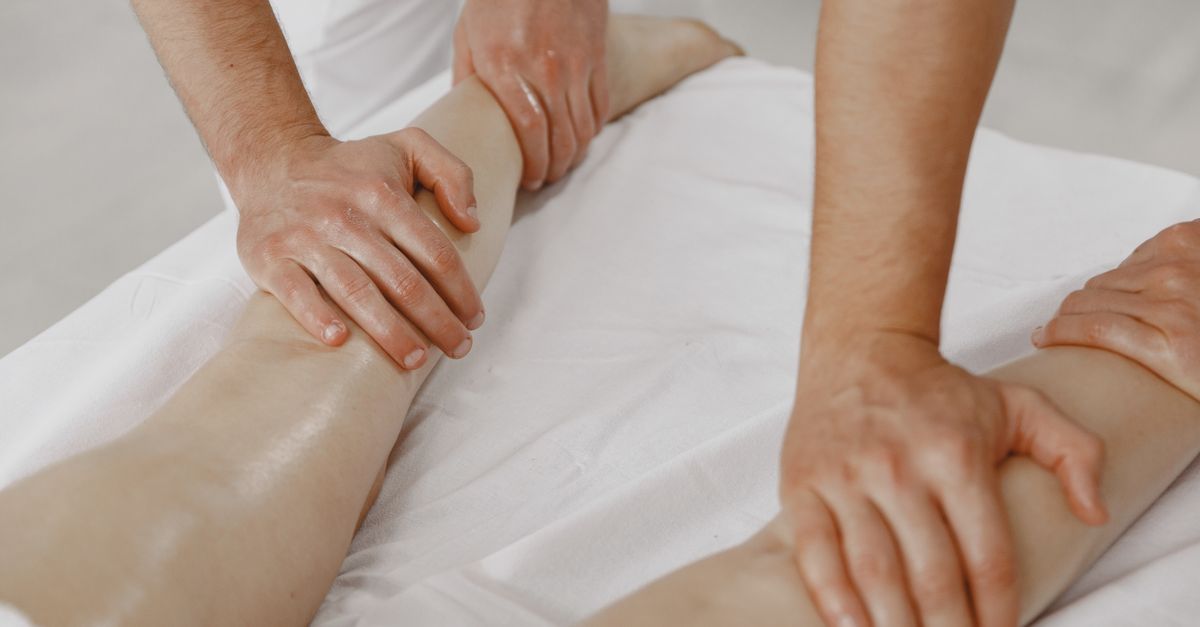
Calf massage supports circulation by activating the calf muscle pump — the physiological mechanism your body uses to push venous blood back up toward the heart against gravity. When the calf muscles are compressed and released rhythmically, they squeeze the deep veins running through the lower leg, propelling blood upward and reducing the pooling that causes swelling, heaviness, and fatigue. This makes calf massage especially valuable for people who sit or stand for long periods without walking, since sedentary muscles provide little natural pump action. Regular calf massage, whether applied by hand or through an oscillating therapeutic massager, can help maintain healthy circulation in the lower limbs throughout the day.
By mid-afternoon on a desk-heavy day, the signs are familiar: legs that feel heavy, ankles that look slightly puffy, a dull ache through the calves that no amount of shifting in your chair seems to fix. This isn't just stiffness — it's your circulation signaling that it needs help. Calf massage targets the exact mechanism responsible for returning blood from your legs to your heart, and understanding that mechanism changes how you think about leg health entirely. This post explains why the calves matter so much for circulation, how massage activates the calf pump, what to look for in a daily routine tool, and how hands-free options compare to manual techniques.
Why Calves Are Your Body's Second Heart
The cardiovascular system gets most of the credit for circulation, but the heart alone cannot overcome gravity in the lower limbs. That's where the calf comes in — and why cardiologists and vascular specialists often refer to the calf musculature as the body's "second heart."
The Calf Muscle Pump Mechanism
Deep within the calf run the posterior tibial and peroneal veins, surrounded by the gastrocnemius and soleus muscles. When those muscles contract — through walking, climbing stairs, or any plantar flexion — they compress the veins and force blood upward toward the femoral vein and eventually back to the heart. One-way valves inside the veins prevent backflow between contractions, so each squeeze makes net progress against gravity.
When you stop moving, the pump stops. Blood pools in the lower leg, pressure builds inside the capillaries, and fluid begins leaking into surrounding tissue. The result is the swelling, fatigue, and heaviness that sedentary workers and frequent flyers know well. The longer you remain still, the more significant the pooling becomes.
Who Is Most Affected
This isn't a concern limited to people with diagnosed vascular conditions. Many groups regularly experience reduced calf pump function:
- Desk workers who sit for four or more consecutive hours
- Remote workers whose daily step counts have dropped significantly
- Frequent flyers sitting in cramped cabin seating for hours at a time
- People in professions that require prolonged standing on hard floors
- Older adults whose muscle mass and tone have declined with age
- Individuals managing venous insufficiency, lymphedema, or chronic leg swelling
Immobility is a primary driver of lower-limb circulatory problems. Extended periods of sitting — particularly during long flights or car travel, where calf muscle activity drops to near zero — are closely associated with reduced venous return and deep vein complications.
What Happens Without Intervention
Chronic under-activation of the calf pump doesn't just cause discomfort. Over time, sustained venous pooling contributes to varicose vein development, chronic edema, and skin changes in the lower leg. For people already managing diabetes or peripheral artery disease, reduced circulation carries more serious implications for tissue health and healing. Addressing the calf pump daily — not just when symptoms flare — is a meaningful preventive habit.
How Calf Massage Activates the Pump
Massage works on the calf pump through two complementary pathways: direct mechanical compression of the veins and reflexive muscle relaxation that improves venous tone. Consistent, rhythmic massage outperforms occasional, forceful pressure precisely because both pathways depend on repetition, not intensity.
Mechanical Compression and Venous Return
When external pressure is applied to the calf — whether by hand, a compression sleeve, or an oscillating massager — it replicates the squeezing action of a muscle contraction. Blood is pushed upward through the deep veins, the one-way valves catch it, and the leg empties incrementally with each compression cycle. This is the same principle behind compression stockings, which apply constant gradient pressure to the leg from ankle to knee.
Massage goes further than static compression because it is rhythmic. Repeated cycles of compression and release create a pumping action that actively moves blood rather than simply holding it in place. For people whose calf muscles are chronically underused, this external pump substitute can meaningfully offset the circulatory slowdown caused by immobility.
Muscle Relaxation and Improved Flow
Chronically tight calf muscles create a secondary problem: sustained low-level tension compresses the veins partially without ever fully releasing them. This reduces the pressure differential that drives venous return. Massage relaxes the gastrocnemius and soleus, restoring the normal contraction-relaxation cycle that makes the pump effective. Looser muscle tissue also allows the arteries supplying the calf to dilate more freely, increasing overall blood flow through the limb.
Oscillation as a Calf Pump Activator
Oscillating massage — the technology used in MedMassager's therapeutic foot massagers — introduces rapid, controlled movement through the foot and into the lower leg. The oscillating platform creates repeated plantar flexion-like activation, contracting the calf muscles and pushing blood upward instead of letting it pool during rest. MedMassager uses oscillating technology to deliver deeper, more controlled vibration than conventional massagers — which matters when the goal is activating deep venous flow, not just surface sensation. This hands-free approach lets people maintain calf pump activity throughout a seated workday without interrupting their routine.
Manual Calf Massage Techniques
Hand-applied massage is effective, accessible, and requires no equipment. For desk workers and travelers who want an on-demand technique, a few basic methods cover the most important circulatory applications.
Effleurage: The Foundation Stroke
Effleurage is a long, gliding stroke applied with the palms and fingers. For the calf, always work from ankle to knee — moving in the direction of venous return, toward the heart. Apply moderate, even pressure as you glide upward, then return with light contact. This stroke warms the tissue, begins moving venous blood, and prepares the muscle for deeper work.
Do two to three minutes of effleurage before using any firmer technique. Rushing into deep pressure on a cold, tight calf can cause discomfort and may not be appropriate for people with certain vascular conditions.
Petrissage: Squeezing and Kneading
Petrissage involves lifting, squeezing, and rolling the muscle belly between both hands. Grasp the calf with both palms and work the gastrocnemius in a slow, rhythmic kneading motion, moving from the lower leg upward. This technique directly compresses the deep veins and surrounding muscle tissue, producing the strongest circulatory effect of any manual technique.
Spend two to four minutes on petrissage, focusing on areas that feel dense or tender. Tenderness during this technique usually indicates chronic tension and sluggish circulation — not injury — in otherwise healthy individuals.
Thumb Circles and Targeted Pressure
For localized tight spots, use both thumbs to apply slow, circular pressure along the length of the gastrocnemius medial and lateral heads. Pay attention to where the muscle connects at the Achilles tendon and the back of the knee — attachment points that often hold significant tension in people who sit for long hours. Keep pressure firm but not painful, and follow thumb circles with effleurage strokes to flush the area.
Limitations of Manual Application
Manual calf massage is effective but carries real-world constraints:
- Reaching your own calves thoroughly requires flexibility that not everyone has
- Self-massage is tiring — applying steady, rhythmic pressure to one leg while bracing with the other is difficult to sustain
- Most people manage a few minutes before fatigue or awkward positioning forces them to stop
- Pressure and rhythm vary with fatigue, making results inconsistent session to session
For a daily circulation routine, these limitations matter. Occasional manual work is valuable, but it's difficult to build the consistency that circulatory benefits require.
Hands-Free Calf Massage for Daily Use
For people who need consistent, daily calf pump activation — not just occasional relief — a hands-free tool changes the practical equation. A foot massager with calf reach allows sustained lower-leg stimulation while seated at a desk, in a recliner, or during a flight without any effort from the user.
How Oscillating Foot Massagers Reach the Calf
The MedMassager Foot Massager operates on an oscillating platform that moves the entire foot through a gentle arc of motion. Unlike vibrating pads that deliver surface-level buzz, oscillation drives actual foot movement — which contracts the lower leg muscles and activates the calf pump passively. The user places their feet on the platform, sets the speed, and the massager does the mechanical work that sitting would otherwise prevent.
Because the oscillation drives plantar flexion-style movement, the effect extends well above the foot. The soleus — the deeper of the two primary calf muscles — is particularly responsive to this type of rhythmic activation. Continuous movement helps keep blood flowing through the feet and calves when natural movement is limited, which is precisely the situation a desk worker faces for hours each day.
Hands-Free vs. Manual: A Direct Comparison
- Duration: Manual massage typically lasts 5–10 minutes before fatigue sets in. A foot massager can run for 15–30 minutes continuously without user effort.
- Consistency: Hand pressure varies with fatigue and attention. Oscillating platforms deliver a consistent rhythm throughout the session.
- Bilateral activation: Manual technique requires switching legs. A foot massager platform activates both legs simultaneously.
- Accessibility: Self-massage requires flexibility and core stability. Foot massager use requires only the ability to place your feet on a platform.
- Integration: Manual massage requires a dedicated break. A foot massager can run under a desk during work hours, requiring zero additional time.
For people managing chronic leg swelling, venous insufficiency, or simply a high-sitting, low-movement lifestyle, the ability to integrate calf pump activation into the existing workday is the critical advantage. Explore the full range of MedMassager foot massager options to find the right fit for your daily routine.
Building a Consistent Daily Routine
Consistency matters more than intensity for circulatory benefits. A 20-minute foot massager session in the morning before sedentary work begins, combined with a second session in the late afternoon when pooling tends to peak, creates a reliable twice-daily pump activation cycle. Manual calf massage techniques can complement this on days when swelling or tension is more pronounced.
For frequent flyers, a compact travel-sized approach — foot exercises in the aisle combined with manual effleurage during the flight — can substitute when equipment isn't available. The underlying goal is the same: break up extended stillness by restoring calf pump activity before significant pooling occurs.
Calf Massage for Specific Situations
Desk Workers: The Afternoon Circulation Drop
Circulatory slowdown in sedentary workers typically peaks in the mid-to-late afternoon, when cumulative hours of sitting create the greatest fluid pooling. Scheduling a foot massager session between 2:00 and 4:00 PM directly addresses this window. Elevating the feet slightly during the session — even a few inches on a footrest — combines gravity with the pump activation effect for a stronger result.
Frequent Flyers: Pre-Flight and In-Flight Strategy
Extended immobility during long flights is widely associated with reduced lower-limb circulation, a concern that applies particularly on flights longer than four hours. Manual calf massage is the most practical in-flight option: use effleurage and petrissage on each leg for five minutes per hour of flight, always working ankle to knee. Ankle circles and heel raises in your seat also activate the calf pump without requiring standing. A foot massager session the evening before a long flight primes calf circulation before extended immobility begins.
People Managing Leg Swelling
For individuals with chronic lower-leg edema, calf massage should always move fluid toward the body — never downward. Work from ankle to knee only, never in reverse. If swelling is significant or asymmetric, consult a physician before beginning any massage routine, as swelling can occasionally indicate a vascular condition requiring medical evaluation. When cleared for self-care, the MedMassager therapeutic massager line includes options sized and powered appropriately for people managing chronic swelling as part of a supervised care routine.
Frequently Asked Questions
How often should I do calf massage for circulation?
Once or twice daily is the most effective frequency — particularly for sedentary workers or anyone who sits for extended periods. Short sessions of 15 to 20 minutes are more valuable than occasional longer sessions, because circulation benefits from consistent, repeated pump activation rather than infrequent intensive effort. If you experience chronic leg swelling or a diagnosed vascular condition, discuss a specific frequency with your healthcare provider.
Why do my calves swell after sitting all day?
Calf swelling after prolonged sitting occurs because the calf muscle pump becomes inactive when you're seated and not walking. Without regular muscle contractions squeezing the deep veins, venous blood pools in the lower leg and capillary pressure rises, causing fluid to leak into surrounding tissue. The result is the puffiness and heaviness that builds through long hours at a desk. Standing, walking, and calf massage all help restore pump activity and reduce this fluid accumulation.
Is it safe to massage your own calves every day?
For most healthy adults, daily calf massage is safe and beneficial. The calf is a large, accessible muscle group with no major nerve structures at significant risk from moderate pressure applied correctly. Avoid deep, forceful pressure if you have varicose veins, known blood clots, open skin, or active infection in the area. If you have a history of deep vein thrombosis or any diagnosed vascular condition, get medical clearance before starting a regular massage routine.
What direction should you massage your calves?
Always massage your calves from ankle toward the knee — never downward toward the foot. This directional approach works with the one-way valves inside your veins, helping push blood upward toward the heart rather than against the natural flow. Massaging downward produces no circulatory benefit and can cause minor discomfort in people with sensitive veins.
Can calf massage reduce leg swelling from long flights?
Yes. Calf massage during and after a long flight helps offset the circulatory slowdown caused by immobility at altitude. Working from the ankle to the knee with effleurage and gentle squeezing strokes activates the venous pump and helps move pooled fluid back toward systemic circulation. Combining massage with in-seat ankle circles, periodic standing, and adequate hydration provides the most effective strategy for reducing lower-leg swelling on long flights.
Does a foot massager help with calf circulation?
An oscillating foot massager can activate the calf pump passively by driving repeated foot motion that engages the lower leg muscles. This plantar flexion-style movement contracts the soleus and gastrocnemius, pushing blood upward through the deep veins in the same way walking does. For desk workers who need continuous calf pump activity during sedentary periods, a foot massager provides a hands-free way to maintain lower-limb circulation without interrupting a work session.
How is calf tightness connected to poor circulation?
Chronically tight calf muscles maintain a low level of sustained tension that partially compresses the deep veins without fully releasing them, reducing the pressure differential that makes the venous pump effective. Tight calves also restrict ankle range of motion, which limits plantar flexion during walking and further diminishes pump output. Massage relieves this resting tension, allowing the pump to function more efficiently both during exercise and at rest.
The Bottom Line on Calf Massage for Circulation
The calves do critical circulatory work that most people never think about until something goes wrong. For desk workers, frequent flyers, and anyone spending long hours seated, the calf pump is chronically underused — and that deficit shows up as swelling, fatigue, and heaviness that accumulates through the day.
Regular calf massage, applied consistently and in the right direction, restores what immobility takes away. Manual techniques like effleurage and petrissage are effective and require no equipment. For a sustainable daily habit that doesn't require flexibility or dedicated break time, an oscillating foot massager extends the benefit hands-free — running under your desk while you work and activating the calf pump precisely when it needs it most.
If you're ready to build circulation support into your daily routine, explore the MedMassager Foot Massager collection — built for the kind of consistent, therapeutic lower-limb activation that keeps circulation moving through long sedentary days. For broader muscle and soft tissue needs, the MedMassager Body Massager delivers professional-grade oscillating therapy across larger areas of the legs and back.
This content is for informational purposes only and is not intended as medical advice, diagnosis, or treatment. Always consult a qualified healthcare professional before starting any new treatment or therapy. MedMassager products are FDA-registered Class I medical devices.


