
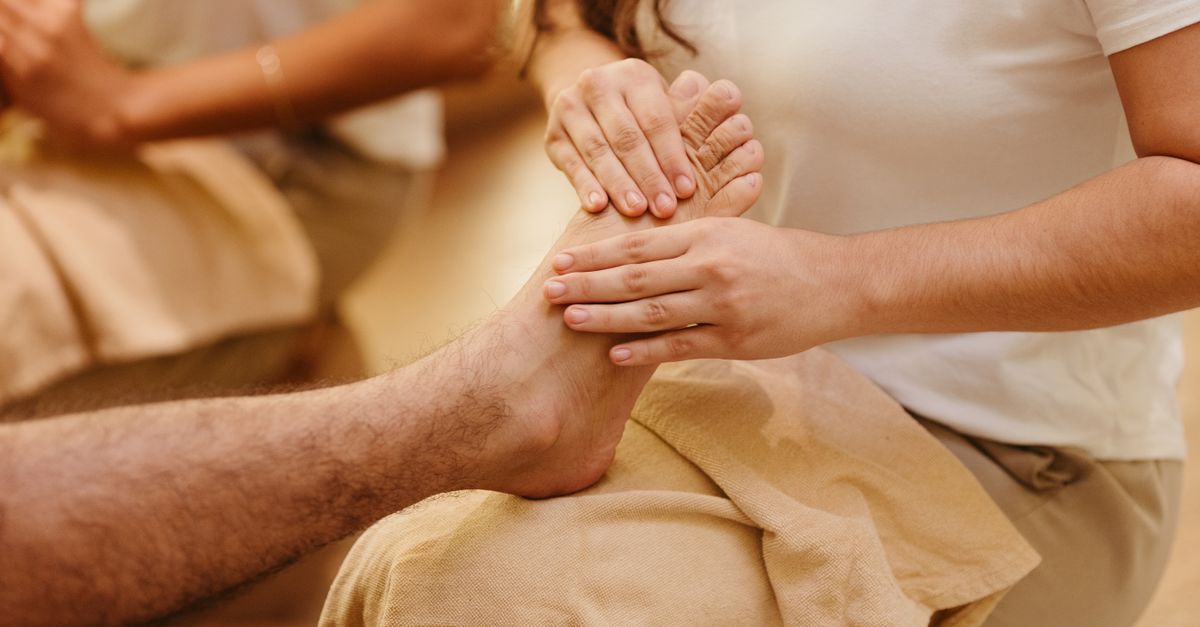
People taking blood thinners can generally use a foot massager, but should choose a gentle, low-intensity setting and shorter session times, since anticoagulant medications increase the risk of bruising and bleeding under the skin. Anyone on warfarin, apixaban, rivaroxaban, or a similar medication should talk with their prescribing physician before starting a foot massage routine, particularly if they have a history of deep vein thrombosis, peripheral artery disease, or fragile skin. New or unusual bruising, swelling, warmth, or skin discoloration after a session are signs to stop immediately and contact a doctor before continuing. This guidance applies to oscillating foot massagers and other mechanical massage devices alike.
If you take warfarin, Eliquis, Xarelto, or another anticoagulant, you've probably paused before adding a foot massager to your evening routine. It's a fair concern. Blood thinners change how your body responds to pressure and friction, and a device that feels perfectly safe for someone else might leave you with bruising you didn't expect.
This is one of the most common hesitations we hear from customers in their 60s, 70s, and beyond, many of whom are managing atrial fibrillation, a history of blood clots, or recovery from a cardiac procedure. A foot massager and blood thinners are not automatically incompatible. The approach simply needs to be more deliberate.
Below, we cover why bruising risk goes up on these medications, how to adjust pressure and session length, the warning signs that mean you should stop, and why your prescribing physician belongs in this conversation before you begin.
Why Blood Thinners Raise Bruising Risk
Anticoagulant medications don't cause bruising directly. Instead, they slow down the clotting process that normally stops small bleeds under the skin from spreading.
When a tiny blood vessel is bumped, pressed, or squeezed, a small amount of blood can leak into surrounding tissue. In someone with normal clotting, that leak seals quickly. On a blood thinner, it can spread further and take longer to resolve, which is why bruises tend to look larger and last longer in this population.
How Anticoagulants Affect Clotting
Warfarin works by blocking vitamin K, which the liver needs to produce several clotting factors. Newer direct oral anticoagulants like apixaban and rivaroxaban target specific steps in the clotting cascade more directly. Both approaches accomplish the same broad goal: reducing the blood's ability to form clots that could cause a stroke or other dangerous blockage. That same mechanism means minor trauma to blood vessels, including firm pressure or repeated friction, is more likely to show up as visible bruising.
Common Blood Thinners to Know
Not every anticoagulant carries the same bleeding profile, and dosing varies by person, so this list is for general awareness rather than a substitute for reading your prescription information.
- Warfarin (Coumadin)
- Apixaban (Eliquis)
- Rivaroxaban (Xarelto)
- Dabigatran (Pradaxa)
- Aspirin and clopidogrel, when prescribed for their antiplatelet effect
If you're unsure which category your medication falls into, that's a good first question for your pharmacist or physician before adjusting any home massage routine.
How Gentle Oscillation Supports Safe Use
Many people searching for a vibrating foot massager are really describing a device that produces mechanical, rhythmic movement against the foot and lower leg. That distinction matters on an anticoagulant, because not every type of movement puts the same stress on the small blood vessels near the surface of the skin.
Oscillation Versus High-Impact Movement
MedMassager uses oscillating technology to deliver deeper, more controlled vibration than conventional massagers. A controlled, side-to-side oscillation is easier to modulate at low intensity than a hard, pounding motion, which reduces the chance of stressing fragile capillaries. Devices that strike the tissue repeatedly are harder to dial down to a genuinely gentle level.
What Oscillating Movement Does
The physical action is straightforward. Oscillating motion moves the foot and calf muscles rhythmically, which encourages blood already in the lower leg to keep circulating rather than pooling during long periods of sitting or standing. This is a mechanical effect, not a treatment for any clotting condition, and it works the same basic way whether or not someone takes an anticoagulant. What changes on blood thinners is the intensity and duration you use, not the underlying mechanism.
Adjusting Settings for Fragile Skin
Because pressure can be adjusted independently of speed on most therapeutic foot massagers, someone managing bruising sensitivity can keep the circulatory benefit while reducing the physical force involved. Three small adjustments make the biggest difference:
- Use the lowest speed setting for the first several sessions
- Rest your feet lightly on the pad instead of pressing down
- Keep socks on if your skin marks easily
Many customers ease into oscillating foot massagers at the gentlest setting and only move up once they've seen how their skin responds over a week or two. The same cautious ramp-up applies to MedMassager body massagers used on the calves or thighs.
What to Discuss With Your Doctor First
Every person on anticoagulant therapy has a slightly different bleeding risk profile, shaped by dosage, the reason the medication was prescribed, and other health conditions. This section is guidance for that conversation, not a substitute for it.
Questions Worth Asking Your Physician
- Does my current dosage put me at higher or lower bruising risk than average?
- Do I have any circulation issues, such as peripheral artery disease, that change how a massager should be used?
- Is there a history of deep vein thrombosis I should be aware of before adding pressure to my legs or feet?
- Are there areas of my foot or leg I should avoid due to varicose veins or fragile skin?
Situations That Call for Extra Caution
Some people on blood thinners also manage conditions like diabetic neuropathy, which can reduce sensation in the feet. When feeling is reduced, it's harder to notice that pressure is too firm before a bruise forms.
A recent blood clot, active varicose veins, or very thin skin from long-term steroid use are also reasons to get specific clearance before starting, rather than assuming a low setting is automatically safe. None of this means a foot massager is off the table. It means the decision belongs to you and your physician together, based on your full medical picture.
How to Use a Foot Massager Safely
Once you've talked with your physician and gotten the go-ahead, easing in gradually is the safest approach. The goal in the first few weeks is to see how your skin and circulation respond before increasing intensity or duration.
- Start at the lowest intensity setting available, even if it feels underwhelming at first.
- Limit the first few sessions to 5 to 10 minutes rather than the 15 to 20 minutes some people use without a bleeding risk.
- Check your feet and lower legs for new marks or discoloration immediately after each session.
- Wait a full day between sessions during the first week or two to see how your body responds.
- Extend session length only if there's no new bruising, swelling, or discomfort.
- Keep a simple log of session length, intensity, and any skin changes to share with your doctor at follow-up visits.
This cautious ramp-up isn't unique to any one device. It's a reasonable approach whenever someone with a bleeding risk introduces a new form of pressure or mechanical movement to their routine, whether that's a foot massager, a compression sleeve, or a stiff new pair of shoes.
Signs You Should Stop and Call Your Doctor
Most people on blood thinners who use a gentle, low-intensity massager notice nothing more than the ordinary tenderness that can follow any new form of pressure. A few warning signs, though, mean you should stop the session and reach out to your prescribing physician before using the device again.
- New bruising that appears larger, darker, or more widespread than typical bumps you've experienced before
- Swelling in one foot or leg that wasn't there before the session
- Warmth, redness, or firmness in the calf, which can sometimes indicate a clot and warrants prompt medical attention
- Persistent pain that doesn't ease within a day of stopping use
- Any skin discoloration that spreads rather than fading over several days
These symptoms don't necessarily mean the massager caused a serious problem. But on blood thinners, it's better to have a physician evaluate anything unusual than to wait and see whether it resolves on its own.
Frequently Asked Questions
Can you use a foot massager if you take blood thinners?
Many people on blood thinners can use a foot massager, but it should be discussed with the prescribing physician first, and sessions typically start at low intensity and shorter duration. The right approach depends on the specific medication, dosage, and any related conditions like a history of blood clots or fragile skin. There isn't a universal answer that applies to everyone taking an anticoagulant.
Do blood thinners make you bruise more easily from massage?
Yes. Anticoagulant medications slow the clotting process, so minor pressure or friction that wouldn't normally cause a mark can lead to more visible or longer-lasting bruising. This is a known effect of the medication rather than a sign that something is wrong with the massage itself.
Is vibration or oscillation safer for people on blood thinners?
Controlled oscillating movement is generally easier to keep at a gentle, adjustable intensity than high-impact pounding devices, which makes it simpler to reduce pressure while still getting mechanical movement in the feet and lower legs. The key safety factor is the intensity setting and session length rather than the massage style alone. Starting at the lowest available setting is the priority regardless of the specific mechanism.
How long should a foot massage session be on blood thinners?
Many people starting out limit sessions to 5 to 10 minutes rather than the longer sessions some use without a bleeding risk. Duration can be extended gradually over several weeks if there's no new bruising, swelling, or discomfort. Your physician may also have a specific recommendation based on your dosage and health history.
Should I tell my doctor before using a foot massager on Eliquis or Xarelto?
Yes, this is a conversation worth having before starting any new massage routine while on these medications. Your physician can flag personal risk factors, such as a history of deep vein thrombosis or fragile skin, that would change how you approach intensity and duration. This step is especially important for anyone over 65 managing multiple health conditions alongside anticoagulant therapy.
What are signs of a blood clot I shouldn't ignore during massage?
Warmth, redness, swelling, or firmness in one calf that appears suddenly can sometimes indicate a blood clot and should be evaluated by a physician promptly rather than monitored at home. Persistent pain in one leg that doesn't match the pressure applied is also worth mentioning to a doctor. These symptoms warrant medical attention whether or not they appear to be connected to massage use.
Can foot massagers help circulation for people on blood thinners?
Mechanical movement from a foot massager can support circulation by encouraging blood flow in the feet and lower legs, which is useful for anyone who sits or stands for long periods. This is a general circulatory mechanism, not a treatment for any clotting condition or a substitute for anticoagulant therapy. Anyone using a device for this purpose while on blood thinners should still follow their physician's guidance on intensity and session length.
Bottom Line on Blood Thinners and Massage
Using a foot massager and blood thinners together isn't automatically risky, but it does call for a more careful approach than most people need. Lower intensity, shorter sessions, and close attention to your skin in the days after each use are the adjustments that matter most. Watch for new bruising, swelling, or warmth in the calf, and stop right away if anything looks unusual.
Loop in your prescribing physician before you start, since they know your medication, dosage, and health history better than any general guide can. When you're ready to begin slowly, MedMassager's therapeutic foot massagers offer adjustable intensity settings that make it easy to start at the gentlest level, and our full collection of therapeutic massagers is worth browsing if you're also managing tension elsewhere in the body.
This content is for informational purposes only and is not intended as medical advice, diagnosis, or treatment. Always consult a qualified healthcare professional before starting any new treatment or therapy. MedMassager products are FDA-registered Class I medical devices.


