
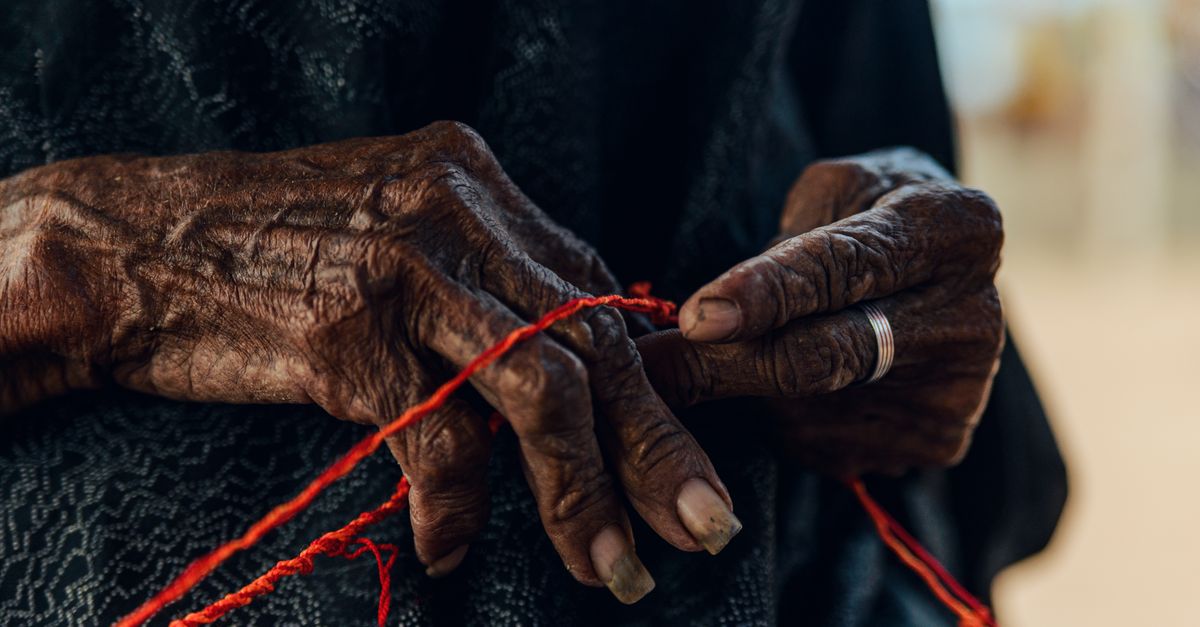
Grip strength naturally declines with age due to a combination of muscle mass loss (sarcopenia), reduced nerve signaling efficiency, and cumulative changes in connective tissue and joint cartilage. This decline typically accelerates after age 65 and affects everyday tasks like opening jars, buttoning clothing, and carrying groceries. Regular hand and forearm exercises — combined with adequate protein intake, physician guidance, and supportive therapies like massage — can slow functional decline and help maintain dexterity. Sudden grip weakness, particularly on one side, warrants prompt medical evaluation, as it can signal a neurological or cardiovascular event.
You reach for a jar of pasta sauce, grip it the way you always have, and nothing happens. The lid stays put. It's a small moment, but it's not isolated — it's the same struggle with a pill bottle cap last week, the button on a winter coat the week before that. If any of this sounds familiar, you're not imagining things, and you're not alone. Grip strength and hand stiffness in seniors are among the most common and underappreciated functional changes that come with aging, yet they rarely get the focused attention they deserve. This post covers why grip weakens with age, what the daily consequences actually look like, what exercises and therapies are backed by evidence, and when declining hand strength is a signal worth taking seriously.
Why Grip Strength Declines With Age
Grip weakness doesn't happen overnight, and it isn't caused by a single factor. It's the result of several overlapping physiological changes — most of which begin earlier than people expect and compound over time.
Muscle Mass Loss: The Sarcopenia Factor
Sarcopenia — the age-related loss of skeletal muscle mass and function — is the most direct contributor to weakening grip. Research tracking musculoskeletal aging consistently shows that adults begin losing muscle mass as early as their 30s, with the rate accelerating significantly after 60. The intrinsic muscles of the hand (the small muscles that control fine motor movement) and the forearm flexors (which drive gripping power) are both affected.
What makes this particularly relevant for grip is that the hand contains over 30 individual muscles, many of them small and highly specialized. These muscles are among the first to show functional decline when overall physical activity drops, since they rely heavily on daily use to maintain tone and responsiveness.
Nerve Signaling Changes
Muscle strength depends on more than just muscle tissue — it depends on the nerve signals that activate it. With age, peripheral nerve conduction slows, motor unit recruitment becomes less efficient, and the communication between the brain and hand muscles loses some of its precision. This is why older adults often describe their grip as feeling "unreliable" even when there's no pain involved: the mechanics are working, but the neural firing isn't as sharp.
This nerve-signaling change also affects proprioception — the body's sense of where the hand is and how much force it's applying. Reduced proprioception contributes to both grip weakness and the increased drop rate that many older adults notice when handling objects.
Joint and Connective Tissue Changes
The joints of the hand and wrist undergo gradual changes in cartilage, synovial fluid production, and ligament flexibility over time. Even without a diagnosed condition like arthritis or carpal tunnel syndrome, these structural shifts contribute to morning stiffness, reduced range of motion, and a general sense of tightness that makes full gripping effort harder to generate.
- Cartilage thins progressively in the finger and wrist joints, reducing cushioning during load-bearing grips
- Synovial fluid — the lubricant that keeps joints moving smoothly — decreases in volume and viscosity
- Tendons and ligaments lose elasticity, making full finger extension and flexion slower and stiffer, especially in the morning
- Fascial tissue in the palm and forearm can thicken slightly, restricting glide between layers
These changes don't necessarily cause pain on their own, but they reduce the mechanical efficiency of the grip and make sustained gripping tasks — carrying bags, holding tools, writing — more fatiguing than they used to be.
Daily Impact of Weakening Grip
Grip strength isn't just a gym metric. It's one of the most practical indicators of functional independence, and its decline touches nearly every domain of daily life. Occupational therapists frequently identify grip and hand dexterity as central to what they call "instrumental activities of daily living" — the tasks that allow someone to live independently.
Everyday Tasks That Become Harder
Most people notice grip decline first in the kitchen. Opening jars, turning stiff faucet handles, and peeling packaging all require sustained force that becomes progressively harder to generate. For someone living alone, an inability to open a medication bottle or prepare a meal independently has real consequences — these aren't small inconveniences.
Beyond the kitchen, hand stiffness and weakened grip affect:
- Dressing: Small buttons, zippers, clasps, and shoelaces require pinch strength and fine motor control that decline alongside gross grip strength
- Carrying: Reduced grip endurance means bags, groceries, and handrails feel heavier and harder to hold securely
- Writing and phone use: Prolonged pen or stylus grip becomes fatiguing; touchscreen precision drops with reduced fingertip sensitivity
- Fall prevention: A weakened grip means less ability to catch a railing or brace against a wall when balance is disrupted — a critical safety consideration
Grip Strength as a Health Indicator
Research in gerontology has consistently linked grip strength to broader health outcomes beyond hand function alone. Studies published in journals including The Lancet and the Journal of Gerontology have found associations between low grip strength and increased risk of cardiovascular events, longer hospital stays, and all-cause mortality in older adults. This doesn't mean weak grip causes these outcomes — but physicians increasingly view grip strength as a useful functional biomarker worth measuring and tracking.
Occupational therapists and physical therapists often use standardized grip dynamometry (measuring grip force in pounds or kilograms) to assess baseline function and track progress during rehabilitation. If your doctor hasn't mentioned grip strength at your last few checkups, it may be worth raising.
Exercises That Support Grip and Dexterity
The most evidence-backed intervention for grip strength decline is also the most accessible: progressive exercise targeting the hand, wrist, and forearm. The key word is progressive — gradual increases in resistance and duration, consistent with how skeletal muscle responds to load. One-time stretching or occasional squeezing doesn't produce lasting adaptation; regular, structured effort does.
Hand and Finger Exercises
These exercises require no equipment or inexpensive tools available at any pharmacy:
- Finger extensions with resistance band: Loop a rubber band around all five fingertips and open the hand fully against resistance. This targets the extensor muscles, which are often undertrained relative to the flexors. Perform 10–15 reps, 2–3 sets daily.
- Soft ball squeeze: Using a stress ball or therapy putty, squeeze firmly and hold for 3–5 seconds before releasing. This directly trains the finger flexors and intrinsic hand muscles. Aim for 10–15 reps per hand.
- Pinch grip: Pinch the ball or putty between the thumb and each finger individually. This isolates the pinch strength behind button-fastening and fine dexterity tasks.
- Finger taps: Tap each finger to the thumb in sequence, as quickly and cleanly as possible, then reverse direction. This maintains fine motor coordination — which works together with strength in functional grip.
- Towel wringing: Hold a small hand towel and twist it in alternating directions as if wringing out water. This engages forearm rotators and grip simultaneously — a highly functional movement pattern.
Forearm and Wrist Strengthening
Grip strength is generated not just in the hand but in the forearm flexors — the muscles that run from the elbow down to the wrist and fingers. Strengthening these muscles supports grip endurance, which is as important as peak grip force for daily tasks.
Three exercises cover the essential range:
- Wrist curls: Seated with a light dumbbell (1–3 lbs is appropriate for most older adults starting out), rest the forearm on the thigh and curl the wrist upward through a full range of motion. 10–15 reps, 2 sets.
- Reverse wrist curls: Same position, palm facing down, extending the wrist upward. This trains the extensor muscles on the back of the forearm, which balance the flexors and reduce strain.
- Wrist circles: Gently rotate the wrist in full circles in both directions. This maintains joint mobility and warms the tissue before more resistive work.
Occupational therapists typically recommend performing hand and forearm exercises in the late morning or midday, after morning stiffness has had time to ease, rather than immediately upon waking. A warm compress or brief soak in warm water applied beforehand can further reduce stiffness before exercise.
Stretching to Address Stiffness
Strength training alone doesn't address the stiffness component of hand and forearm aging. Flexibility work targeting the finger flexors, palm fascia, and wrist joint is equally important — particularly for people who spend extended time typing, writing, or doing other repetitive hand tasks.
- Prayer stretch: Press palms together in front of the chest, fingers pointing up, and slowly lower the hands toward the waist until a gentle stretch is felt through the inner wrist and palm. Hold 20–30 seconds.
- Finger extension stretch: Gently pull each finger backward toward the back of the hand, holding 10–15 seconds per finger. This stretches the flexor tendons individually.
- Forearm flexor stretch: Extend one arm forward with the palm up and gently press down on the fingers with the opposite hand until a stretch is felt along the inner forearm. Hold 20–30 seconds per side.
How Massage Supports Hand and Forearm Health
Exercise is the foundation, but massage — applied to the hands, forearms, and upper arms — can meaningfully support the exercise program by improving local circulation, reducing tissue tension, and making it more comfortable to exercise consistently. The goal isn't to replace effort with passive therapy; it's to create conditions where the muscles and connective tissue respond better to the work being done.
Circulation and Tissue Comfort
Hands and forearms are peripheral tissue — they sit at the end of the circulatory chain, farthest from the heart. Adequate blood flow is essential for delivering nutrients to muscle tissue and clearing metabolic byproducts after exercise. For older adults who may also have reduced cardiovascular efficiency, this peripheral circulation can be sluggish — contributing to the cold hands, slow recovery, and prolonged stiffness many seniors experience.
Applied oscillating massage to the forearm muscles helps stimulate local blood flow, warming the tissue and supporting circulation through the area before or after exercise. The vibration also works through the fascial and connective tissue layers of the forearm, which can become less pliable with age and with the cumulative tension of repetitive hand use.
Using a Body Massager on the Forearms
The forearms are a practical and comfortable target for a therapeutic body massager. Applying a professional-grade body massager to the forearm muscle belly — rather than directly over the wrist joint — addresses the muscular tension and circulation issues that contribute to grip stiffness and fatigue. The oscillating motion penetrates deep muscle layers, increasing local blood flow in muscles that are chronically loaded from daily hand tasks.
The MedMassager Body Massager is an FDA-registered Class I medical device that delivers clinic-grade oscillation with variable speed settings, making it adaptable to the sensitivity range that matters most for older adults — firm enough to be effective, controllable enough to stay comfortable. Many occupational therapists recommend therapeutic massage of the forearms as a complement to hand exercise programs, particularly for patients managing stiffness without a specific inflammatory diagnosis.
For those whose grip and hand stiffness is accompanied by upper arm and shoulder tension — a common pattern in seniors who compensate with shoulder muscles when grip weakens — the Body Massager can also be applied to the biceps and upper arm, extending the benefit upward through the kinetic chain. Explore the full range of therapeutic body massagers to find the right fit for your needs.
Self-Massage of the Hands
Direct hand massage — applied by a therapist, a partner, or the individual themselves — is a well-recognized component of occupational therapy programs for hand stiffness and function. For self-application, pressing the thumb of one hand firmly into the palm of the other and moving in small circles across the thenar eminence (the pad at the base of the thumb) addresses the intrinsic muscles directly. Working between the knuckles on the back of the hand with firm finger pressure helps mobilize the interosseous muscles.
Direct hand massage is best performed manually or with small handheld tools designed for that scale. The forearm work described above — using a body massager on the muscle belly proximal to the wrist — addresses the muscles that most directly drive grip function and is a practical complement to the hand-specific work.
When Grip Weakness Needs Medical Evaluation
Most grip decline in older adults is gradual and bilateral — it affects both hands roughly equally and progresses slowly over years. That pattern, while worth addressing, generally fits the profile of age-related functional change and responds well to the exercises and supportive strategies described above.
Certain presentations of grip weakness, however, require prompt medical evaluation rather than self-managed exercise. Contact your physician or go to urgent care if you notice:
- Sudden onset: Grip weakness that appears quickly — over hours or days rather than months — is not typical aging and needs evaluation
- One-sided weakness: Grip loss significantly greater in one hand than the other, especially if accompanied by facial drooping, speech changes, or arm weakness, can indicate a stroke or TIA and warrants emergency evaluation
- Associated numbness or pain: Grip weakness accompanied by numbness, tingling, or radiating pain may indicate nerve compression (cervical radiculopathy, thoracic outlet syndrome) or peripheral neuropathy requiring diagnosis
- Rapid progression: Decline that accelerates noticeably over weeks rather than years warrants workup for neuromuscular conditions
- Coordination changes: Difficulty with fine motor tasks beyond grip — dropping objects frequently, inability to coordinate finger movements — may reflect cerebellar or neurological changes
Occupational therapists are also valuable partners here. An OT can perform a structured functional hand assessment, measure grip dynamometry, identify compensation patterns you may not have noticed, and build a personalized exercise program based on your specific baseline. This is worth pursuing through your primary care physician or directly through an outpatient OT clinic if grip function is materially affecting your daily life.
Frequently Asked Questions
At what age does grip strength typically start to decline?
Grip strength begins to decline gradually as early as the mid-30s to 40s as part of the broader process of sarcopenia, but most people don't notice functional impact until their 60s or 70s, when the rate of muscle loss accelerates. The degree of decline varies significantly based on physical activity levels, diet, and overall health. Staying physically active throughout midlife substantially slows how quickly grip strength diminishes.
How often should seniors do hand strengthening exercises?
Most occupational therapists and physical therapists recommend hand and forearm exercises 3 to 5 days per week for older adults, with rest days to allow tissue recovery. A daily routine of light range-of-motion and stretching is generally safe every day, while resistance-based exercises like ball squeezes or wrist curls benefit from every-other-day spacing. Consistency over weeks is what produces lasting improvement, so a manageable routine done regularly outperforms an intensive routine done sporadically.
Can grip strength be regained after it has declined?
Yes — research on resistance training in older adults consistently shows that skeletal muscle responds to progressive loading at any age, including in people in their 80s and 90s. While it may not be possible to fully restore peak grip strength from decades earlier, meaningful functional improvement is achievable with consistent structured exercise. Even modest gains — enough to open a jar, carry a bag with confidence, or hold a handrail securely — translate directly into improved daily function and independence.
Why are my hands stiff in the morning but better later in the day?
Morning hand stiffness is caused by reduced joint fluid circulation and minor inflammatory fluid accumulation that settles in the joints during prolonged stillness overnight. As the hands warm up and begin moving, synovial fluid redistributes, blood flow increases, and tissue tension eases — typically within 30 to 60 minutes for age-related stiffness. Morning stiffness lasting longer than an hour, or accompanied by significant swelling or warmth in the joints, may indicate inflammatory arthritis and is worth discussing with a physician.
Does massage actually help with hand stiffness and grip function?
Massage applied to the forearm muscles and hands helps by improving local circulation, reducing muscular tension, and warming connective tissue — all of which can make the hands feel more functional and more comfortable for exercise. It is most effective as a complement to strengthening exercises rather than a standalone treatment, as passive therapy alone does not rebuild muscle mass or neural efficiency. Occupational therapists commonly include forearm and hand massage within hand rehabilitation programs.
Is it normal for one hand to be weaker than the other?
Some difference in grip strength between the dominant and non-dominant hand is normal — dominant hands typically test 10% to 15% stronger. A larger discrepancy, or one that develops or worsens noticeably, is worth investigating. Significant asymmetric grip weakness can indicate nerve compression, a prior injury with incomplete recovery, or — if sudden — a neurological event that requires immediate evaluation.
What foods or nutrients support grip strength and muscle health in older adults?
Adequate protein intake is the most well-supported nutritional factor for preserving muscle mass in older adults — geriatric nutrition specialists commonly recommend a range of 1.0 to 1.2 grams of protein per kilogram of body weight daily, as older adults generally need more than younger adults to stimulate the same degree of muscle protein synthesis. Vitamin D, which supports both muscle function and bone health, is frequently deficient in older adults and worth checking through bloodwork. Omega-3 fatty acids may also support muscle mass preservation based on emerging research, though exercise remains the primary driver.
The Bottom Line on Grip Strength and Hand Stiffness
Grip strength and hand stiffness in seniors are genuine functional concerns — not minor inconveniences to push through. The changes are real, the mechanisms are well understood, and they respond meaningfully to consistent attention.
Start with exercise. A basic routine of hand squeezes, finger extensions, wrist curls, and targeted stretching, done regularly under the guidance of a physician or occupational therapist, is the most effective tool available. Add supportive strategies — warm-up routines, adequate protein, improved sleep posture — to build around it.
For forearm tension and circulation support, a therapeutic body massager applied to the forearm muscles can complement the exercise program by warming tissue, supporting blood flow, and reducing the stiffness that makes daily activity harder. The MedMassager Body Massager collection includes FDA-registered Class I devices designed for this kind of targeted therapeutic use. If you're exploring options, the full MedMassager product range covers tools for forearm, back, and full-body support.
And if grip weakness appears suddenly, is notably one-sided, or progresses faster than gradual aging would explain — get it evaluated. Hands are worth the attention.
This content is for informational purposes only and is not intended as medical advice, diagnosis, or treatment. Always consult a qualified healthcare professional before starting any new treatment or therapy. MedMassager products are FDA-registered Class I medical devices.


