
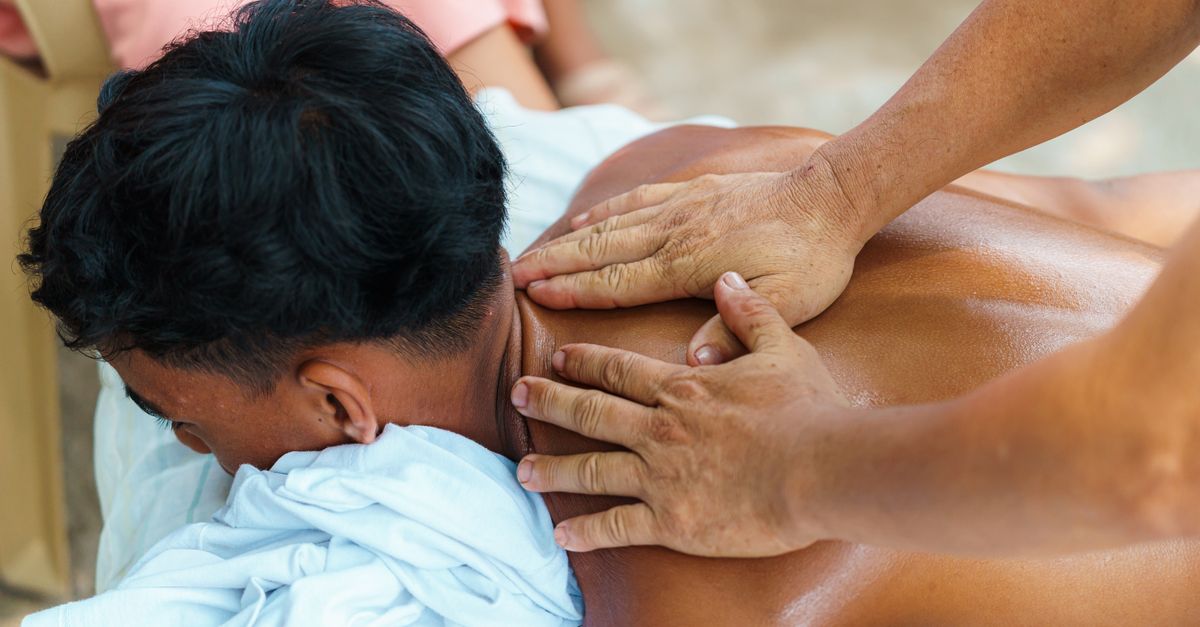
Glute massage hurts because the gluteal muscles are among the densest and deepest muscle groups in the body, requiring significant pressure to reach the tissue layers where tension accumulates. Prolonged sitting compresses these muscles for hours at a time, creating chronic tightness and localized sensitivity that makes even moderate pressure feel intense. The glutes also receive referred tenderness from the lower back and hip joints, meaning pain in those areas can make the gluteal muscles feel sore even before massage begins. If glute massage produces sharp or radiating pain that travels down the leg, that is a signal to stop and consult a healthcare provider rather than push through.
You sit down for what should be a straightforward self-massage session — and the moment any real pressure reaches your glutes, you wince. It feels disproportionate. Your shoulders took the same pressure without complaint. Your calves were fine. But the glutes? Even light contact stings. If that sounds familiar, you are not alone, and you are not imagining it. The answer has to do with muscle anatomy, the accumulated effects of prolonged sitting, and the way the hips and lower back refer tension into surrounding tissue. This post covers exactly why the glutes are so unexpectedly sensitive, what pressure and positioning adjustments make massage more tolerable, and one clear warning sign that tells you to stop rather than work through the discomfort.
Why Gluteal Muscles Are So Dense and Deep
The gluteal group is not a single muscle — it is three overlapping muscles of significantly different sizes, all stacked in layers over the hip joint. Understanding that architecture explains a lot about why pressure in this region lands differently than it does almost anywhere else.
The Three-Layer Structure
The gluteus maximus is the largest muscle in the human body by volume. It sits at the outermost layer, covering most of what you recognize as the buttock. Beneath it lies the gluteus medius, which runs from the iliac crest down to the greater trochanter of the femur and plays a primary role in hip stabilization. Deeper still is the gluteus minimus, a smaller muscle that works alongside the medius.
Layered between and beneath these muscles are several smaller, functionally critical muscles — the piriformis, the obturator internus, the gemelli, and the quadratus femoris. These deep hip external rotators are difficult to access from the surface and are extremely sensitive to pressure when tight. When you press into the glutes, you are not pressing into one tissue — you are compressing multiple layers of dense, heavy-use muscle all at once.
Why Density Creates More Sensitivity
Large, dense muscles require more pressure to reach the tissue where tension actually lives. But applying enough pressure to penetrate through the gluteus maximus means everything beneath it — including nerve-adjacent structures and the smaller deep rotators — receives that force too. If any of those deeper layers are already sensitized from overuse or compression, the sensation compounds quickly.
This is different from massaging a smaller, more superficial muscle like the forearm or calf, where moderate pressure lands in a single tissue layer. In the glutes, that same moderate pressure may contact three or four layers simultaneously — which is why the experience can feel unexpectedly intense or sharp.
How Prolonged Sitting Makes Glute Massage Hurt More
Most people who describe glute massage as painful spend a significant portion of their day seated. That is not a coincidence. Prolonged sitting creates specific conditions in the gluteal muscles that make them far more reactive to pressure.
Sustained Compression and Blood Flow
When you sit, the gluteal muscles bear your body weight directly. Hours of sustained compression reduce local blood flow through the tissue, creating a pattern of low-grade ischemia — restricted circulation in the muscle. Research on the effects of prolonged sitting on musculoskeletal health suggests that reduced blood flow to compressed muscle tissue contributes to the accumulation of metabolic byproducts and localized sensitivity.
Over time, that restricted circulation leaves the muscle in a state where even mild external pressure triggers a stronger pain response than it otherwise would. The tissue is already oxygen-deprived and sensitized — adding massage pressure on top of that creates a disproportionate sensation.
Muscle Shortening and Trigger Point Development
Prolonged sitting holds the gluteal muscles in a partially shortened or compressed position for extended periods. Unlike dynamic movement, which cycles a muscle through contraction and lengthening, sitting locks the tissue in place. This contributes to the formation of trigger points — localized, hyperirritable spots within the muscle that are significantly more painful to direct pressure than surrounding tissue.
Trigger points in the gluteus medius and minimus are among the most commonly reported musculoskeletal complaints. When a massager or manual pressure contacts one of these spots, the response is often a sharp, concentrated pain that feels out of proportion. This is normal physiology, not a sign that massage is damaging the tissue.
Hip Flexor Imbalance
Extended sitting also tightens the hip flexors — particularly the psoas and iliacus — while the glutes remain relatively inactive. This muscular imbalance means the gluteal muscles are asked to work harder when you do stand and move, while simultaneously being compressed during sitting. The result is a chronically stressed muscle that is primed to be sensitive to touch.
Referred Tenderness From the Lower Back and Hip
One reason glute massage can feel painful even before significant pressure is applied is that the gluteal region receives referred pain from adjacent structures that have nothing to do with the gluteal muscles themselves.
The Lower Back Connection
The lumbar spine and the sacroiliac (SI) joint sit in close anatomical proximity to the upper gluteal region. When the muscles and connective tissue around the lumbar spine are tight or inflamed, the pain signal does not stay neatly localized — it spreads into neighboring areas, including the gluteal muscles. This referred pain pattern is well documented in musculoskeletal medicine.
A person with lower back tightness may find their upper glutes feel tender on light contact, not because there is a problem in the gluteal muscle itself, but because the nervous system is already broadcasting a pain signal from the lumbar region into that area.
The Hip Joint and Bursa
The hip joint is surrounded by bursa — small fluid-filled sacs that reduce friction between structures. Bursitis, particularly trochanteric bursitis affecting the greater trochanter on the outer hip, commonly refers pain into the lateral gluteal region. If bursitis is present and undiagnosed, massage pressure over the outer glute will feel sharp and out of proportion because you are pressing near inflamed tissue.
Hip joint degeneration, labral issues, and tendinopathy of the gluteal tendons where they attach at the greater trochanter can all create referred tenderness into the gluteal muscles. The muscle itself may not be the primary problem — the pain is coming from a structure nearby. Common sources of referred gluteal tenderness include:
- Lower back muscle tightness and lumbar fascial tension
- Sacroiliac joint irritation or dysfunction
- Trochanteric bursitis along the outer hip
- Gluteal tendinopathy at the greater trochanter attachment
- Hip joint pathology, including early osteoarthritis or labral involvement
When any of these contributing sources are active, the gluteal muscles will feel tender to massage even if the muscles themselves are otherwise healthy. Knowing this helps frame the sensitivity — it is not always about what is happening in the glute tissue directly.
Pressure and Positioning Adjustments That Help
The goal is not to push through pain — it is to find the threshold where pressure produces a productive sensation without triggering a pain response that causes the surrounding muscles to tighten defensively. Several practical adjustments make a meaningful difference.
Start With Lower Pressure and Work Up Slowly
The most common mistake in glute massage is applying full pressure immediately. The gluteal muscles feel like they can handle intensity because they are so large — but if the tissue is already sensitized, that approach is counterproductive. Begin with the lowest effective pressure and hold it while the tissue has time to respond. Sustained low-pressure contact gives the muscle time to release gradually rather than brace against sudden intensity.
For people using a therapeutic massager, starting at a lower speed setting and allowing the oscillating vibration to work gradually into the tissue is more effective than pressing hard at a high setting. The MedMassager Body Massager collection includes adjustable speed ranges specifically to allow this kind of progressive application — beginning with gentle surface contact and increasing only as the tissue responds.
Positioning Adjustments That Reduce Tension
The position of the hip during massage significantly affects tissue tension. When you sit directly on the massage area, you are compressing the very muscles you are trying to release. Changing position so the gluteal muscles are unloaded — such as lying on your side with the top knee bent and resting forward — allows the tissue to be in a more relaxed state before pressure is applied. Effective positions include:
- Side-lying with top knee forward: Takes most of the load off the upper glute and allows the gluteus medius to relax
- Prone (face down): Unloads the glutes entirely; works well for the gluteus maximus with a massager applied from the side
- Seated on a firm surface with one leg crossed: Stretches the piriformis region and makes the deep external rotators more accessible
- Standing, weight shifted to the opposite side: Allows the working-side glute to relax while upright
The side-lying position is often the most effective for self-massage with a body massager because it keeps the target muscle unloaded while allowing consistent contact. A flat surface with a professional-grade body massager applied along the muscle belly — not directly on bony prominences — gives the best combination of access and comfort.
Work Around the Most Tender Spots First
Rather than pressing directly into the most painful area first, start at the edges of the muscle and work inward. Begin along the outer hip, then move toward the central gluteal mass, then toward the deeper structures if tolerated. This gives the surrounding tissue a chance to relax, which often reduces the intensity of the most tender spots by the time you reach them.
The MedMassager therapeutic massager line uses oscillating technology to deliver deep, controlled movement without requiring heavy manual force. The oscillation does the penetrating work, which means you can let the device contact the surface tissue without grinding in. This distinction matters in an area as sensitive as the glutes, where too much applied force can trigger a pain-avoidance response that tightens the muscle further.
When Glute Massage Pain Is a Reason to Stop
Soreness and sensitivity during glute massage are common and typically not concerning. But there is a specific pattern of pain that is a clear reason to stop — not push through.
Radiating Pain Into the Leg
If pressure on the gluteal region produces pain, numbness, tingling, or an electric sensation that travels down the back of the leg — into the hamstring, calf, or foot — that is a different category of experience than muscular tenderness. This pattern is consistent with sciatic nerve irritation, and applying additional massage pressure when the sciatic nerve is involved can worsen the irritation rather than resolve it.
The sciatic nerve runs through or adjacent to the piriformis muscle in the deep gluteal layer. In some people, the nerve passes directly through the piriformis muscle belly. When this muscle is tight or inflamed, it can compress the sciatic nerve — a condition often called piriformis syndrome. Massage of the glutes in this situation can sometimes help, but it must be applied carefully and with awareness of what is happening structurally.
Pain Patterns That Warrant Professional Evaluation
The following patterns are reasons to stop and seek evaluation from a physical therapist, orthopedic physician, or primary care provider before continuing:
- Sharp, shooting pain that travels below the knee during or immediately after massage
- Numbness or tingling in the foot, toes, or lower leg that appears during glute massage
- Pain that is significantly worse after massage than before, and does not resolve within a few hours
- A sensation of weakness in the leg associated with glute-area pressure
- Glute or hip pain that is constant, worsening over time, or present at rest without any obvious muscular cause
These patterns are not characteristic of typical muscular tenderness — they suggest nerve, joint, or structural involvement that needs assessment before applying mechanical pressure. A therapeutic body massager is built for people managing muscular tension and circulation needs, not as a substitute for clinical evaluation when nerve-related symptoms are present.
Frequently Asked Questions
Why are my glutes so sore to the touch even without exercising?
Gluteal soreness without exercise is commonly caused by prolonged sitting, which compresses the muscle tissue and restricts local blood flow for extended periods. This creates low-grade muscular sensitivity that can make the tissue tender to touch or pressure. Referred pain from the lower back, sacroiliac joint, or hip structures can also produce gluteal tenderness without any direct injury to the muscle itself.
Is it normal for glute massage to hurt more than other muscle groups?
Yes, and there is a straightforward anatomical explanation. The gluteal group is one of the densest, heaviest muscle groups in the body, and significant pressure is required to reach the deeper tissue layers where tension accumulates. That same pressure also contacts smaller, more sensitive structures beneath — making the overall sensation more intense than massage applied to shallower muscles.
Can sitting all day make glute massage more painful?
Prolonged sitting is one of the most consistent contributors to gluteal sensitivity. Hours of sustained compression reduce blood flow through the tissue and can lead to the formation of trigger points — localized, highly sensitive spots within the muscle. When pressure contacts these areas, the response is often sharper than it would be in a muscle that has been regularly used and adequately circulated throughout the day.
Why does glute massage feel like it goes into my hip or lower back?
The gluteal region shares significant neurological and fascial connections with the lower back and hip joint. Tension or irritation in the lumbar spine, sacroiliac joint, or hip structures can refer pain into the gluteal muscles, which is why massage pressure in one area may seem to radiate into adjacent regions. This referral pattern reflects how interconnected the musculature of the posterior pelvis actually is.
When should I stop massaging my glutes and see a doctor?
Stop and seek evaluation if you experience sharp or shooting pain that travels down the back of your leg, numbness or tingling in your lower leg or foot, or pain that is significantly worse after massage and does not resolve within a few hours. These patterns suggest possible sciatic nerve involvement, bursitis, or structural hip issues that require clinical assessment before massage continues.
What pressure level is best for massaging sore glutes?
For sensitive or tender gluteal tissue, starting with the lowest effective pressure and increasing only as the tissue responds is the most productive approach. Applying heavy pressure immediately often triggers a defensive muscle contraction that makes the session more painful and less effective. Positioning the body so the target muscle is unloaded — such as lying on your side — also allows you to work with less applied force for better results.
Does the piriformis muscle cause glute massage pain?
The piriformis is a small deep hip muscle that sits beneath the gluteus maximus, and it is frequently a source of significant tenderness when tight. Because of its proximity to the sciatic nerve, piriformis tension can produce both local gluteal pain and referral sensations that travel down the leg. If pressure in the deep gluteal area consistently reproduces leg symptoms, a physical therapist should evaluate whether the piriformis or sciatic nerve is involved before massage is continued.
The Bottom Line on Glute Massage Discomfort
Glute massage hurts more than expected because anatomy, physiology, and daily habits set the gluteal muscles up for heightened sensitivity. The sheer density and depth of the gluteal group means pressure has to travel through multiple tissue layers to do anything useful. Prolonged sitting compounds this by compressing the muscle for hours, reducing circulation, and creating trigger points that react strongly to direct contact. Referred tenderness from the lower back and hip means the glutes often arrive at any massage session already sensitized.
The most effective adjustments are positional and pressure-based: unload the muscle before applying contact, start at a lower intensity, and work around the edges before moving into the most reactive areas. A therapeutic massager with adjustable intensity allows you to find the productive threshold without forcing your way through a pain response that causes the muscle to tighten further. The MedMassager Body Massager uses oscillating technology to deliver deep, controlled vibration to dense muscle groups like the glutes without requiring excessive manual force.
If sharp or radiating leg pain appears during gluteal massage, treat that as a stop signal — not something to work through. Explore the full range of MedMassager therapeutic tools designed for people managing muscular tension, and when nerve-related symptoms are present, get a clinical evaluation before continuing.
This content is for informational purposes only and is not intended as medical advice, diagnosis, or treatment. Always consult a qualified healthcare professional before starting any new treatment or therapy. MedMassager products are FDA-registered Class I medical devices.


