
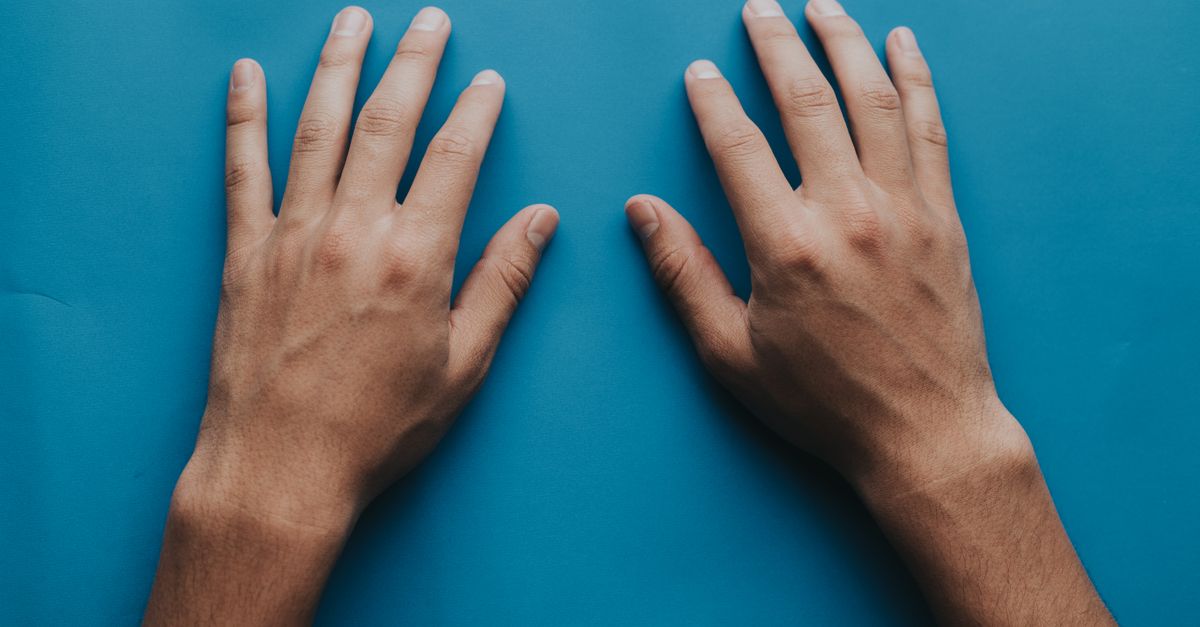
De Quervain's tenosynovitis is irritation and swelling of the tendons that run along the thumb side of the wrist, specifically the abductor pollicis longus and extensor pollicis brevis tendons, which share a narrow fibrous sheath at the wrist. Repetitive gripping, pinching, or lifting motions — common in new parents, grandparents caring for young children, and heavy smartphone users — inflame this sheath and cause pain that radiates from the thumb up the forearm. The condition is diagnosed clinically using the Finkelstein test, in which tucking the thumb into a fist and tilting the wrist toward the pinky side reproduces sharp pain at the thumb-side wrist. Treatment typically involves activity modification, thumb-spica splinting, anti-inflammatory measures, and massage targeting the forearm muscles that drive the irritated tendons rather than the inflamed sheath itself.
You've been picking up your newborn dozens of times a day, and now there's a sharp ache running from your thumb up to your wrist that won't quit. Or maybe it's months of cradling a phone in one hand that's finally caught up with you. Whatever the trigger, de Quervain's tenosynovitis has a way of announcing itself at exactly the wrong moment — when you reach for a coffee mug, twist a doorknob, or try to lift a child who has no interest in waiting for your wrist to feel better.
This guide covers what's actually happening inside that thumb-side wrist compartment, how to check yourself with the Finkelstein test, which activities to modify, when a thumb-spica splint makes sense, and how strategic forearm massage can relieve the muscle tension driving the problem — without aggravating the inflamed sheath itself.
What's Happening at the Thumb-Side Wrist
De Quervain's is not a general wrist pain condition, and it's not the same as carpal tunnel syndrome. It's a very specific irritation confined to a single anatomical compartment on the radial (thumb) side of the wrist. Understanding the anatomy makes the rest of the management approach make sense.
The Tendons and the Sheath
Two tendons are involved: the abductor pollicis longus (APL) and the extensor pollicis brevis (EPB). Both originate in the forearm, travel through a narrow fibrous tunnel called the first dorsal compartment at the wrist, and attach to the thumb. Their job is to pull the thumb away from the hand and extend it — motions you use constantly without realizing it.
When these tendons are overloaded through repetitive use, the synovial sheath surrounding them inside that tunnel becomes inflamed. The sheath swells, the tunnel effectively narrows, and every time the tendons move through it, they produce friction, pain, and sometimes a catching or creaking sensation called crepitus. The pain is localized to the bony bump on the thumb side of the wrist known as the radial styloid.
Who Gets It and Why
The condition has earned informal nicknames like "mommy thumb" and "gamer's thumb" because the loading pattern is so predictable. New parents and grandparents repeatedly lift infants with the wrists deviated and thumbs extended — exactly the position that loads the first dorsal compartment. Heavy smartphone users hold the phone with the pinky and type with the thumb extended in continuous small movements. Assembly workers, knitters, gardeners, and musicians round out the population.
- Repetitive lifting with the wrist in radial or ulnar deviation
- Prolonged pinching or gripping with the thumb abducted
- Extended thumb typing or swiping on touchscreens
- Activities involving twisting motions, like wringing laundry or turning tools
- Hormonal changes during pregnancy and the postpartum period, which affect tendon sheath laxity and fluid retention
Women are affected more often than men, and postpartum patients represent a significant subset. A combination of hormonal changes affecting connective tissue and the sudden onset of repetitive infant-lifting creates conditions that strongly favor tenosynovitis.
How De Quervain's Differs from Carpal Tunnel and General Wrist Pain
This distinction matters because the management is different. Carpal tunnel syndrome involves median nerve compression inside the carpal tunnel on the palm side of the wrist, producing numbness and tingling in the thumb, index, and middle fingers. De Quervain's is on the opposite side of the wrist entirely and produces aching or sharp pain rather than numbness as the primary symptom — though wrist numbness can occasionally accompany severe cases.
General wrist pain from sprains or arthritis lacks the anatomically specific location at the radial styloid that de Quervain's produces. If pressing directly on that bony prominence on the thumb side of your wrist reproduces your pain, the diagnosis is pointing clearly toward this condition rather than something more diffuse.
The Finkelstein Test: A Simple Self-Check
The Finkelstein test is the standard clinical maneuver used to identify de Quervain's tenosynovitis. It can be performed at home to get a clearer picture of what you're dealing with — though it's not a substitute for a clinical diagnosis from a physician or physical therapist.
How to Perform It
- Hold your affected hand out in front of you, palm facing up.
- Curl your thumb across your palm so that your fingers can wrap over it, making a fist with the thumb tucked inside.
- Slowly tilt your entire fist downward toward your pinky side (ulnar deviation), as if pouring something out of a glass.
- Notice where you feel pain — and how sharply it arrives.
A positive result means you feel a sharp, recreated pain directly over the radial styloid — that bony bump at the thumb side of your wrist. The test mechanically stretches the first dorsal compartment tendons, which pulls the inflamed sheath tight. If the pain is vague, diffuse, or located elsewhere in the wrist, de Quervain's may not be the primary source.
Interpreting the Result
A strongly positive Finkelstein test, combined with localized tenderness at the radial styloid and a history of repetitive thumb or wrist loading, is considered highly suggestive of de Quervain's tenosynovitis. The test can occasionally be positive in other conditions including intersection syndrome (which occurs slightly further up the forearm) and basal joint arthritis of the thumb, so clinical correlation matters.
If your Finkelstein test is strongly positive and symptoms have persisted beyond two to three weeks, a clinical evaluation is warranted. Persistent or worsening pain, numbness radiating into the thumb, or a visible lump or swelling at the wrist are all reasons to see a physician rather than continuing to self-manage.
Activity Modification and Splinting
The first and most important intervention for de Quervain's tenosynovitis is reducing the mechanical load on the irritated compartment. Without load reduction, no amount of massage or anti-inflammatory treatment will allow the sheath to calm down — the tendons will continue creating friction with every movement.
What to Modify
Effective activity modification means identifying the specific motions that load the first dorsal compartment and temporarily changing how you perform them. For new parents, this is the most challenging part — you can't stop lifting your child. But you can change how you do it.
- Infant lifting: Use both hands cupping the baby's torso rather than pinching under the arms with thumbs extended. Bringing the baby close to the body before lifting reduces the load on the thumb tendons.
- Smartphone use: Use both thumbs instead of one, or switch to voice input for prolonged messaging. Prop the phone on a surface rather than holding it extended in one hand.
- Gripping tasks: Use wider-handled tools where possible — a wider grip shifts load away from the thumb-opposition muscles.
- Twisting and wringing: Avoid or delegate during the acute phase.
The goal is not complete rest. Complete immobilization rarely helps tendon conditions and can lead to stiffness. The aim is strategic reduction of the specific loading patterns that are sustaining the inflammation.
Thumb-Spica Splinting
A thumb-spica splint immobilizes the thumb and wrist while leaving the fingers free. It holds the first dorsal compartment in a low-tension position, preventing the extreme thumb extension and wrist radial deviation that most aggravate the condition. Many clinicians recommend wearing it during activities that load the thumb and during sleep, when unconscious wrist positioning can repeatedly stress an inflamed tendon.
Off-the-shelf thumb-spica braces are widely available and appropriate for initial management. Custom thermoplastic splints fabricated by an occupational therapist provide a more precise fit and may be preferable for moderate to severe cases. Wearing the splint consistently for four to six weeks while continuing activity modification gives the sheath the best opportunity to reduce inflammation.
How Forearm Massage Helps — Without Touching the Sheath
This is the most misunderstood part of managing de Quervain's with massage. Massaging directly over the radial styloid — the precise location of the inflamed tendon sheath — is counterproductive during an acute flare. It adds mechanical stress to already-irritated tissue. The effective approach works upstream, on the forearm muscles that originate the irritated tendons.
The Forearm Muscle Connection
The abductor pollicis longus and extensor pollicis brevis don't start at the wrist — they originate in the middle third of the forearm. When these muscles are chronically overloaded by repetitive gripping and pinching, they develop tension and trigger points that increase the resting pull on their tendons. That increased tension means the tendons are under constant load even when you're not actively using your hand, which slows recovery and keeps the sheath irritated.
Releasing tension in the forearm extensors and the muscle bellies of the APL and EPB directly reduces the passive load on the first dorsal compartment. Less resting tension means less friction in the sheath and less inflammation sustained between activity bouts. This is the physiological rationale for forearm-focused massage in de Quervain's tenosynovitis.
Using the MedMassager Body Massager for Forearm Work
A professional-grade oscillating massager applied to the forearm extensor compartment is one of the most effective ways to address the muscle tension upstream of the irritated wrist. The MedMassager Body Massager delivers deep oscillating vibration that penetrates into the forearm muscle belly — working far more thoroughly than manual finger pressure can sustain over a session.
Oscillation creates repeated rhythmic movement through muscle tissue, increasing local blood flow and helping tight muscle fibers release without the sustained compressive load that can aggravate underlying inflammation. For de Quervain's specifically, this vibration reaches the surrounding forearm muscle tissue to improve circulation in areas that are stiff or overused — which is exactly the mechanism relevant to APL and EPB tension. The MedMassager Body Massager is an FDA-registered Class I medical device designed for therapeutic use on large and medium muscle groups, and the forearm extensor compartment responds well to it.
Where to Apply Massage — and Where Not To
Precision matters. The goal is to work the forearm muscles, not the wrist itself.
- Target area: The dorsal (back) surface of the forearm, roughly from two inches above the wrist up to the elbow — covering the extensor muscle bellies including the tissue containing the APL and EPB origins.
- Avoid: The wrist itself, and specifically the radial styloid area on the thumb side. Keep the massager at least two inches proximal to the wrist crease during active inflammation.
- Avoid: Any area that produces sharp or shooting pain — this signals proximity to an irritated structure.
- Also useful: The muscle belly of the thenar eminence (the pad at the base of the thumb on the palm) can be gently addressed by hand once acute inflammation subsides, as it contains muscles that work in concert with the APL.
If you're in an acute flare with significant swelling at the wrist, limit massage to areas well above the wrist and consider waiting until the acute phase settles before introducing oscillating pressure to the forearm.
Daily Routine for Managing De Quervain's at Home
Consistency matters more than intensity with de Quervain's tenosynovitis. A structured daily routine that combines load management, splinting, targeted massage, and gentle mobility work gives the inflamed sheath a real opportunity to recover.
Morning Protocol
- Apply your thumb-spica splint before any activity involving gripping or lifting.
- Spend two minutes on gentle wrist and forearm range-of-motion movements — slow circles and gentle flexion/extension — staying well short of the position that provokes pain.
- If using ice for inflammation, apply for ten to fifteen minutes to the radial styloid area before loading the wrist.
Forearm Massage Session (Once or Twice Daily)
- Position your arm palm-down on a table or your knee, with the forearm relaxed and supported.
- Using the MedMassager Body Massager, begin at the upper forearm near the elbow and apply gentle pressure with a slow gliding motion toward the mid-forearm.
- Work at a comfortable intensity — enough to feel the oscillation penetrating the muscle, not enough to cause sharp pain. On a 1–10 discomfort scale, stay at or below a 4.
- Spend two to three minutes on the dorsal forearm extensor compartment, pausing on particularly tense or tender spots for fifteen to twenty seconds before continuing.
- Stop approximately two inches above the wrist. Do not work over the wrist joint itself.
- Finish with a gentle passive stretch: extend the wrist slightly downward with the fingers relaxed to lengthen the extensor compartment after massage.
Evening Wind-Down
A second, shorter forearm massage session in the evening — three to five minutes — can help clear accumulated tension from daily use. This is also a good time to put the splint back on, since overnight splinting during the first few weeks of active management reduces the unconscious positions that sustain irritation through the night.
Avoid heavy gripping, pinching, or twisting tasks in the two hours before bed. If swelling has increased through the day, a brief ice application before the evening session helps reduce tissue reactivity before massage.
When to See a Physician
Home management is appropriate for mild to moderate de Quervain's tenosynovitis when symptoms are recent, clearly linked to a known repetitive activity, and improving with the approaches above. Several situations call for professional evaluation rather than continued self-treatment, however.
- Symptoms that have persisted beyond four to six weeks without improvement
- Numbness or tingling radiating into the thumb or fingers
- Visible swelling, a lump, or a snapping sensation at the wrist
- Pain that is severe or waking you from sleep
- Symptoms that worsen despite splinting and activity modification
- Uncertainty about the diagnosis — particularly if pain is diffuse, bilateral, or accompanied by joint swelling in multiple locations
A physician can confirm the diagnosis, rule out basal joint arthritis or intersection syndrome, and offer interventions beyond conservative care. Corticosteroid injection into the first dorsal compartment is highly effective for de Quervain's that doesn't respond to conservative management and often produces rapid relief. Surgery to release the tendon sheath is rarely necessary but is an option for refractory cases.
Physical and occupational therapists with hand specialization are also valuable partners — they can fabricate custom splints, guide graded return to activity, and teach ergonomic modifications specific to your daily tasks.
Frequently Asked Questions
How long does de Quervain's tenosynovitis take to heal?
Recovery time varies based on severity and how consistently load is reduced. Mild cases managed with splinting and activity modification often improve meaningfully within four to eight weeks. More established or severe cases can take several months, particularly when the provocative activity — like daily infant care — cannot be fully avoided. Corticosteroid injection, when conservative care is insufficient, often accelerates recovery significantly.
Can I massage de Quervain's tenosynovitis directly on the wrist?
Massaging directly over the inflamed tendon sheath at the wrist is not recommended during an active flare, as it adds mechanical stress to already-irritated tissue. The effective approach is to work the forearm extensor muscles that originate the affected tendons, staying at least two inches above the wrist crease. This upstream strategy reduces resting tendon tension without compressing inflamed tissue.
Is de Quervain's tenosynovitis the same as carpal tunnel syndrome?
No — they are distinct conditions involving different anatomy on opposite sides of the wrist. Carpal tunnel syndrome involves compression of the median nerve on the palm side of the wrist, primarily causing numbness and tingling in the first three fingers. De Quervain's tenosynovitis affects tendons on the thumb side of the wrist and produces pain rather than numbness as the primary symptom. Misidentifying one as the other leads to management strategies that don't address the actual problem.
What is the Finkelstein test and how accurate is it?
The Finkelstein test involves tucking the thumb into a fist and tilting the wrist toward the pinky side — a position that stretches the first dorsal compartment tendons. Sharp, localized pain at the thumb-side wrist during this maneuver is considered a positive result and is strongly associated with de Quervain's tenosynovitis. The test is highly sensitive for the condition but can occasionally produce positive results in other conditions such as basal joint arthritis, so clinical correlation with a healthcare provider is important for a definitive diagnosis.
Why do new parents and grandparents get de Quervain's so often?
Lifting an infant repeatedly with the wrists deviated and thumbs extended is one of the most consistent loading patterns for the first dorsal compartment tendons. New parents may perform this motion dozens of times per day, often through fatigue, which removes the natural protective coordination that limits overloading. In postpartum women, hormonal changes also affect tendon sheath laxity and fluid balance, increasing susceptibility to tenosynovitis even at lower repetition loads.
Should I wear a thumb-spica splint all day?
Most clinicians recommend wearing a thumb-spica splint during activities that load the thumb and wrist, and during sleep, rather than continuously around the clock. Constant immobilization can lead to stiffness and is generally unnecessary for mild to moderate cases. The splint's job is to prevent the extreme wrist and thumb positions that most stress the inflamed compartment — particularly during unavoidable daily tasks where those positions are hardest to control voluntarily.
Does de Quervain's tenosynovitis go away on its own?
In some cases — particularly when the provocative activity is temporary or can be substantially reduced — de Quervain's tenosynovitis does resolve with conservative management and time. When the repetitive loading pattern continues, as it often does for parents and people in certain occupations, the condition tends to persist or worsen without active management. Waiting without intervention typically extends recovery time and increases the likelihood of needing more aggressive treatment.
The Bottom Line on De Quervain's Tenosynovitis
De Quervain's tenosynovitis is one of the most anatomically specific wrist conditions there is — and that specificity is actually useful. Once you understand that the problem lives in a single tendon compartment on the thumb side of the wrist, driven by forearm muscles that originate well above the pain site, the management approach becomes logical: reduce load with activity modification and a thumb-spica splint, and address muscle tension upstream with targeted forearm massage rather than at the inflamed sheath itself.
The MedMassager Body Massager is built for exactly this kind of deep forearm work — delivering oscillating therapeutic vibration through muscle tissue in a way that sustained manual pressure rarely matches. It's an FDA-registered Class I therapeutic massager designed for people who need something more effective than a consumer-grade device for managing persistent muscle tension.
For mild to moderate cases, consistent home management gives most people meaningful improvement within weeks. For symptoms that persist, worsen, or involve numbness, a physician or hand-specialized occupational therapist should evaluate you — there are excellent clinical options, including corticosteroid injection, that work well when conservative care isn't enough. Explore the full range of MedMassager therapeutic tools designed for people managing tendon and muscle conditions throughout the body.
This content is for informational purposes only and is not intended as medical advice, diagnosis, or treatment. Always consult a qualified healthcare professional before starting any new treatment or therapy. MedMassager products are FDA-registered Class I medical devices.


