
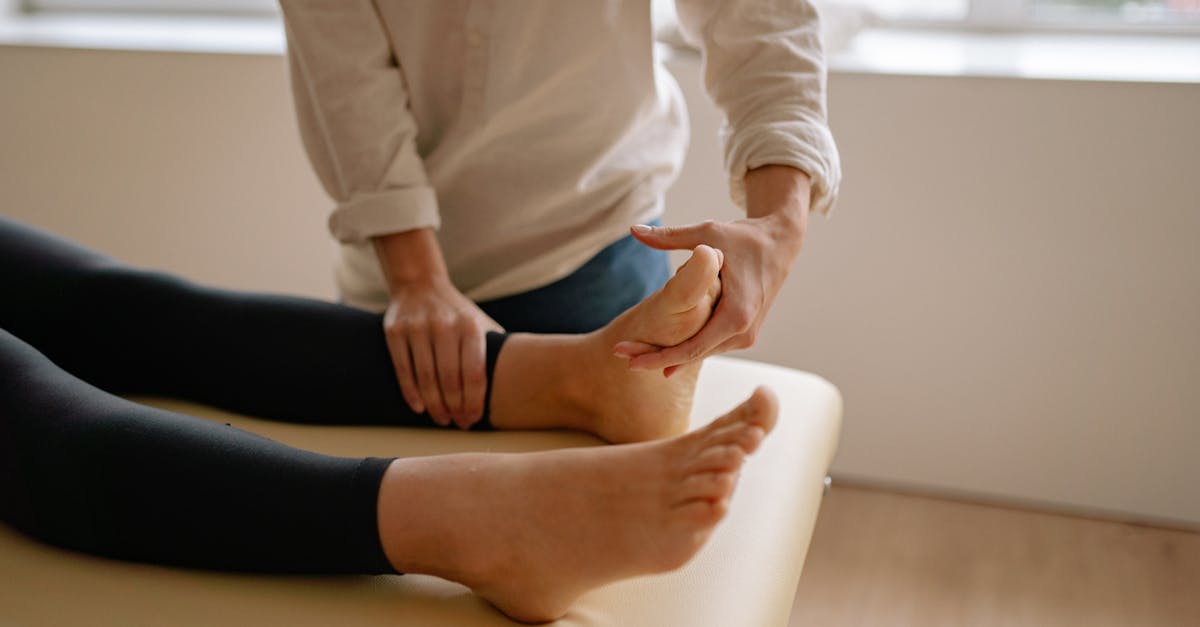
To massage a bunion, use your thumbs to apply gentle circular pressure around the base of the big toe joint, working in small motions along the sides of the bony protrusion. Gently flex and extend the big toe through its natural range of motion while massaging to help mobilize the joint and encourage blood flow to the area. Massage the surrounding soft tissue, including the arch and ball of the foot, to relieve tension in the muscles and tendons connected to the joint. Sessions of 5 to 10 minutes daily can help reduce discomfort and improve local circulation, though massage does not correct the underlying bony deformity.
If you've been living with a bunion, you already know the feeling — a dull ache at the base of your big toe that builds after a long day on your feet, a bump that makes certain shoes unbearable, and stiffness that lingers into the evening. Massaging a bunion won't straighten the joint, but it can meaningfully reduce the pain and tightness that make bunions so disruptive to daily life. The key is knowing where to apply pressure, how much force to use, and which techniques address the real source of discomfort rather than just the visible bump. This guide walks through the anatomy behind bunion pain, the most effective massage techniques, and how to build a simple daily routine that supports long-term relief.
Why Bunions Hurt: The Anatomy Behind the Pain
Understanding what's actually happening inside the foot makes it easier to massage effectively — and helps set realistic expectations about what massage can and cannot do.
What a Bunion Actually Is
A bunion, medically known as hallux valgus, is a structural deformity of the first metatarsophalangeal (MTP) joint — the large joint at the base of the big toe. Over time, the metatarsal bone drifts outward while the big toe angles inward toward the second toe. This creates the characteristic bony prominence on the medial side of the foot.
The deformity itself is skeletal. No amount of massage, stretching, or splinting will reposition bone. The pain associated with bunions is largely soft-tissue in origin, however, making it directly responsive to manual therapy.
Where the Pain Actually Comes From
The bony bump is visible, but it's rarely the primary pain generator. Most bunion discomfort comes from the surrounding soft tissue:
- Inflamed bursa — a fluid-filled sac over the joint that becomes irritated from friction and pressure
- Tight joint capsule — the connective tissue surrounding the MTP joint that stiffens as the deformity progresses
- Shortened intrinsic foot muscles — particularly the abductor hallucis, which runs along the inner arch and pulls on the big toe
- Plantar fascia tension — the thick band of tissue along the bottom of the foot that connects to the base of the toes
- Compensatory tightness in the calf and Achilles — as gait changes to offload the painful joint, neighboring structures become overworked
Bunions affect a significant portion of the adult population and are more common in people who wear narrow or ill-fitting footwear, though genetics and biomechanics also play a role. The inflammation and soft-tissue tightness that develop around the joint are what massage directly addresses.
When Massage Is and Isn't Appropriate
Massage is appropriate for chronic, low-grade bunion discomfort — the kind of aching stiffness that builds over the course of a day. It is not appropriate during an acute flare when the joint is hot, visibly swollen, or acutely inflamed. Applying pressure to actively inflamed tissue can worsen irritation. If your bunion is red, swollen, and warm to the touch, rest and ice take priority over massage until the acute phase passes.
How Massage Relieves Bunion Discomfort
Massage won't move bone, but it addresses the soft-tissue factors that account for most of the pain. The mechanisms are straightforward and well-supported by general physical therapy principles.
Improving Circulation Around the Joint
The MTP joint sits at the far end of the circulatory chain. Blood traveling from the heart has to reach the feet last, and return circulation depends heavily on muscle movement in the calf and foot. When a bunion causes compensatory changes in gait — favoring the outer edge of the foot, shortening stride, or avoiding full push-off — the intrinsic foot muscles become underused and local circulation slows.
Manual massage stimulates blood flow directly. Gentle pressure and circular motion increase local circulation to the joint capsule, bursa, and surrounding soft tissue. Better circulation means more oxygen and nutrients delivered to irritated tissue, and more efficient removal of inflammatory byproducts. For people who spend long hours on their feet, or who have conditions like diabetes that already compromise lower-extremity circulation, this effect is particularly meaningful.
Releasing Soft-Tissue Tension
The abductor hallucis — the muscle running along the inner arch — shortens progressively as hallux valgus develops, pulling the big toe further inward. Massaging this muscle directly can temporarily reduce its resting tension, which relieves some of the force pulling on the MTP joint. The plantar fascia also tightens in response to altered foot mechanics, and releasing it through massage can reduce referred pain into the forefoot and toes.
Improving Joint Mobility
Stiffness in the MTP joint limits the big toe's ability to extend during normal walking. This restriction — called limited dorsiflexion — forces compensatory movement through the ankle and knee, contributing to pain that can travel up the kinetic chain. Gentle passive mobilization of the big toe during massage helps maintain whatever range of motion is available and can reduce the rigidity that makes mornings and post-rest periods particularly painful.
How Oscillating Foot Massagers Support This Process
For people who find manual self-massage difficult — due to limited mobility, hand strength issues, or the awkwardness of reaching their own feet — an oscillating therapeutic foot massager can serve as a practical supplement to manual techniques. Oscillating motion keeps blood flowing through the foot instead of settling during rest, delivering the circulatory benefit even when active manual work isn't possible.
MedMassager's FDA-registered foot massagers use oscillating technology to deliver controlled, consistent movement through the foot and lower leg. The platform design engages the entire foot simultaneously, making it practical for daily use as part of a bunion management routine. This is not a substitute for targeted manual massage of the MTP joint itself, but it supports overall foot circulation in a way that complements the hands-on techniques described below.
How to Massage a Bunion: Step-by-Step
These techniques can be performed seated, with your foot resting on the opposite knee or on a folded towel in your lap. Use a small amount of lotion or oil to reduce skin friction. Start gently — the joint is often sensitive — and increase pressure only as tolerated.
Warm-Up: General Foot Circulation
- Begin by wrapping both hands around the entire foot and applying gentle compression for 10 to 15 seconds.
- Use your thumbs to make slow, broad strokes along the bottom of the foot from heel to toe — this is effleurage, a light gliding technique that increases surface circulation and prepares tissue for deeper work.
- Repeat 5 to 6 strokes. The goal here is warming the tissue, not applying targeted pressure yet.
Technique 1: Circular Pressure Around the Bunion
- Place one thumb on the medial side of the MTP joint — the inner edge of the bony bump — and the other thumb on the top of the joint.
- Apply gentle downward pressure and make small, slow circles. Move around the perimeter of the joint rather than pressing directly on the most prominent point of the bump.
- Work for 60 to 90 seconds in one direction, then reverse. Use moderate pressure — enough to feel the tissue move, not enough to cause sharp pain.
- If you find a particularly tender spot, hold gentle static pressure for 10 to 20 seconds before releasing. This sustained-pressure technique (similar to trigger point release) can help reduce localized muscle tension.
Technique 2: Abductor Hallucis Release
- Find the inner arch of your foot — the fleshy ridge running from the heel to the base of the big toe.
- Use your thumb to apply slow, firm strokes along this ridge from heel toward the toe. You're working the abductor hallucis muscle directly.
- Pause on any point that feels tight or tender and hold for 15 to 20 seconds.
- Repeat 4 to 5 strokes. This is often the most effective technique for reducing the pulling sensation on the MTP joint.
Technique 3: Passive Big Toe Mobilization
- Hold the base of the big toe firmly between your index finger and thumb.
- Slowly pull the toe away from the second toe (into abduction) and hold for 5 to 10 seconds. Do not force it — move only to the point of mild resistance.
- Gently flex the toe downward and then extend it upward, moving through whatever range is comfortable.
- Perform 8 to 10 repetitions. The goal is maintaining joint mobility, not forcing correction of the angle.
Cool-Down: Plantar Fascia Sweep
- Finish with broad thumb strokes across the ball of the foot and along the plantar fascia from the heel toward the toes.
- Apply light to moderate pressure and move slowly. Spend extra time on the area just below the base of the toes, where the fascia inserts.
- End with gentle foot-wide compression — both hands wrapped around the foot, holding for 10 seconds — before releasing.
Building a Daily Bunion Massage Routine
Consistency matters more than session length. A focused 5 to 10 minutes daily is more effective than an occasional 30-minute session because cumulative soft-tissue release and circulation improvement build over time.
Timing Your Sessions
The best times to massage a bunion are in the morning before getting out of bed and in the evening after removing your shoes. Morning massage helps reduce joint stiffness before the first steps of the day — particularly important because the MTP joint tends to seize up overnight. Evening massage clears the accumulated inflammation and tissue tension from a day of walking and standing.
Avoid massaging immediately after intense physical activity when inflammation is likely elevated. Skip massage entirely on days when the bunion is acutely flared, hot, or swollen.
Complementary Practices That Improve Results
Massage works best as part of a broader bunion management approach. Several complementary strategies significantly improve outcomes when combined with regular massage:
- Toe spacers: Silicone spacers worn between the big and second toe counteract the inward drift and reduce joint pressure during rest
- Wide-toe-box footwear: Eliminating pressure from narrow shoes reduces the friction and compression that drives inflammation
- Calf stretching: Tight calves restrict ankle dorsiflexion, which increases forefoot loading and worsens MTP joint stress — daily calf stretches address this upstream
- Foot strengthening: Exercises like toe spreads, towel scrunches, and short-foot exercises rebuild the intrinsic muscle strength that supports proper big toe alignment
- Therapeutic foot massagers: Using an oscillating foot massager for 10 to 15 minutes in the evening maintains lower-leg circulation and helps reduce the diffuse aching that often accompanies chronic bunion discomfort
When to See a Podiatrist
Self-massage is appropriate for managing mild to moderate bunion discomfort, but there are clear signals that professional evaluation is needed. See a podiatrist if:
- Pain is severe enough to limit normal walking
- The joint is frequently red, swollen, or warm
- The big toe has crossed over or under the second toe
- You've developed a hammertoe or other secondary deformity
- Conservative management including massage, footwear changes, and orthotics has not provided adequate relief after several months
Surgical correction (bunionectomy) is the only intervention that addresses the underlying bony deformity. For many people, consistent conservative management significantly reduces pain and slows deformity progression without requiring surgery.
Using a Foot Massager for Bunion Relief
Manual massage requires a level of flexibility and hand strength that not everyone has — particularly older adults, people managing arthritis, or those with back conditions that make bending difficult. Oscillating foot massagers offer a practical alternative that delivers consistent circulation benefits without requiring active effort.
The MedMassager Foot Massager delivers oscillating motion across the entire plantar surface of the foot. Unlike vibration platforms that produce rapid, shallow movement, MedMassager's oscillating action moves tissue at a depth more comparable to what a therapist achieves manually. Repeated foot motion activates the surrounding muscle tissue and promotes blood flow through the foot and lower leg — supporting the same circulatory goals as manual massage.
For people managing bunions alongside other foot conditions — plantar fasciitis, neuropathy, or general poor circulation from prolonged standing — the MedMassager therapeutic foot massager collection includes options suited to a range of needs and intensities. Using the foot massager for 10 to 15 minutes in the evening, after completing any targeted manual techniques, adds a low-effort circulatory maintenance layer to the daily routine.
If foot discomfort extends into the calf or lower leg, a body massager can address the compensatory tightness that develops in the calf and anterior tibialis when gait changes due to bunion pain. Calf activation pushes blood upward, supporting circulation throughout the lower leg and reducing the referred aching that can accompany chronic foot problems.
Frequently Asked Questions
Can massaging a bunion make it worse?
Gentle massage performed on a non-inflamed bunion is safe and generally beneficial. Massaging a bunion that is actively inflamed — red, hot, or acutely swollen — can increase irritation and should be avoided until the flare subsides. Using excessive pressure directly on the bony prominence itself can also aggravate the overlying bursa, so always work around the joint perimeter rather than pressing hard on the bump itself.
How often should I massage a bunion?
Daily massage sessions of 5 to 10 minutes tend to produce the best results. Consistency matters more than session length — regular daily work accumulates soft-tissue benefits over time in a way that occasional longer sessions do not. Morning and evening sessions are ideal: morning to reduce stiffness before the first steps of the day, and evening to clear inflammation and tissue tension that builds during walking and standing.
Will massaging a bunion straighten it?
No. A bunion is a bony structural deformity of the first metatarsophalangeal joint, and massage cannot reposition bone. Massage effectively addresses the soft-tissue pain that causes most day-to-day bunion discomfort — including tightness in the joint capsule, inflammation in the bursa, and tension in the intrinsic foot muscles. Surgical correction is the only intervention that addresses the skeletal deformity itself.
What is the best way to relieve bunion pain at home?
Effective home management combines several approaches: daily soft-tissue massage targeting the MTP joint and inner arch, toe spacers to reduce inward toe drift, wide-toe-box footwear that eliminates friction on the bump, calf stretching to reduce forefoot loading, and intrinsic foot strengthening exercises. Icing for 10 to 15 minutes after prolonged standing can help manage acute inflammation. Most people see meaningful relief from combining two or three of these strategies consistently over several weeks.
Should I massage a bunion with oil or lotion?
Using a small amount of massage oil or unscented lotion is recommended because it reduces skin friction and allows your thumbs to move smoothly across the tissue without dragging. It also allows you to apply firmer pressure without discomfort on the skin surface. Arnica gel is sometimes used for its traditional anti-inflammatory properties, though evidence for topical arnica specifically in bunion pain is limited.
Does stretching help bunions in addition to massage?
Yes. Stretching complements massage by addressing tightness in structures that connect to the MTP joint from further up the kinetic chain. Calf stretches improve ankle dorsiflexion and reduce forefoot pressure during walking. Toe abduction stretches — gently pulling the big toe away from the second toe and holding for 10 to 15 seconds — help maintain joint mobility and counteract the progressive inward drift. Most podiatrists recommend combining stretching and strengthening with any manual therapy approach.
Is a foot massager helpful for bunion pain?
An oscillating foot massager can support bunion management by maintaining circulation through the foot and lower leg, which helps reduce the diffuse aching that accompanies chronic bunion discomfort. It is not a substitute for targeted manual massage of the MTP joint — the hands-on techniques that specifically address the joint capsule, bursa, and abductor hallucis require more precise control than a platform massager provides. Used together, targeted manual massage and daily foot massager sessions address both the localized joint issue and overall lower-extremity circulation.
The Bottom Line
Learning how to massage a bunion correctly gives you a practical, daily tool for managing one of the most common sources of chronic foot pain. The techniques — circular pressure around the MTP joint, abductor hallucis release, and passive toe mobilization — directly address the soft-tissue tightness and circulation deficits that cause most bunion discomfort, even when the underlying bony deformity can't be changed.
Five to ten minutes each morning and evening, combined with sensible footwear and basic stretching, can meaningfully reduce day-to-day pain and slow the progression of stiffness over time.
For a low-effort complement to your manual routine, the MedMassager therapeutic foot massager delivers controlled oscillating motion across the full plantar surface — keeping blood moving through the foot and lower leg during the evening hours when it matters most. Explore the full range of MedMassager therapeutic massagers to find the option that fits your needs.
This content is for informational purposes only and is not intended as medical advice, diagnosis, or treatment. Always consult a qualified healthcare professional before starting any new treatment or therapy. MedMassager products are FDA-registered Class I medical devices.


