
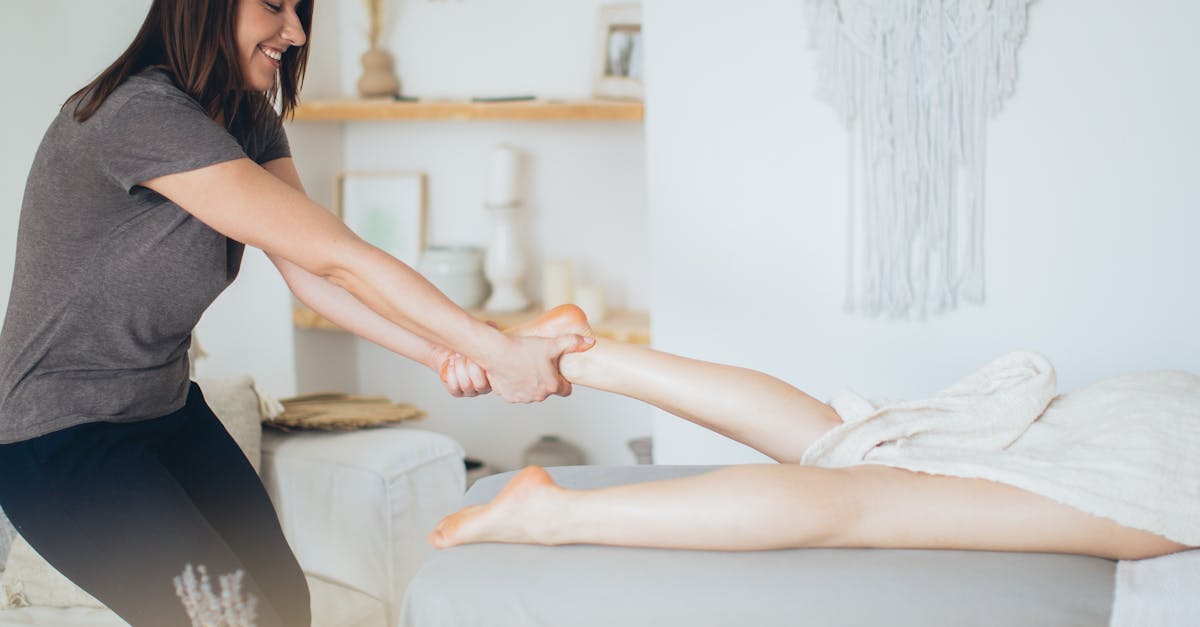
To massage swollen legs and feet, use gentle upward strokes starting at the foot and moving toward the heart, which encourages fluid drainage through the lymphatic system. Apply light-to-moderate pressure with your palms or thumbs, working from the toes up through the ankle, calf, and thigh in slow, deliberate movements. Avoid pressing directly on inflamed or broken skin, and always elevate the limb before and after massage to support drainage. If swelling is severe, sudden, or accompanied by pain, redness, or warmth, consult a healthcare provider before attempting self-massage.
Your feet feel tight in your shoes by afternoon. Your ankles look puffy by evening. By the time you sit down for the night, the skin around your lower legs feels stretched and uncomfortable — and you're not sure whether to push through or do something about it. Swollen legs and feet are one of the most common physical complaints among people who stand for long hours, sit at a desk all day, travel frequently, or manage underlying circulatory conditions. Learning how to massage swollen legs and feet correctly can make a meaningful difference in comfort and daily function — but technique matters. This guide covers the anatomy behind edema, how massage supports fluid movement, and a step-by-step routine you can use at home.
Why Legs and Feet Swell
Swelling in the lower extremities — clinically called peripheral edema — isn't a condition on its own. It's a symptom, and the cause shapes how you should address it. Understanding what's happening beneath the skin helps you use massage more effectively and know when to stop and seek medical guidance instead.
The Mechanics of Fluid Buildup
Your circulatory system is a two-way network. The heart pumps oxygen-rich blood outward through the arteries, and the veins return that blood back upward against gravity. The lymphatic system runs parallel, draining excess fluid from tissue and returning it to circulation. When either system slows down — due to inactivity, heat, prolonged pressure, or disease — fluid leaks from the capillaries and collects in surrounding tissue. Gravity pulls that excess fluid downward, which is why the feet and ankles are most commonly affected.
The venous return system relies heavily on muscle contractions in the calf and foot. Each time you take a step, your calf muscles squeeze the deep veins and push blood upward toward the heart. When you sit or stand still for extended periods, that pump stops working efficiently, and blood and interstitial fluid begin to pool in the lower leg.
Common Causes of Leg and Foot Swelling
Edema in the feet and legs has a wide range of causes. Some are situational and easily resolved; others are chronic and require ongoing management alongside medical care.
- Prolonged sitting or standing, especially in warm environments
- Long-distance travel (plane, car, or train)
- Pregnancy, particularly in the second and third trimesters
- Venous insufficiency, where leg veins struggle to return blood efficiently
- Lymphedema, caused by lymphatic system damage or dysfunction
- Medications including calcium channel blockers, corticosteroids, and certain antidepressants
- Heart, kidney, or liver conditions that affect fluid regulation
- Peripheral neuropathy affecting blood flow and sensation in the feet
- Sedentary lifestyle or reduced mobility in older adults
According to the Mayo Clinic, most cases of mild leg swelling are not dangerous and respond well to elevation, movement, and compression. However, sudden swelling in one leg — especially when accompanied by pain, warmth, or redness — can indicate deep vein thrombosis (DVT) and requires immediate medical evaluation.
When Massage Is Not Appropriate
Massage improves circulation and supports lymphatic drainage, but it is not appropriate for all types of swelling. Do not attempt to massage swollen legs or feet if any of the following apply:
- Sudden, asymmetric swelling in one limb only
- Skin that is red, hot, or significantly tender to the touch
- Open wounds, skin infections, or active inflammation
- Swelling linked to a diagnosed heart or kidney condition without physician clearance
In these situations, the underlying cause must be addressed medically before any physical therapy or massage is introduced.
How Massage Reduces Leg and Foot Swelling
When swelling results from fluid pooling in the tissue — rather than from acute injury or systemic disease — massage works through several overlapping physical mechanisms that collectively reduce that buildup.
Lymphatic Drainage and Fluid Movement
The lymphatic system does not have a central pump the way the cardiovascular system has the heart. Instead, lymph fluid moves through a network of vessels and nodes driven by muscle contractions, breathing, and external pressure. Manual lymphatic drainage (MLD) — a specialized massage technique — uses light, rhythmic strokes to stimulate lymph vessels just beneath the skin.
Research in physical therapy and manual medicine indicates that MLD reduces tissue swelling by actively encouraging lymph fluid out of congested areas and toward functioning lymph nodes. Even simplified versions of these techniques, applied consistently at home, can produce meaningful results for mild edema.
Improved Venous Return
Massage in the upward direction — from the foot toward the thigh — mechanically assists venous blood flow back toward the heart. This is the same principle behind compression stockings. When you apply pressure along the calf and squeeze gently upward, you're mimicking the action that walking normally provides. For people with reduced mobility, desk-bound jobs, or conditions that limit natural movement, this kind of assisted circulation can significantly reduce the fluid accumulation that builds over hours of inactivity.
Activating the Calf Muscle Pump
The calf muscles serve as the primary pump for venous return in the lower leg. Any movement that activates the calf — walking, heel raises, or therapeutic massage — triggers this mechanism. Repeated foot and calf movement pushes blood upward instead of letting it pool in the feet.
This is why even passive motion — such as oscillating foot massage — can support fluid movement in people who cannot exercise or stand for extended periods. For people managing conditions like diabetes, peripheral neuropathy, or limited mobility, therapeutic foot massagers designed to create continuous oscillating movement offer a passive way to keep that calf pump engaged without requiring physical exertion.
How to Massage Swollen Legs and Feet
The following technique is based on principles of manual lymphatic drainage and soft tissue massage. It is suitable for mild-to-moderate edema from lifestyle causes such as prolonged sitting, standing, or travel. Perform this routine once or twice daily for best results, ideally after elevating the legs for 15–20 minutes.
Before You Begin
- Elevate first. Lie down and prop your legs above heart level for at least 15 minutes before massaging. Gravity will begin moving fluid upward passively before you start.
- Choose a comfortable position. Sit upright in a chair with the leg relaxed, or lie on a bed with the leg slightly elevated on a pillow.
- Use a light lubricant. A small amount of lotion or massage oil reduces skin friction and makes strokes smoother. Avoid products with strong fragrance on sensitive or thin skin.
- Keep pressure light to moderate. Lymph vessels sit close to the surface. Deep, forceful pressure is counterproductive and can be painful on swollen tissue.
The Massage Sequence
- Activate the lymph nodes at the knee. Begin at the back of the knee, not the foot. Use two fingers to make 10–15 gentle circular motions over the popliteal lymph nodes (the soft hollow behind the knee). This opens the upstream drainage pathway before you begin moving fluid toward it.
- Stroke the calf upward. Place both palms at the ankle and apply gentle upward pressure, gliding slowly toward the back of the knee. Use a light-to-moderate squeeze as you move. Repeat this stroke 6–8 times before advancing to the next step.
- Work the ankle and lower leg. Using your thumbs or the heel of your palm, make slow circular strokes around the ankle — particularly around the medial and lateral malleolus (the bony prominences on either side of the ankle). Follow each circular motion with an upward stroke toward the calf.
- Address the top of the foot. Using your thumbs, stroke from the base of each toe toward the ankle in slow, firm glides. Work across the dorsal surface (top of the foot) systematically, covering the full width. Repeat 4–6 times per area.
- Squeeze and release the toes. Gently compress each toe from tip to base, then release. This minor pressure helps move stagnant fluid out of the small vessels at the tips of the toes — an area often overlooked.
- Finish with long upward strokes. End each session with 6–8 long, slow strokes running from the top of the foot all the way up the leg to the thigh, maintaining consistent upward direction. These full-length strokes give the mobilized fluid a final push in the right direction.
- Elevate again afterward. After your session, elevate the leg for another 10–15 minutes. This reinforces the drainage work you've done.
Duration and Frequency
A full session covering both legs takes approximately 15–20 minutes. Focus more time on whichever leg is more swollen. Once daily is a reasonable starting point; twice daily — once in the morning to reduce overnight pooling and once in the evening to address daytime accumulation — tends to produce better results for people with chronic edema.
Consistency matters more than session length. A 10-minute daily routine maintained over weeks will outperform an occasional longer session.
Using a Therapeutic Massager for Swelling
Manual self-massage is effective, but it's physically demanding to sustain — especially when treating both legs, managing fatigue, or dealing with reduced hand strength or dexterity. Therapeutic massagers offer a practical alternative that can be used consistently without physical effort.
Oscillating Foot Massagers
Oscillating foot massagers work by creating repeated, controlled movement through the foot and lower leg. This motion activates the calf muscles and keeps blood flowing through the feet when natural movement is limited. They are particularly useful for people who spend long hours sitting, those managing conditions like peripheral neuropathy or diabetes, or anyone recovering from an injury that limits their ability to walk.
MedMassager's FDA-registered foot massagers use oscillating technology to deliver clinic-grade therapeutic movement at home. The oscillating platform engages the entire foot and lower leg, passively activating the calf pump mechanism without requiring the user to stand or exercise. Many people managing chronic leg swelling use foot massagers as a daily tool to reduce end-of-day fluid accumulation.
Body Massagers for the Calf and Thigh
For swelling that extends up into the calf and lower thigh, a body massager applied directly to the muscle tissue can support circulation in a way that foot-only massage cannot. Oscillation penetrates deep muscle layers, increasing local blood flow in tissues affected by prolonged sitting or inactivity. This is particularly relevant for people with sedentary jobs or reduced mobility who develop swelling throughout the entire lower limb rather than just the foot and ankle.
MedMassager's Body Massager delivers professional-grade oscillating massage to the calf, thigh, and surrounding soft tissue, supporting venous return along the full length of the lower extremity.
What to Look for in a Therapeutic Massager for Edema
If you're considering a massager to support leg and foot swelling management, prioritize these features:
- Oscillating motion over simple vibration — oscillation creates movement through the full foot and calf, not just surface-level sensation
- Variable speed settings so you can begin at low intensity on swollen, sensitive tissue and adjust as needed
- FDA-registration as a Class I medical device, indicating the product has been reviewed as a therapeutic tool rather than a consumer wellness gadget
- Hands-free operation for the foot massager, allowing use while seated without manual effort
- Durable construction designed for daily use rather than occasional sessions
Strategies That Support Massage Results
Massage works best as part of a broader approach to managing leg and foot swelling. Several complementary strategies can reinforce what massage does during your daily routine.
Compression Garments
Graduated compression stockings or socks apply external pressure that prevents fluid from re-accumulating after drainage. They are most effective when worn during periods of activity or prolonged sitting — not while sleeping. The Mayo Clinic and most vascular specialists recommend compression as a first-line intervention for chronic venous insufficiency and mild lymphedema. Wearing compression after massage sessions helps maintain the drainage benefit.
Movement and Exercise
Even short bouts of movement have a measurable impact on edema. Ankle circles, heel raises, and brisk walking all activate the calf pump and move fluid upward. If you work at a desk, standing and walking for 2–5 minutes every hour can significantly reduce afternoon swelling compared to remaining seated. Swimming is particularly effective because the hydrostatic pressure of water compresses the entire lower leg while you move, providing natural resistance to fluid accumulation.
Dietary Considerations
Excess sodium causes the body to retain water, which worsens edema in susceptible individuals. Reducing sodium intake — particularly from processed foods, canned goods, and restaurant meals — can reduce the baseline level of fluid retention in your tissues. Staying well-hydrated also helps, as paradoxically, dehydration signals the body to hold onto more water.
Elevation
Elevating your legs above heart level for 20–30 minutes, two to three times per day, uses gravity to passively drain fluid from the lower extremity. This is one of the most consistently recommended interventions by physicians for mild peripheral edema and requires no equipment or technique. Combining elevation with massage — elevate first, massage second, elevate again — produces better results than either approach alone.
Frequently Asked Questions
How often should I massage swollen legs and feet?
For mild-to-moderate edema from lifestyle causes, once or twice daily is typically effective. Morning massage helps reduce fluid that has pooled overnight, while an evening session addresses swelling that builds throughout the day. Consistency over days and weeks produces better outcomes than infrequent longer sessions.
Should I massage toward the heart or away from it?
Always massage in an upward direction — from the foot toward the heart. This supports the natural direction of venous blood flow and lymphatic drainage. Massaging downward, toward the foot, can push fluid in the wrong direction and worsen swelling rather than reducing it.
Is it safe to massage legs swollen from a medical condition?
It depends on the condition. Swelling from lifestyle factors like prolonged sitting or travel generally responds well to gentle massage. However, swelling caused by heart failure, kidney disease, DVT, or active infection requires physician clearance before massage is appropriate. If you have a diagnosed medical condition contributing to your edema, consult your doctor before beginning a home massage routine.
Why do legs and feet swell more in hot weather?
Heat causes blood vessels to dilate (vasodilation), which increases fluid leakage from capillaries into surrounding tissue. The body's natural cooling response redistributes blood toward the skin, and the reduced efficiency of venous return in heat allows more fluid to pool in the lower extremities. Staying hydrated, avoiding prolonged standing in the heat, and wearing compression socks can help manage heat-related swelling.
Does elevating legs actually help with swelling?
Yes. Elevating the legs above heart level allows gravity to passively drain fluid from the lower extremity back toward the core and lymphatic system. Most vascular specialists recommend elevation as a first-line measure for mild peripheral edema. Consistent elevation — 20 to 30 minutes, two to three times per day — produces noticeable results within a few days for situational swelling.
Can a foot massager help with leg swelling?
An oscillating foot massager can support circulation in the lower leg by activating the calf muscle pump — the same mechanism engaged during walking. Repeated foot motion encourages blood to move upward rather than pool in the feet and ankles. This makes therapeutic foot massagers a useful tool for people with sedentary jobs, reduced mobility, or conditions that make regular walking difficult, though they should complement — not replace — medical management for significant edema.
What is the difference between lymphatic drainage massage and regular massage for swelling?
Manual lymphatic drainage (MLD) uses very light, rhythmic strokes specifically designed to stimulate lymph vessels near the surface of the skin and move fluid toward functioning lymph nodes. Regular deep-tissue or Swedish massage uses firmer pressure focused on muscle tissue and tends to address tension and blood flow rather than lymphatic drainage specifically. For edema management, lighter lymphatic drainage technique is more appropriate — firm pressure on swollen tissue can cause discomfort and is generally less effective for fluid reduction.
The Bottom Line
Knowing how to massage swollen legs and feet correctly — with upward strokes, appropriate pressure, and consistent technique — gives you a practical tool for managing one of the most common physical complaints in daily life. The key principles are simple: always work toward the heart, start gentle, elevate before and after, and stay consistent over time.
For people who need daily support without the physical effort of manual massage, therapeutic oscillating foot massagers provide passive calf activation and circulation support that fits easily into an evening routine. Those dealing with swelling through the calf and thigh may also benefit from a body massager that reaches the larger muscle groups of the lower leg.
If swelling is persistent, asymmetric, or accompanied by other symptoms, consult a healthcare provider before continuing self-treatment. Used appropriately, massage is a safe, accessible, and effective complement to the medical and lifestyle strategies that keep chronic edema in check.
This content is for informational purposes only and is not intended as medical advice, diagnosis, or treatment. Always consult a qualified healthcare professional before starting any new treatment or therapy. MedMassager products are FDA-registered Class I medical devices.


