
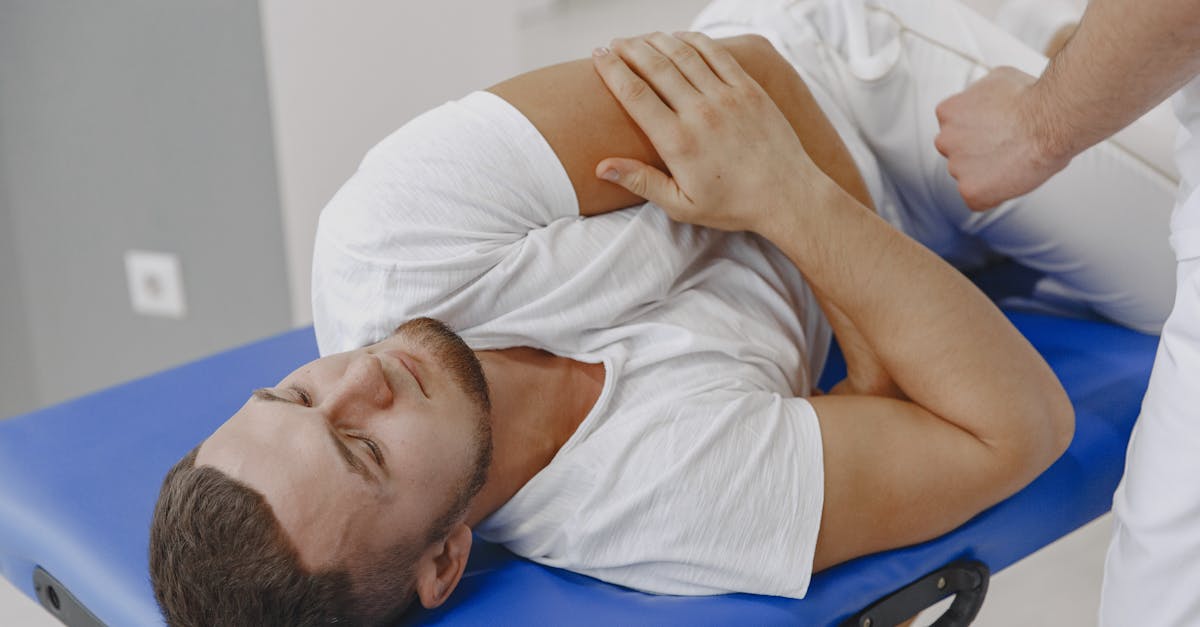
Rotator cuff massage involves applying therapeutic pressure and movement to the muscles and tendons surrounding the shoulder joint — specifically the supraspinatus, infraspinatus, teres minor, and subscapularis. Massage supports recovery from rotator cuff strain by increasing local blood flow to muscle tissue, reducing tension in surrounding muscles, and helping ease the stiffness that follows overuse or injury. It is most effective as part of a broader recovery plan that includes rest, physical therapy, and guidance from a healthcare provider.
Shoulder pain has a way of making itself known at the worst moments — reaching for something overhead, rolling over in bed, or simply lifting a bag. For many people, that pain traces back to the rotator cuff: a group of four muscles and their tendons that hold the shoulder together and power nearly every arm movement you make. Rotator cuff massage is one of the most commonly searched approaches to managing this kind of pain, and for good reason — targeted soft tissue work can meaningfully reduce muscle tension and support blood flow in a joint that needs both. This post covers how rotator cuff injuries happen, what massage does at the tissue level, how to apply it effectively, and what to watch for so you don't make an existing injury worse.
What Happens to the Rotator Cuff
Understanding rotator cuff anatomy helps explain why this injury is so persistent — and why massage plays the role it does in recovery.
The Four-Muscle Structure
The rotator cuff is made up of four muscles that originate on the shoulder blade (scapula) and attach to the head of the upper arm bone (humerus) via tendons. Each plays a specific role:
- Supraspinatus: initiates arm abduction (lifting the arm away from the body); the most commonly injured of the four
- Infraspinatus: controls external rotation; frequently involved in overhead-use injuries
- Teres minor: assists external rotation and stabilizes the humeral head
- Subscapularis: handles internal rotation and sits on the front surface of the shoulder blade
Together, these muscles compress the humeral head into the shoulder socket (glenoid), giving the joint both mobility and stability. When any one of them is strained, torn, or inflamed, the entire movement pattern of the shoulder is affected.
How Rotator Cuff Injuries Develop
Rotator cuff injuries fall into two broad categories: acute tears and degenerative wear. Acute injuries typically result from a sudden force — catching a fall with an outstretched arm, a direct blow to the shoulder, or a sharp overhead throw. Degenerative injuries build over time through repetitive overhead motion, poor posture, or the cumulative wear of aging on tendon tissue.
Rotator cuff problems are among the most common causes of shoulder pain and disability in adults, particularly those over 40. The supraspinatus tendon is especially vulnerable because it passes through a narrow channel under the acromion bone — a space that can become even tighter with poor shoulder mechanics or bone spur formation, a condition known as shoulder impingement.
Why the Surrounding Muscles Matter
One of the overlooked aspects of rotator cuff injury is what happens to the muscles around the primary injury site. When one muscle is strained or a tendon is inflamed, the shoulder compensates — neighboring muscles take on more load than they're designed for, leading to tightness in the trapezius, deltoid, and rhomboids. The biceps tendon, which attaches near the rotator cuff, often becomes irritated as well.
This compensation pattern is why people with a supraspinatus strain often report neck stiffness, upper back tightness, and pain radiating down the arm. Addressing only the primary injury while ignoring the surrounding muscle tension slows recovery considerably.
How Massage Supports Rotator Cuff Recovery
Massage doesn't repair torn tissue — that requires time, and sometimes surgical intervention. What it does is address the muscular and circulatory environment around the injury, which significantly affects how quickly and comfortably recovery progresses.
Increasing Local Blood Flow
Tendons have a relatively poor blood supply compared to muscle tissue, which is one reason rotator cuff injuries heal slowly. The muscles surrounding the tendons respond well to massage — mechanical movement stimulates muscle tissue, helping circulate blood through areas that commonly tighten from overuse or injury. Improved circulation brings oxygen and nutrients to the repair site while helping clear metabolic waste that accumulates in tight, underused tissue.
For people using a therapeutic massager on the shoulder and upper back, oscillating motion penetrates deep muscle layers, increasing local blood flow in muscles that have tightened from compensation patterns. This is distinct from surface-level vibration — deeper oscillation reaches the muscle belly rather than just the skin and superficial fascia.
Reducing Muscle Guarding
Muscle guarding is the involuntary tightening that happens around an injured area as the body tries to protect it. In the short term, this is protective. Over days and weeks, sustained guarding reduces range of motion, creates secondary trigger points, and adds compressive load to the very joint you're trying to protect.
Therapeutic massage — whether performed manually by a physical therapist or with an FDA-registered body massager — helps interrupt this guarding cycle by mechanically loosening muscle tissue. This reduces resting tension in muscles like the trapezius and levator scapulae that commonly overload when the rotator cuff is compromised.
Managing Referred Pain and Trigger Points
The rotator cuff muscles — particularly the infraspinatus and subscapularis — are well-documented sources of referred pain. Trigger points in the infraspinatus can send pain down the front of the shoulder and into the upper arm, mimicking biceps tendon pain. Subscapularis trigger points often refer pain to the back of the shoulder and wrist.
Targeted pressure on these trigger points, held for 30–60 seconds and then released, can interrupt the pain-referral cycle. This is a core technique in physical therapy and sports massage for shoulder injuries, and it's one reason skilled manual work — or a massager with sufficient penetration depth — outperforms surface-level heat pads or foam rolling in this area.
Techniques and Tools for Shoulder Massage
The right approach depends on the stage of injury, the specific muscles involved, and whether you're working with a practitioner or managing at home.
Professional Manual Techniques
A licensed massage therapist or physical therapist working on a rotator cuff injury typically uses a combination of approaches:
- Cross-fiber friction: pressure applied perpendicular to the direction of tendon fibers, used near the tendon insertion points to stimulate tissue remodeling
- Myofascial release: sustained, low-load stretching of the fascia surrounding the shoulder and scapula
- Trigger point release: sustained pressure on active trigger points in the infraspinatus, subscapularis, and teres minor
- Effleurage and petrissage: broad gliding and kneading strokes used on the trapezius, deltoid, and upper back to reduce general muscular tension
Professional sessions are especially valuable in the early-to-mid stages of recovery, when understanding the injury's exact location and severity matters most. A physical therapist can also integrate massage with targeted strengthening exercises — the combination addresses both the mechanical and circulatory dimensions of recovery.
At-Home Massage with a Body Massager
Between professional sessions — or for ongoing management of chronic shoulder tightness — a therapeutic body massager can be highly effective on the surrounding muscle groups. The key word is surrounding: direct pressure over an acutely inflamed tendon should be avoided until the acute phase has passed, typically 48–72 hours after an acute strain flare.
The MedMassager Body Massager uses oscillating technology to deliver deep, controlled movement into large muscle groups like the trapezius, deltoid, and rhomboids — the muscles that bear the compensation load during rotator cuff recovery. For reaching the posterior shoulder and scapular area, a long-handled massager is particularly practical. You can position it against the upper back and posterior shoulder while seated, keeping your arm in a relaxed, low position that doesn't stress the rotator cuff.
Self-Massage Techniques Without Tools
For those without a massager, several manual self-massage approaches work reasonably well for the trapezius and accessible parts of the posterior shoulder:
- Cross-arm reach: use the opposite hand to apply sustained pressure to the posterior shoulder and infraspinatus area
- Lacrosse ball against a wall: lean into a lacrosse ball placed between your upper back and a wall, slowly shifting position to find and hold trigger points for 30–60 seconds
- Neck and upper trap massage: use fingertip pressure in small circular motions along the upper trapezius from the base of the skull to the shoulder
These techniques reach the superficial and mid-depth muscle layers well. For deeper tissue work on the subscapularis — which sits under the shoulder blade, against the ribcage — professional manual therapy remains the most effective option.
Using a Massager Safely Near a Rotator Cuff Injury
Therapeutic massage is beneficial for rotator cuff recovery — but timing, placement, and intensity all matter. Applied incorrectly, massage can aggravate an inflamed tendon or delay healing.
What to Avoid and When
During the acute inflammatory phase — typically the first 48–72 hours after an acute injury or flare — direct pressure over the injured tendon can increase irritation. This is not the time for deep tissue work on the shoulder itself. Focus any massage on the neck, upper back, and unaffected arm during this window.
Once the acute phase passes, massage on the surrounding muscle groups is appropriate. If you're unsure whether your injury is still in the acute phase, a simple rule applies: if the shoulder is warm to the touch, visibly swollen, or significantly more painful than your baseline, hold off on direct massage and consult a physical therapist or orthopedic specialist.
Positioning for Comfort and Access
Positioning matters when applying a body massager to the shoulder region. A few guidelines:
- Keep the arm relaxed and at your side or in your lap — avoid positions that require holding the arm overhead or across your body for extended periods
- For the posterior shoulder and trapezius, a seated position with the massager handle angled over the shoulder works well
- Avoid pressing directly over the front of the shoulder joint (AC joint area) with high-intensity settings
- Start at the lowest intensity setting and increase only if it feels comfortable — more pressure is not always more effective
When to Work with a Professional
Massage is a valuable adjunct — not a standalone treatment for significant rotator cuff injuries. Seek evaluation from a physical therapist or orthopedic physician if any of the following apply:
- Pain is severe, constant, or waking you at night
- You have significant weakness when lifting the arm or rotating it outward
- Shoulder pain followed a specific traumatic event such as a fall or collision
- Symptoms haven't improved after 2–3 weeks of conservative care
A full-thickness rotator cuff tear requires medical evaluation and may require surgical repair — massage and home therapy are not substitutes for proper diagnosis. MRI is typically the diagnostic tool of choice for confirming tear severity.
Building a Shoulder Recovery Routine
Consistent, moderate intervention beats occasional intense treatment for rotator cuff recovery. A practical routine combines massage with movement and load management.
Daily Routine Structure
A reasonable daily shoulder recovery routine might look like this:
- Morning: 5–10 minutes of gentle range-of-motion exercises prescribed by a physical therapist (pendulum swings, wall walks, external rotation with a band)
- Midday or afternoon: 10–15 minutes with a therapeutic body massager on the upper trapezius, posterior shoulder, and rhomboids — not directly on an acutely inflamed tendon
- Evening: 5 minutes of self-massage with the opposite hand or a lacrosse ball on accessible trigger points; follow with gentle static stretching of the chest and anterior shoulder to counteract forward posture
Frequency matters more than session length. Two 10-minute massager sessions per day will typically outperform one 30-minute session for managing muscle tightness and circulation.
Pairing Massage with Strengthening
Massage alone doesn't rebuild the strength or tendon resilience the rotator cuff needs to function under load. Research in physical therapy consistently supports eccentric strengthening exercises — where the muscle is loaded as it lengthens — as particularly effective for tendon recovery. Exercises like side-lying external rotation, prone Y-T-W movements, and resistance-band internal and external rotation are standard components of rotator cuff rehabilitation.
Massage performed before strengthening exercises can help warm up the tissue and reduce initial stiffness. Applied after exercise, it helps manage soreness and supports the circulation needed for tissue adaptation. Your physical therapist can guide appropriate sequencing based on where you are in recovery.
Managing Posture to Reduce Ongoing Load
Poor posture is one of the most overlooked contributors to persistent rotator cuff problems. Forward head posture and rounded shoulders alter the mechanics of the shoulder joint, narrowing the subacromial space and increasing impingement risk. Massage can relieve the chest tightness and trapezius tension that pulls the shoulder forward — but if posture isn't addressed, the tension will return.
Simple adjustments like raising monitor height, using a lumbar support cushion, and doing doorway chest stretches daily can meaningfully reduce the postural load on the rotator cuff. For customers managing ongoing shoulder tension alongside neck and upper trap involvement, the MedMassager Neck Massager addresses that companion area with targeted rotating nodes and built-in heat, helping loosen tight muscles and support blood flow through the neck and into the upper shoulder.
Frequently Asked Questions
Is massage good for a rotator cuff injury?
Massage can be beneficial for rotator cuff injuries, particularly for reducing tension in the surrounding muscles that compensate when the cuff is strained. It supports local blood flow, reduces muscle guarding, and helps manage trigger point pain in the infraspinatus, subscapularis, and trapezius. Direct deep pressure over an acutely inflamed tendon should be avoided in the first 48–72 hours after injury — focus on surrounding muscle groups during that window.
Where do you massage a rotator cuff injury?
For rotator cuff injuries, massage is most effective on the posterior shoulder (infraspinatus and teres minor), the upper trapezius, the deltoid, and the rhomboids. The subscapularis, located on the front surface of the shoulder blade, can be accessed with professional manual therapy but is difficult to reach with self-massage. Avoid pressing directly over the acromion or the front of the shoulder joint during active inflammation.
Can massage make a rotator cuff injury worse?
Massage can aggravate a rotator cuff injury if applied with too much pressure directly over an acutely inflamed tendon, or if used during the acute inflammatory phase before swelling has subsided. Working around the injury — on the surrounding muscles rather than the tendon itself — reduces this risk considerably. If massage consistently increases your pain or causes new symptoms, stop and consult a physical therapist or orthopedic physician.
How often should you massage a rotator cuff injury?
For most people managing a rotator cuff strain, massage to the surrounding muscle groups can be done daily — two shorter sessions of 10–15 minutes typically work better than one long session. Professional manual therapy once or twice per week complements daily at-home work well. As the injury improves, frequency can be reduced to maintenance levels based on how the shoulder feels.
What is the difference between a rotator cuff strain and a tear?
A rotator cuff strain involves overstretching or partial damage to the muscle fibers or tendons without a complete break in the tissue. A tear — which can be partial or full-thickness — involves an actual disruption of the tendon or muscle tissue. Strains typically respond well to conservative management including rest, physical therapy, and massage. Full-thickness tears often require surgical evaluation and cannot be effectively managed with massage alone.
Does heat or cold help a rotator cuff injury more?
Both have a role, depending on the stage of injury. Ice is generally preferred in the first 48–72 hours after an acute injury or flare to limit inflammation and swelling. Heat becomes more appropriate in the subacute and chronic phases, where it helps relax muscle tension and improve blood flow to stiff tissue. Many people find that applying heat before massage produces the best results for ongoing shoulder tightness.
Can I use a massager on my shoulder if I haven't seen a doctor?
For mild to moderate shoulder muscle tightness, using a therapeutic massager on the surrounding muscle groups is generally low-risk. However, if you have significant weakness in the arm, severe or constant pain, pain following a traumatic event, or symptoms that haven't improved after two to three weeks, professional evaluation should come first. A physical therapist or orthopedic physician can confirm the nature and severity of the injury before you establish a home care routine.
The Bottom Line on Rotator Cuff Massage
Rotator cuff massage works best as part of a broader recovery plan — not as a standalone treatment. It addresses the muscular tension, compensation patterns, and circulation limitations that slow recovery and extend pain, particularly in the muscles surrounding the primary injury site.
For at-home management, a therapeutic body massager gives you consistent, daily access to the upper back and shoulder muscles that carry the most load during rotator cuff recovery. The MedMassager Body Massager delivers deep oscillating movement into those muscle groups — the trapezius, rhomboids, posterior shoulder, and deltoid — helping maintain blood flow and reduce the kind of chronic tightness that builds between physical therapy sessions.
If you're also dealing with neck and upper trap involvement alongside your shoulder pain, the MedMassager Neck Massager addresses that companion area with targeted rotating nodes and built-in heat.
This content is for informational purposes only and is not intended as medical advice, diagnosis, or treatment. Always consult a qualified healthcare professional before starting any new treatment or therapy. MedMassager products are FDA-registered Class I medical devices.


