
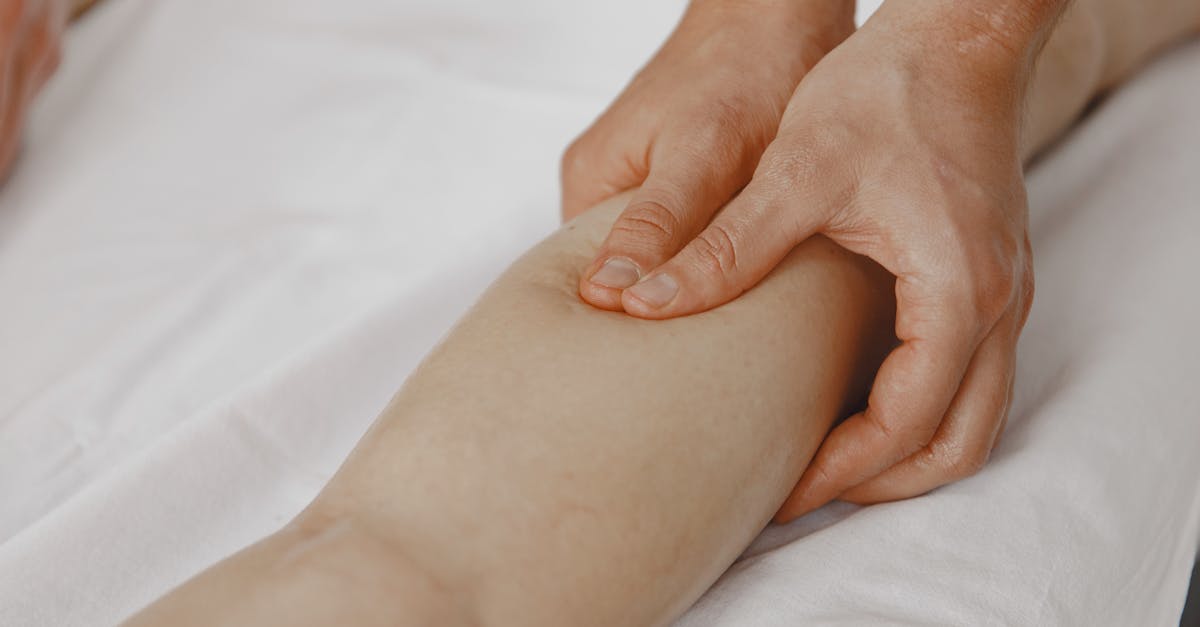
Self-massage for restless leg syndrome involves applying manual pressure, kneading, and rhythmic movement to the calves, shins, hamstrings, and feet to help relieve the crawling, tingling, or aching sensations that characterize RLS. Massage works by stimulating blood flow through the lower limbs, which can interrupt the discomfort cycle that typically worsens during periods of rest or inactivity. Most people find the greatest relief by massaging in the evening before bed, when RLS symptoms are most likely to flare. Consistent daily practice combined with light movement tends to produce better results than occasional massage alone.
You finally sit down to relax after a long day, and within minutes your legs feel like they need to move immediately. That restless, crawling sensation that makes it impossible to stay still is the hallmark of restless leg syndrome, and for millions of people it turns evenings and bedtime into a source of real frustration. Self-massage for restless leg syndrome is one of the most accessible, drug-free tools available for managing those moments — something you can do on your couch, in bed, or in a chair without any equipment. This guide covers the techniques that work, the muscle groups to target, how to build them into a daily routine, and when a therapeutic massager might help you go further.
Why RLS Feels Worse at Night
Understanding why RLS behaves the way it does makes it much easier to time your massage practice effectively and manage expectations about what it can accomplish.
The Circadian Pattern of RLS
Restless leg syndrome follows a predictable daily rhythm. Symptoms consistently worsen in the late afternoon and evening hours, typically peaking between 10 p.m. and 4 a.m. Researchers believe this pattern is tied to dopamine fluctuations — dopamine levels naturally dip in the evening, and since dopamine plays a central role in controlling leg movement, the timing makes neurological sense.
The condition affects an estimated 5–10% of adults in the United States, according to the National Institute of Neurological Disorders and Stroke (NINDS). It is more common in women and tends to become more frequent with age, though it can appear at any stage of life.
Inactivity as a Trigger
One of the clearest RLS triggers is prolonged stillness. Sitting for a long flight, resting on the couch, or lying in bed creates the exact conditions that allow symptoms to build. This is why movement — even simple leg motion — provides temporary relief. Walking, stretching, or shaking out the legs interrupts the neurological signal that generates the urge.
Massage works in a similar way. By physically stimulating the muscles and increasing blood movement through the lower limbs, massage introduces enough sensory input and circulatory activity to quiet the restless sensation, at least temporarily.
The Role of Blood Flow
Some research points to impaired circulation in the lower limbs as a contributing factor in RLS symptom intensity. When blood sits in the calves and feet during rest, the lack of movement can amplify discomfort. Applying pressure and kneading to these areas encourages blood to move upward, reducing that pooling effect and supporting the kind of circulation your legs would normally get from walking.
Self-Massage Techniques for RLS
There is no single universally correct massage technique for RLS — different approaches work for different people, and combining several methods in one session tends to be more effective than relying on just one.
Calf Kneading
The calves are usually the primary target because they hold significant tension and are the muscle group most directly associated with RLS sensations. To knead your calf, sit in a chair or on the floor with your leg extended or bent at the knee. Use both hands to grip the calf muscle — thumbs on one side, fingers on the other — and work in a slow, firm, circular motion from the ankle up toward the back of the knee.
Spend 3 to 5 minutes per leg. Adjust pressure based on comfort — firm enough to feel the muscle working but not sharp or painful. This technique directly stimulates blood flow through the gastrocnemius and soleus muscles, the two primary calf muscles involved in pushing blood upward through the lower limb.
Long Effleurage Strokes
Effleurage is a sweeping, gliding stroke used in Swedish massage. For the legs, this means using the flat of both palms to stroke upward from the ankle toward the knee, then from the knee toward the hip. Always stroke toward the heart — this direction supports venous blood return rather than working against it.
This technique works well as both a warm-up before deeper work and a cool-down after kneading. It covers a larger surface area of the leg quickly and introduces a calming sensory input that many people with RLS find immediately soothing.
Thumb Pressure on the Shin and Foot
The tibialis anterior — the muscle running along the outer shin — is frequently overlooked but often tense in people with RLS. Use your thumbs to apply slow, firm pressure along this muscle from the ankle upward in short intervals, pausing on any point that feels particularly tight.
Follow this with attention to the foot itself. The arch, heel, and ball of the foot contain a dense network of nerve endings. Using your thumbs to work across the arch in short circular strokes, combined with gentle toe stretches, can extend the circulation benefit down through the foot and may help reduce the tingling or crawling sensation that sometimes concentrates there.
Hamstring and Thigh Release
RLS does not always stay confined to the calves. In more severe cases, the restless sensation travels into the thighs, making it worth including the upper leg in your massage routine. Sit with your leg flat and use both palms to compress and release the hamstring (back of the thigh) with slow, even pressure. A tennis ball or foam roller under the thigh while seated can apply sustained pressure without fatiguing your hands.
Building a Daily Massage Routine
Technique matters, but consistency matters more. A moderate massage practice done nightly will almost always outperform an intensive one done sporadically.
Timing Your Sessions
The most effective window for RLS self-massage is roughly 30 to 60 minutes before you expect symptoms to begin — for most people, this means early evening rather than waiting until the sensations are already intense. Once RLS symptoms are fully active, massage may still help, but it typically requires more effort and time to produce relief.
A second shorter session immediately before sleep can help reduce the likelihood of symptoms disrupting sleep onset. Even 5 to 10 minutes of calf kneading in bed can make a measurable difference.
A Simple Evening Routine
- Warm up with effleurage — 2 minutes of upward gliding strokes on both legs
- Knead the calves — 3 to 5 minutes per leg using firm circular pressure
- Work the shin and tibialis — 2 minutes of thumb pressure along each outer shin
- Massage the feet — 2 to 3 minutes on each foot, focusing on the arch and heel
- Finish with hamstrings — 2 minutes of compression strokes on each thigh
- Cool down with effleurage — 1 to 2 minutes of light gliding strokes to finish
Total time per session: approximately 20 to 25 minutes. This is manageable as a regular habit and comprehensive enough to cover all the muscle groups commonly involved in RLS.
Pairing Massage with Complementary Practices
Self-massage works best as part of a broader evening wind-down strategy. Practices commonly combined with massage for RLS relief include:
- Light walking for 10 to 15 minutes before the massage session
- Calf stretches and ankle circles to loosen the lower leg before kneading
- Warm (not hot) foot soaks or a warm bath to relax muscle tissue before massage
- Avoiding caffeine and alcohol in the hours before bed, both of which can worsen RLS symptoms
- Consistent sleep and wake times to reduce circadian disruption
None of these replace medical evaluation or prescribed treatment. Combined with massage, they form a supportive evening routine that many people with RLS find genuinely helpful for managing the night-to-night intensity of their symptoms.
When a Therapeutic Massager Can Help
Manual self-massage has real limitations — primarily fatigue. Kneading your own legs for 20 minutes every night is physically tiring, and the pressure you can apply to your own calves is limited by hand strength and awkward angles. This is where a therapeutic foot massager can extend what you're able to do on your own.
How Oscillation Works for RLS
MedMassager foot massagers use oscillating technology rather than simple vibration. The distinction matters for RLS: oscillation produces a rhythmic, wave-like movement that engages the calf muscles with each motion cycle. Repeated foot motion activates the calf muscles, pushing blood upward instead of letting it pool in the feet — which directly addresses the circulatory component that contributes to RLS symptoms.
In a published clinical study (PMC7117678), participants using MedMassager experienced significant improvement in RLS symptom severity compared to a control group over a 4-week randomized trial. This makes MedMassager one of the few FDA-registered therapeutic foot massagers with published clinical evidence specifically relevant to RLS.
Using a Foot Massager Alongside Manual Technique
The most practical approach is to combine both. Use manual kneading to work the calves, shins, and hamstrings — areas a foot massager cannot reach directly — then use the foot massager to handle the feet and lower leg activation without fatiguing your hands. Continuous oscillation introduces low-level movement in the legs, helping prevent prolonged stillness during the rest period when symptoms are most likely to build.
This pairing is especially useful for people whose RLS symptoms include significant foot-level tingling or crawling sensations. The MedMassager Foot Massager operates at variable speeds, allowing you to find the intensity level that feels most effective without overstimulating sensitive tissue.
Body Massager for Upper Leg and Back Involvement
For people who experience RLS sensations that extend into the thighs or lower back, a therapeutic body massager reaches the larger muscle groups that hand massage alone struggles to address effectively. Deep oscillation increases local blood flow in large muscle groups, supporting recovery during rest — which is precisely the window when RLS tends to flare.
Signs It's Time to See a Doctor
Self-massage is a legitimate supportive tool for RLS, but it is not a substitute for medical evaluation — especially if your symptoms are worsening or significantly disrupting your sleep.
Consider consulting a neurologist or sleep medicine specialist if you notice any of the following:
- Symptoms occurring during the day as well as the evening
- RLS sensations that have extended into the arms or torso
- Consistent sleep disruption lasting more than a few weeks
- Symptoms that don't respond at all to movement or massage
- A family history of RLS alongside rapidly worsening severity
- Pregnancy-related RLS (which often requires specific management guidance)
RLS is also associated with underlying conditions including iron deficiency anemia, kidney disease, and peripheral neuropathy. A blood panel checking ferritin levels is often one of the first things a physician will order, since low iron stores — even without clinical anemia — are a known contributor to RLS severity. Addressing an underlying deficiency can significantly reduce symptom intensity on its own.
Frequently Asked Questions
Does massaging your legs help restless leg syndrome?
Yes, massage can help reduce the intensity of RLS symptoms for many people, primarily by stimulating blood flow through the calves and feet and introducing sensory input that interrupts the urge-to-move cycle. Most people find relief is temporary rather than permanent, but consistent nightly massage can reduce how frequently and intensely symptoms occur. Combining massage with light movement and good sleep habits tends to produce the most noticeable results.
Where exactly should I massage for restless leg syndrome?
The calves are the most important area to target, as they are most commonly involved in RLS sensations and play a direct role in pushing blood back through the lower limbs. The feet, shins (tibialis anterior), and hamstrings are also worth including, particularly if your symptoms extend beyond the lower calf. Working from the foot upward in the direction of blood flow toward the heart tends to be most effective.
What time of day is best for RLS self-massage?
Evening massage — roughly 30 to 60 minutes before your symptoms typically start — is the most effective timing for most people with RLS. This proactive approach addresses the circulatory and muscle tension factors before the restless sensation becomes difficult to manage. A shorter follow-up session immediately before sleep can further reduce the chance of symptoms disrupting sleep onset.
Can stretching combined with massage help RLS more than massage alone?
Yes, combining calf stretches and ankle mobility work with massage tends to produce better results than either alone. Stretching lengthens the muscle tissue before you knead it, which allows deeper pressure to penetrate more effectively and may increase the circulation response. A few minutes of calf stretches and ankle circles before your massage session is a simple addition that many people with RLS find noticeably beneficial.
Is RLS caused by poor circulation?
RLS is primarily a neurological condition involving dopamine signaling in the brain, not a circulatory disorder. However, impaired blood flow in the lower limbs can worsen symptom severity, which is why movement and massage — both of which support circulation — provide relief. Underlying conditions like iron deficiency, peripheral neuropathy, and kidney disease are also associated with RLS, so medical evaluation is important for anyone with persistent or worsening symptoms.
How long does it take for massage to relieve RLS symptoms?
Many people experience partial relief within a few minutes of beginning calf kneading, though the full effect typically builds over a 15 to 20 minute session. For some people, relief lasts through the night; for others, symptoms return within a few hours. Consistency matters — most people report that nightly massage produces a gradual reduction in overall symptom intensity over days to weeks, rather than dramatic improvement after a single session.
Does a foot massager help with restless leg syndrome?
A therapeutic foot massager can extend the benefit of manual massage by introducing continuous oscillating movement to the feet and lower legs without fatiguing the hands — particularly useful for longer sessions or for people with limited hand strength. The rhythmic motion engages the calf muscles and supports blood movement through the lower limbs, addressing the circulatory component that contributes to RLS sensations during rest. MedMassager's FDA-registered foot massager is the only one of its category with a published clinical study specifically examining RLS symptom relief.
The Bottom Line
Self-massage for restless leg syndrome is one of the most practical, accessible tools available for managing the nightly discomfort that makes this condition so disruptive. Focusing on the calves, feet, shins, and hamstrings with consistent technique — applied in the evening before symptoms peak — gives you the best chance of meaningful, nightly relief.
Consistency is the variable that matters most. A 20-minute routine done regularly will do far more for your RLS than a longer session done occasionally. Pair it with light walking, calf stretches, and a stable sleep schedule for a comprehensive approach that addresses the condition from multiple directions.
When manual massage alone isn't enough — or when hand fatigue makes nightly sessions unsustainable — a therapeutic massager can fill the gap. Explore the MedMassager Foot Massager collection to find an FDA-registered option built specifically for the kind of continuous, low-level leg movement that clinical research has shown to benefit people managing RLS.
This content is for informational purposes only and is not intended as medical advice, diagnosis, or treatment. Always consult a qualified healthcare professional before starting any new treatment or therapy. MedMassager products are FDA-registered Class I medical devices.


