
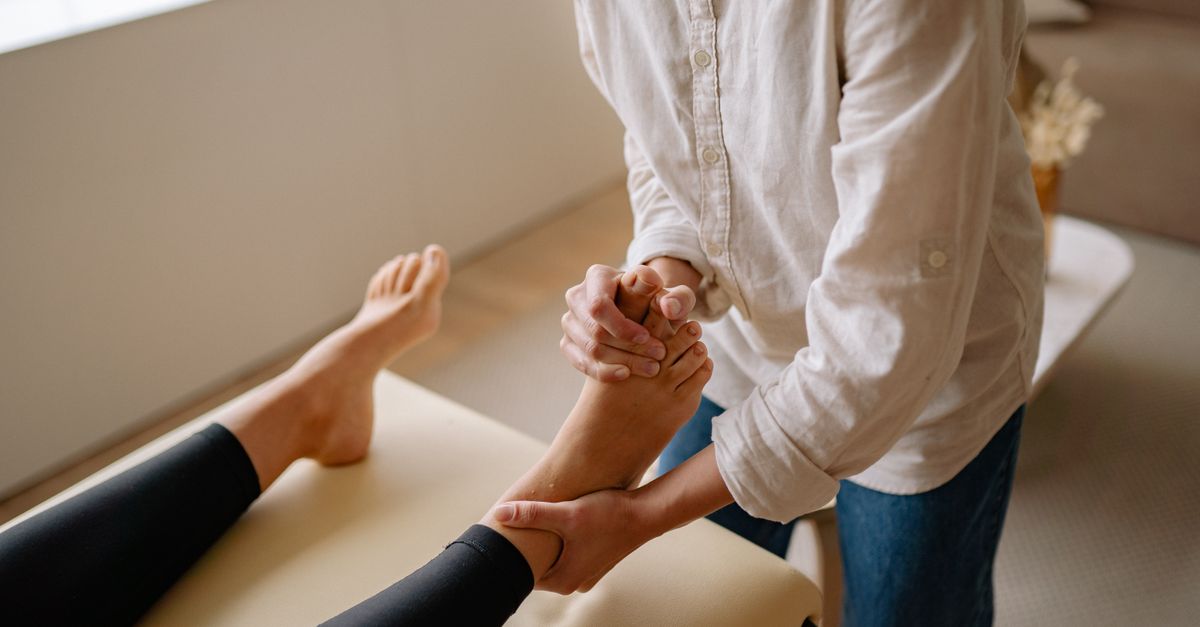
Shin splints, clinically known as medial tibial stress syndrome, occur when repetitive loading causes stress at the muscle attachment points along the inner tibia, resulting in inflammation and pain along the lower leg. Massage therapy can support recovery by targeting the surrounding calf musculature and soft tissue rather than applying direct pressure to the painful shin ridge. The goal of massage for shin splints is to reduce the muscular tension that increases load on the tibia, improving blood flow to the lower leg and supporting the body's natural healing process. Direct massage over the bone itself is not recommended, and pain that is focal, point-specific, or present at rest should be evaluated by a physician to rule out a tibial stress fracture before any massage or return to activity.
That aching line of pain along the inner edge of your lower leg is one of the most common complaints among new runners, walkers who've ramped up their mileage, and people who spend long shifts on hard floors. Shin splints have a way of appearing right when you've finally committed to a new activity — a few weeks into a walking program, the first month of a running plan, or after a week of unusually high step counts. The pain is hard to ignore, and the instinct to push through it can make things significantly worse.
Understanding what's actually happening in the lower leg — and how massage fits into recovery — makes the difference between a brief setback and a recurring problem. This post covers the mechanics behind shin splints, the role of rest and gradual return, footwear considerations, and how targeted massage of the calf and surrounding musculature can reduce load on the tibia and support recovery. It also covers one critical warning sign that means massage should stop immediately.
What Causes Shin Splints?
Shin splints are not a single injury — they're a stress response. Understanding the underlying mechanics helps explain why certain recovery strategies work and why others can make things worse.
The Tibial Attachment Problem
Medial tibial stress syndrome develops when repetitive impact loads exceed what the bone and surrounding tissue can absorb. The tibia — the large bone running along the front of the lower leg — serves as the attachment point for several muscles, including the soleus and the flexor digitorum longus. When those muscles contract repeatedly under load, they pull on the tibial periosteum, the dense connective tissue covering the bone.
Over time, this repeated traction stress causes microscopic damage to the periosteum and the underlying bone cortex. The result is the characteristic aching, diffuse tenderness along the inner border of the shin — usually the lower two-thirds of the tibia. It's not a muscle cramp and it's not a pulled muscle. It's an overuse stress response at the bone-tissue interface.
Why New or Increased Activity Is the Trigger
The most consistent risk factor for shin splints is a rapid increase in training load. Bone and connective tissue adapt more slowly than cardiovascular fitness or muscle strength. Someone starting a couch-to-5K program may feel aerobically capable of increasing mileage before their lower legs have structurally adapted to the demand.
Common scenarios that trigger shin splints include:
- Starting a running or walking program after a long sedentary period
- Increasing weekly mileage too quickly (more than roughly 10% per week is a commonly cited guideline)
- Transitioning from soft to hard surfaces (trail to pavement, grass to gym floor)
- Beginning a job or shift that requires prolonged standing on concrete
- Military recruits and new athletes early in a training cycle
Sports medicine research consistently identifies training load errors as the primary modifiable risk factor — meaning most shin splints are preventable with pacing.
Biomechanics and Footwear
How the foot strikes the ground matters. Overpronation — where the arch collapses inward with each step — increases rotational stress on the tibia and is associated with higher rates of medial tibial stress syndrome. Worn-out footwear that no longer provides adequate arch support or cushioning removes a key layer of shock absorption, transferring more force directly into the lower leg structures.
Running shoes have a functional lifespan, typically estimated at 300–500 miles depending on body weight, surface, and shoe construction. Beyond that range, midsole cushioning degrades significantly even when the upper still looks intact. For people starting new activity, investing in properly fitted footwear — ideally assessed at a specialty running store — is one of the highest-value injury-prevention steps available.
How Massage Helps With Shin Splints
Massage does not directly treat the bone stress that underlies shin splints. What it does is address the muscular tension and restricted blood flow in the surrounding soft tissue — and that muscular environment has a direct effect on how much load the tibia absorbs with every step.
The Muscle-Load Connection
The calf complex — primarily the gastrocnemius and soleus — plays a central role in shin splint mechanics. When these muscles are chronically tight or fatigued, they transfer more stress to their tibial attachment points during activity. A tight soleus, in particular, increases the traction force on the inner tibia with every heel strike or push-off.
Releasing tension in the posterior lower leg muscles reduces the mechanical pull on the periosteum. This doesn't heal existing stress damage overnight, but it does reduce the ongoing insult that keeps the tissue inflamed and delays healing. Regular massage of the calf musculature is a supporting tool — one part of a broader recovery approach that includes rest, load management, and gradual return to activity.
Where to Apply Massage — and Where Not To
This distinction is critical: massage for shin splints targets the calf and surrounding musculature, not the shin ridge itself. Applying direct, sustained pressure over the inner border of the tibia during an active flare can aggravate the inflamed periosteum and slow healing. The therapeutic target is the soft tissue — the soleus, gastrocnemius, tibialis posterior, and the muscles of the lateral lower leg.
The MedMassager Body Massager is well suited for calf work because its oscillating motion penetrates deep into the gastrocnemius and soleus without requiring the user to manually control pressure — a meaningful advantage when managing soreness in a sensitive area. Oscillation moves surrounding muscle tissue and increases local blood flow in areas that are stiff or overused, delivering deeper, more controlled vibration than conventional massagers. That's precisely the mechanism relevant to shin splint recovery.
Lower-Leg Circulation and the Foot Massager
Circulation throughout the lower leg plays a supporting role in tissue recovery. The lower leg is a hydraulically complex region — blood that pools in the feet and ankles after prolonged standing or activity creates a less-than-ideal environment for tissue repair.
A therapeutic foot massager addresses this by introducing repeated oscillating motion through the foot and ankle, which activates the calf muscles and encourages blood to circulate upward through the lower leg rather than settling. For people managing shin splints, using a foot massager during rest periods supports lower-leg circulation without requiring any weight-bearing or impact.
Rest, Recovery, and Gradual Return
Massage works best as part of a structured recovery plan — not as a substitute for the rest that shin splints genuinely require.
How Much Rest Is Actually Needed
Mild shin splints with diffuse tenderness that resolves within a day of activity typically respond well to a reduction in training load — not complete rest, but a meaningful step back. Moderate cases where pain persists beyond a day or lingers during normal daily activity usually require cutting mileage by 50% or more, avoiding high-impact surfaces, and substituting low-impact cross-training such as swimming, cycling, or pool running.
Severe cases — where pain is present during walking or at rest — warrant a period of complete rest from impact activity, often two to four weeks, followed by a very gradual structured return. Many sports medicine clinicians use a pain-based return-to-run protocol: no running until walking is pain-free, then progression through increasing intensities guided by symptom response.
The Gradual Return Principle
The single most common reason shin splints become recurrent is returning to full training volume too quickly after pain subsides. Pain resolution does not equal tissue healing — the periosteum and bone cortex take longer to fully recover than the subjective pain experience suggests.
A general framework for return to running after shin splints:
- Pain-free walking for at least several consecutive days
- Walk-run intervals at low intensity, monitoring for any symptom recurrence
- Gradual increase in running duration, extending only when the previous level remains pain-free for 48 hours
- Delay speed work, hill training, or increased mileage until a full base of pain-free easy running is established
- Continue calf-strengthening work (eccentric heel drops are commonly prescribed by physical therapists) throughout the return phase
Throughout this period, using a professional-grade body massager for post-activity calf work supports the tissue recovery process between sessions.
Footwear and Surface Modifications
Addressing footwear during the recovery period — rather than waiting until return to full training — reduces the likelihood of recurrence. Key considerations include replacing shoes that are past their mileage limit, having gait assessed for significant overpronation that may benefit from supportive insoles, and being mindful of training surfaces. Returning to activity on softer surfaces (tracks, grass, trails) before transitioning back to pavement reduces impact load on the recovering tibia.
How to Use Massage for Shin Splint Recovery
Technique and timing both matter. The following approach targets the relevant musculature while avoiding the common mistake of working directly over the inflamed shin ridge.
Calf Massage With the Body Massager
The posterior lower leg — gastrocnemius and soleus — is the primary target. Using the MedMassager Body Massager on the calf, follow these guidelines:
- Position the applicator head on the belly of the gastrocnemius (the fleshy part of the upper calf, not directly behind the shin bone)
- Work from the upper calf downward toward the Achilles, spending 30–60 seconds on each zone
- Use moderate pressure — enough to feel the oscillation penetrating the muscle, not so much that it causes sharp pain
- Spend additional time on the soleus by positioning the applicator lower on the calf and angling slightly inward
- Session duration: 5–10 minutes per leg, once daily during the recovery phase or post-activity during gradual return
Avoid running the applicator over the inner shin ridge directly. If you move the massager anteriorly and feel bony prominence or sharp tenderness, redirect back to the muscular tissue.
Foot Massager for Circulation Support
Using a foot massager during rest periods — particularly after long days on your feet — supports lower-leg circulation during the recovery phase. Place your feet flat on the massager surface and allow the oscillating motion to work through the foot and into the lower leg. Ten to fifteen minutes in the evening is a reasonable session length.
The combination of targeted calf work with the Body Massager and circulation support with the Foot Massager addresses the lower leg from two angles: reducing muscular tension that strains the tibia, and supporting blood flow that facilitates tissue repair.
Timing Within Your Recovery Day
Massage is most beneficial after activity — not immediately before. Pre-activity, focus on dynamic warm-up and gradual movement to prepare the tissue. Post-activity, once the acute circulation response has settled (roughly 30–60 minutes after finishing), massage helps clear accumulated tension and restore blood flow to the fatigued muscles. During complete rest periods, massage can be done at any point in the day with no specific timing constraint.
Critical Warning: When Massage Must Stop
This is the most important section in this article for anyone experiencing lower-leg pain.
Stress Fracture vs. Shin Splints
Medial tibial stress syndrome and tibial stress fractures exist on a continuum of bone stress injury. In some cases, what begins as shin splints progresses — particularly if activity continues through worsening symptoms — to a partial or complete stress fracture of the tibia. The clinical distinction matters enormously for treatment.
Shin splints involve diffuse tenderness spread across a broad area of the inner shin and typically feel like a dull ache that worsens with activity and improves with rest. A tibial stress fracture typically presents with:
- Focal point tenderness — a single, specific spot that is exquisitely painful to touch
- Pain at rest, not just during activity
- Pain that wakes you at night
- Swelling or visible changes around a specific spot on the shin
- Pain that has worsened progressively despite rest
A tibial stress fracture requires imaging — X-ray and often MRI — to confirm, and requires a period of non-weight-bearing or significantly restricted activity to heal properly. Applying massage over a stress fracture site can cause additional trauma to already-compromised bone tissue.
The Non-Negotiable Rule
If any of the above warning signs are present, stop all massage to the lower leg and see a physician or sports medicine provider before resuming any massage or exercise. This is not a situation where self-management is appropriate. The cost of a missed tibial stress fracture — potential complete fracture, surgical intervention, extended recovery — is vastly greater than the cost of getting an imaging study.
When in doubt, seek evaluation. The clinical signs of shin splints and stress fractures can overlap, and only imaging provides a definitive answer.
Frequently Asked Questions
Is it okay to massage shin splints directly on the shin?
Direct massage over the inner shin ridge is generally not recommended during an active shin splints flare because the periosteum — the tissue covering the bone — is inflamed and sensitive to additional pressure. Massage is more effective and safer when targeted at the surrounding calf musculature, particularly the gastrocnemius and soleus, which reduces the mechanical load on the tibial attachment without irritating the inflamed tissue directly.
How long does it take for shin splints to heal?
Mild shin splints with prompt load reduction often improve within two to four weeks. Moderate cases managed conservatively with rest and gradual return typically resolve in four to eight weeks, though this varies depending on severity and how consistently load modification is maintained. Returning to full activity too quickly is the most common reason shin splints persist or recur, so symptom-guided pacing rather than calendar-based timelines tends to produce better outcomes.
Can I run through shin splints?
Continuing to run through active shin splint pain generally worsens the condition and extends recovery time. The tibia needs a reduction in repetitive loading to allow the stressed periosteal and bony tissue to recover, and sustained impact activity prevents that process. A structured approach — reducing or temporarily eliminating running, substituting low-impact cross-training, and returning gradually once walking is pain-free — typically leads to faster overall return to full training than pushing through symptoms.
What is the difference between shin splints and a stress fracture?
Shin splints typically cause diffuse, aching tenderness spread along a broad section of the inner shin that worsens with activity and eases with rest. A tibial stress fracture presents with focal point tenderness at a single specific location, pain that occurs at rest or at night, and progressive worsening despite rest. These distinctions are not always clear-cut, which is why any lower-leg pain that is point-specific, present at rest, or failing to improve with standard rest should be evaluated medically with imaging to rule out a fracture.
Does stretching help shin splints?
Calf stretching — particularly of the soleus, which is best stretched with a bent-knee calf stretch — can help reduce the tension that contributes to tibial load during activity. Stretching is most beneficial as a preventive and maintenance measure rather than an acute treatment; aggressively stretching a severely inflamed area can sometimes aggravate symptoms. A physical therapist can assess which specific muscles are tight and recommend a targeted routine appropriate for the stage of recovery.
What exercises strengthen the muscles around the shin?
Eccentric heel drops — standing on the edge of a step and slowly lowering the heel below step level — are among the most commonly recommended exercises for building the soleus and gastrocnemius strength that protects against shin splints. Tibialis anterior strengthening, done by sitting and repeatedly pulling the toes upward against light resistance, addresses the front of the lower leg. Calf raises, single-leg balance work, and hip strengthening exercises also contribute to overall lower-leg load distribution and are frequently included in physical therapy protocols for shin splint prevention and recovery.
Can a body massager help with shin splint recovery?
A body massager can support shin splint recovery by targeting the calf musculature that contributes to tibial stress and improving local blood flow through oscillating vibration that moves deep into the gastrocnemius and soleus. The key is applying the massager to the muscular belly of the calf rather than directly over the shin bone. This approach helps reduce the muscle tightness that increases load on the tibial attachment points, supporting the tissue environment for recovery without adding stress to the inflamed periosteum.
The Bottom Line on Shin Splints and Massage
Shin splints are a load-related stress response, and recovery depends on removing the excess load — both from training modifications and from the chronic muscular tension that amplifies tibial stress. Massage is a legitimate and useful tool in that recovery, provided it's applied to the right structures: the calf musculature, not the painful shin ridge itself.
Targeted calf work with a body massager reduces the muscle tightness driving the problem, while a foot massager supports lower-leg circulation during rest periods. Together, they address the soft-tissue environment that determines how quickly the tibia can recover. Used alongside appropriate rest, gradual return to activity, and proper footwear, this approach gives shin splints the best conditions to resolve without becoming a recurring problem.
If your lower-leg pain includes a focal tender point, pain at rest, or symptoms that are worsening despite rest, stop and see a medical provider before continuing any massage or exercise. That distinction — between shin splints and a tibial stress fracture — is too important to self-assess.
Explore MedMassager's therapeutic body massagers for calf and lower-leg recovery work, or browse the full range of MedMassager therapeutic devices to find the right tool for your recovery routine.
This content is for informational purposes only and is not intended as medical advice, diagnosis, or treatment. Always consult a qualified healthcare professional before starting any new treatment or therapy. MedMassager products are FDA-registered Class I medical devices.


