
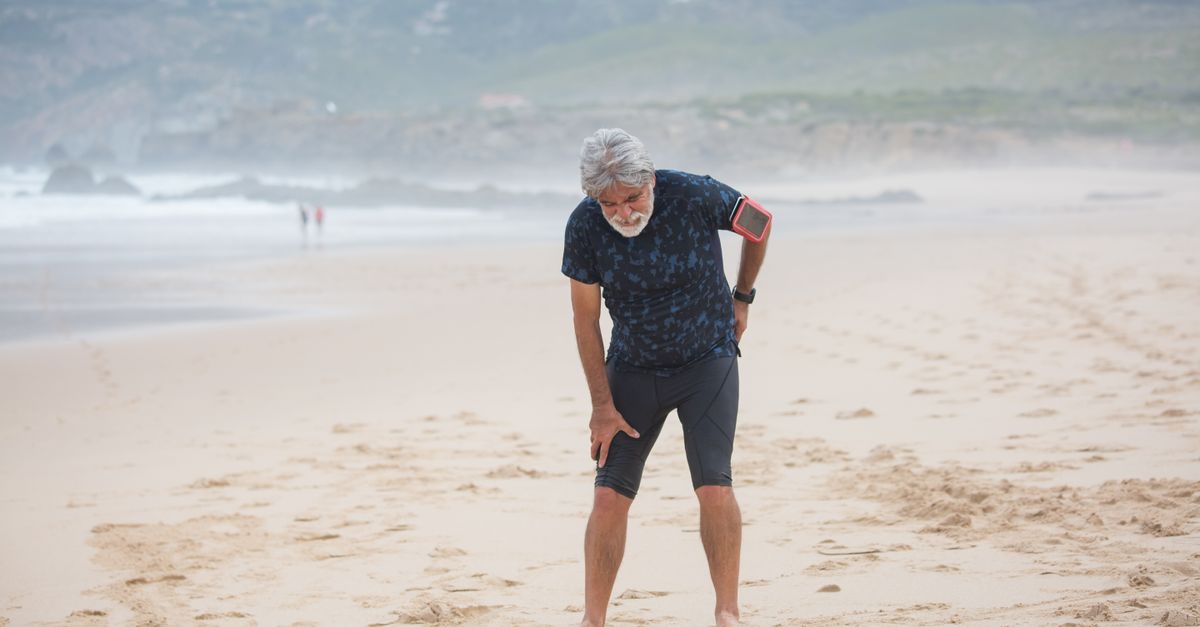
Trochanteric hip bursitis — more accurately called greater trochanteric pain syndrome (GTPS) — is outer hip pain centered over the bony prominence on the side of the upper thigh, commonly felt when lying on the affected side, climbing stairs, or sitting cross-legged. Although the condition was historically attributed to inflammation of the trochanteric bursa, current clinical evidence indicates that degeneration or tearing of the gluteal tendons (gluteus medius and gluteus minimus) is the primary driver in most adults. Management focuses on load reduction, targeted strengthening, sleeping position modifications, and addressing tightness in the surrounding gluteal and lateral thigh musculature rather than applying direct pressure over the painful point.
That nagging ache on the outer side of your hip — the one that wakes you at 3 a.m. when you roll onto it, or flares up every time you climb a flight of stairs — has a name most people haven't heard: greater trochanteric pain syndrome. For years it was simply called hip bursitis or trochanteric pain, and most people were told their bursa was inflamed. That explanation turns out to be incomplete, and it matters because the wrong diagnosis leads to the wrong treatment.
This article covers what greater trochanteric pain syndrome actually is, why the gluteal tendons are usually the real problem, how to manage load and sleep position to stop aggravating it, and how therapeutic massage of the surrounding musculature — not the painful spot itself — fits into a recovery plan.
What Is Greater Trochanteric Pain Syndrome?
Greater trochanteric pain syndrome is the umbrella term for outer hip pain originating at or near the greater trochanter, the large bony ridge on the upper outer femur where the gluteal tendons attach. For most of the 20th century, clinicians assumed the bursa — a fluid-filled sac sitting between the tendon and the bone — was the source of that pain. More recent imaging research has shifted that picture significantly.
Why "Bursitis" Is Often the Wrong Label
Studies using MRI and diagnostic ultrasound have found that isolated bursal inflammation without accompanying tendon pathology is relatively uncommon in adults presenting with lateral hip pain. The more frequent finding is tendinopathy — degenerative change, partial tearing, or irritation — of the gluteus medius and gluteus minimus tendons as they insert onto the greater trochanter. The bursa can become secondarily reactive, but treating only the bursa while ignoring the tendons typically produces poor long-term outcomes.
This distinction matters clinically. Bursal inflammation responds to rest and anti-inflammatory approaches. Tendinopathy responds to graduated loading, tissue work on the surrounding musculature, and correction of the compressive forces that provoke it. Managing trochanteric hip bursitis effectively requires understanding which tissue is actually generating the symptoms.
Who Gets It and Why
Greater trochanteric pain syndrome is notably more common in adults over 50 and significantly more prevalent in women than men, reflecting hormonal influences on tendon integrity and differences in pelvic geometry. Several factors increase risk:
- Wider pelvis relative to femur length, increasing the lateral load angle at the tendon insertion
- Hip osteoarthritis, which alters gait and shifts load onto the lateral structures
- Low back pain, which changes how the gluteal muscles are recruited during walking
- Prolonged sitting, particularly with legs crossed, which places the iliotibial band under compressive tension over the trochanter
- Sudden increases in walking distance or hill-climbing activity
- Obesity, which increases compressive load on the tendons during single-leg stance
The condition is also associated with gluteal muscle weakness. When the gluteus medius cannot adequately stabilize the pelvis during walking, the femur adducts (moves inward), stretching the iliotibial band tightly across the greater trochanter and increasing compressive stress on both the bursa and the underlying tendons with every step.
The Anatomy Behind the Ache
The greater trochanter is not a single flat surface — it has multiple facets, each serving as an attachment point for different parts of the gluteal complex. The gluteus medius attaches primarily to the superior and posterior facets; the gluteus minimus attaches to the anterior facet. Both tendons behave as compression tendons, meaning they are load-sensitive and prone to reactive changes when compressive force at their insertion point is increased or sustained.
The iliotibial band runs vertically down the outer thigh and crosses the greater trochanter region. When the hip is in adduction — as it is when you stand with one hip dropped, sit cross-legged, or lie with your top leg falling across the bottom one — the IT band presses against the trochanter, increasing compression on the underlying tendons. This is why so many common resting positions aggravate GTPS even though they feel passive.
How Therapeutic Massage Helps Trochanteric Hip Pain
Massage applied directly over the greater trochanter is almost universally counterproductive in GTPS. The tender point is already under compressive load; adding more compression provokes the tendon rather than relieving it. The therapeutic target is the musculature surrounding the painful area — specifically the gluteus medius, gluteus maximus, tensor fasciae latae, and the lateral thigh tissues that influence how much compressive force reaches the trochanteric tendons.
Why the Gluteal Group Is the Right Target
The gluteus medius is the primary dynamic stabilizer of the pelvis during walking and single-leg stance. When it is tight, inhibited, or fatigued, the femur moves into adduction with each step, progressively loading the trochanteric insertion. Reducing muscular tension in the gluteus medius and gluteus maximus — through therapeutic massage of the overlying muscle belly rather than the tendon insertion — helps restore more normal movement mechanics.
The tensor fasciae latae (TFL), which runs from the outer pelvis into the iliotibial band, is frequently overactive in people with GTPS. Chronic TFL tightness increases IT band tension and, by extension, compressive load over the trochanter. Addressing TFL and the lateral thigh tissues is a meaningful adjunct to any GTPS management program.
Oscillation, Vibration, and Local Blood Flow
Tendons have relatively poor blood supply compared to muscle tissue, which is one reason tendinopathy heals slowly. The surrounding musculature, however, responds well to mechanical stimulation. Deep oscillation moves surrounding muscle tissue, helping increase blood flow in areas that are stiff or overused — supporting the kind of tissue circulation that tendons depend on indirectly through adjacent musculature.
The MedMassager Body Massager delivers professional-grade oscillating stimulation to large muscle groups like the gluteal complex, where surface-level vibration devices rarely penetrate effectively. MedMassager uses oscillating technology to deliver deeper, more controlled vibration than conventional massagers — producing a more sustained mechanical input to the muscle tissue. For the gluteus medius and maximus, which sit under a substantial layer of tissue in most adults, that depth matters.
Where to Apply Massage and Where Not To
The practical rule for trochanteric hip pain is straightforward: work the muscle bellies, avoid the insertion point. The gluteus medius belly sits along the outer upper pelvis, above and slightly behind the greater trochanter. The gluteus maximus occupies the bulk of the buttock. The TFL runs from the anterior iliac spine downward. These are all safe and productive targets for oscillating massage.
Avoid placing the massager directly over the tender bony prominence of the greater trochanter. Even gentle mechanical pressure over an already-compressed tendon insertion can set off a pain flare that persists for hours or days. The goal is to reduce the muscular tension contributing to that compression — not to directly treat the trochanter itself.
Load Management for GTPS Recovery
Tendinopathy does not respond well to passive rest alone. Complete offloading of a tendon can cause further deconditioning, while continued overload sustains the reactive state. The clinical concept that guides recovery is load management — reducing provocative loads while maintaining sufficient stimulus to support tendon health.
Positions and Movements to Modify
Certain everyday positions dramatically increase compressive load on the trochanteric tendons and should be modified during an active flare:
- Crossing your legs — adducts the hip and compresses the IT band over the trochanter
- Standing with weight shifted onto one hip — increases lateral tensile load on the gluteal tendons
- Deep hip stretches and pigeon pose — well-intentioned but highly compressive for GTPS
- Running on cambered roads — the downhill-side leg is in persistent relative adduction
- Low chairs and deep sofas — increase hip flexion past 90 degrees, loading the superior tendon facet
Climbing stairs and hills is particularly provocative because it requires sustained single-leg stance with significant gluteal tendon load. During an active flare, reducing stair volume and incline walking is one of the fastest ways to lower symptom intensity.
Walking and Activity Modification
Total rest is not the goal. Walking on flat surfaces, maintaining hip-width stance, and keeping steps shorter than usual are all compatible with GTPS management. The objective is to eliminate compressive provocations while preserving the graduated tendon loading that supports recovery. A physical therapist experienced with tendinopathy can help establish appropriate activity thresholds for individual cases.
Sleeping Position Adjustments for Hip Bursitis
Nighttime pain is one of the most disruptive features of greater trochanteric pain syndrome, and sleep deprivation compounds pain sensitivity the following day. Sleep position adjustments are among the most immediately effective interventions available.
Side Sleeping: The Pillow Strategy
Lying directly on the affected hip places the full body weight through the tender area — an obvious problem. Lying on the opposite hip with the affected leg on top creates a different issue: the top leg falls across the lower leg into adduction, stretching the IT band over the trochanter and compressing the tendon in the same way that crossing your legs does during the day.
The solution is a firm pillow placed between the knees when side-sleeping, positioned to keep the top leg roughly parallel to the mattress and the hip in neutral rather than adduction. This single adjustment eliminates the sustained compressive load that makes nighttime pain so persistent for many GTPS patients.
Back Sleeping and Avoiding Hip Rotation
Back sleeping is generally well-tolerated in GTPS, but external hip rotation — feet splaying outward — can create mild traction stress on the lateral hip structures. Placing a rolled towel or small wedge pillow under the outer thigh of the affected side maintains the leg in neutral rotation. Many people find back sleeping significantly more comfortable than side sleeping during active flares, even if they are not habitual back sleepers.
Using a Body Massager for Gluteal Relief
Building a consistent soft-tissue routine for the gluteal group and lateral thigh takes some setup, but the approach is straightforward once you understand the target anatomy and the technique boundaries.
Setup and Positioning
For gluteal work, the most effective position is lying on the unaffected side with the affected hip uppermost, or sitting in a firm chair leaning slightly forward. Both positions bring the gluteus medius and TFL to the surface and make them accessible without pressure on the trochanter itself.
Using the MedMassager Body Massager, begin at a lower intensity setting and allow the device to rest on the muscle belly without pressing — the oscillating head delivers its mechanical input without requiring the added compression of firm manual pressure. This is particularly important near the hip, where even slight misdirection toward the trochanter can provoke symptoms.
Target Areas and Duration
A practical soft-tissue session for GTPS might follow this sequence:
- Gluteus maximus (buttock) — 3 to 4 minutes, working the full muscle belly from the sacrum outward. This is the largest and most accessible target.
- Gluteus medius (outer upper pelvis, above the trochanter) — 2 to 3 minutes. Stay above the bony prominence. If you feel the hard edge of the trochanter, move the device upward.
- Tensor fasciae latae (outer hip, anterior to the trochanter) — 1 to 2 minutes. Small muscle, but high-yield in GTPS due to its direct influence on IT band tension.
- Lateral thigh (IT band region) — 2 to 3 minutes working down the outer thigh from hip to knee. This is a muscular and fascial target that reduces lateral tension, not a direct tendon target.
Total session time of 10 to 12 minutes, performed once daily during active symptom phases, is a reasonable starting point. The goal is tissue relaxation and improved local circulation in the surrounding musculature — not aggressive treatment of the painful site.
Frequency and Progression
Daily soft-tissue work on the gluteal complex is appropriate during a flare. As symptoms stabilize, this can shift to 3 to 4 sessions per week as a maintenance habit alongside the graduated strengthening work that physical therapy will typically prescribe. Many people managing GTPS find that consistent gluteal massage reduces the muscular tightness that would otherwise accumulate through normal daily activity and feed the compressive cycle.
The MedMassager Body Massager collection includes options suited to larger muscle groups like the gluteal complex, with variable intensity settings that allow you to begin conservatively and adjust as the surrounding musculature becomes less reactive. For those also managing back or lower lumbar involvement — common in people with GTPS due to compensatory movement patterns — the same device works effectively across the paraspinal and lumbar musculature.
If your pain extends into the lower back or involves the piriformis region, therapeutic body massagers designed for back and hip discomfort may be a useful part of a broader soft-tissue strategy.
Frequently Asked Questions
What is the difference between trochanteric bursitis and greater trochanteric pain syndrome?
Trochanteric bursitis is an older term that attributed outer hip pain specifically to inflammation of the trochanteric bursa. Greater trochanteric pain syndrome is the current clinical term, reflecting evidence that gluteal tendinopathy — degeneration or irritation of the gluteus medius and minimus tendons — is the more common underlying cause. The two conditions can coexist, but treating only the bursa while ignoring the tendons typically produces incomplete or short-lived relief.
Why does my outer hip hurt more when I lie on my side at night?
Lying directly on the affected hip compresses the trochanteric bursa and the underlying tendon insertion under body weight, provoking pain in the already-irritated tissue. Lying on the opposite side with the affected leg on top causes a different problem: the top leg falls inward into adduction, stretching the iliotibial band tightly across the greater trochanter. Both positions load the tender structures. Placing a firm pillow between the knees when side-sleeping keeps the top hip in neutral and significantly reduces nighttime pain for many people with GTPS.
Should I stretch my hip when I have trochanteric pain syndrome?
Many common hip stretches — including pigeon pose, figure-four stretches, and deep hip flexor stretches — actually increase compressive load on the trochanteric tendon insertion and can worsen GTPS symptoms. These positions place the hip in combined flexion and adduction, which is precisely the movement pattern that aggravates the gluteal tendons at the trochanter. During active flares, most outer hip stretches should be avoided; graduated strengthening and load management are more appropriate first steps, ideally guided by a physical therapist.
How long does greater trochanteric pain syndrome take to resolve?
Recovery timelines vary widely depending on severity, how long symptoms have been present, and how consistently aggravating factors are eliminated. Mild cases managed with load modification, sleeping position adjustments, and targeted strengthening often improve noticeably within 6 to 12 weeks. More established tendinopathy can take 3 to 6 months of consistent management before significant functional improvement occurs. Flares triggered by a return to provocative activity — stairs, hills, or cross-legged sitting — can extend recovery if not addressed promptly.
Is massage directly on the outer hip safe with trochanteric bursitis?
Applying direct pressure over the greater trochanter itself is generally not recommended during active GTPS, because the tendon insertion and bursa are already under compressive stress. Adding mechanical pressure to an already-compressed tissue structure typically increases rather than reduces symptoms. Therapeutic massage is most effective when applied to the surrounding muscle bellies — the gluteus maximus, gluteus medius, and tensor fasciae latae — at a safe distance from the bony prominence, where it can reduce muscular tension without provoking the tender site.
What exercises help with greater trochanteric pain syndrome?
Graduated gluteal strengthening is central to GTPS recovery because a stronger gluteus medius reduces the femoral adduction that loads the trochanteric tendons. Isometric exercises — sustained contractions without joint movement — are generally the safest starting point during acute phases. Side-lying clamshells, single-leg bridges, and lateral band walks are commonly used as the condition stabilizes, though the specific progression should be guided by a physical therapist to avoid reloading the tendon prematurely.
Can hip bursitis come back after it has healed?
Recurrence is common if the underlying drivers — gluteal weakness, habitual cross-legged sitting, high-adduction walking patterns, or sudden spikes in activity — are not addressed during recovery. Greater trochanteric pain syndrome is a load-sensitive condition, meaning the tendon can be re-provoked by a return to the same mechanical environment that caused the initial episode. Maintaining gluteal strength, avoiding sustained compressive positions, and managing activity increases gradually are the primary strategies for reducing recurrence risk.
The Bottom Line on Trochanteric Hip Pain
Greater trochanteric pain syndrome is one of the more mismanaged musculoskeletal conditions precisely because its old label — hip bursitis — directed treatment toward the wrong tissue. The bursa is rarely the whole story. The gluteal tendons, and the compressive forces that accumulate on them through everyday positions and movement patterns, are usually the central problem.
Effective management combines three things that work together: removing the compressive provocations (sleep position, crossed legs, steep stairs during flares), progressively reloading the gluteal tendons through appropriate exercise, and reducing muscular tension in the gluteal group and lateral thigh that feeds the compressive cycle. Therapeutic massage has a real role in that third element — applied to the muscle bellies, not the tender point.
For consistent soft-tissue work on the gluteus medius, gluteus maximus, and surrounding lateral hip musculature, the MedMassager Body Massager delivers the depth of oscillating stimulation that large muscle groups require, with adjustable intensity that suits both acute and maintenance phases. Explore the full range of MedMassager therapeutic massagers to find the right tool for your recovery plan.
This content is for informational purposes only and is not intended as medical advice, diagnosis, or treatment. Always consult a qualified healthcare professional before starting any new treatment or therapy. MedMassager products are FDA-registered Class I medical devices.


