
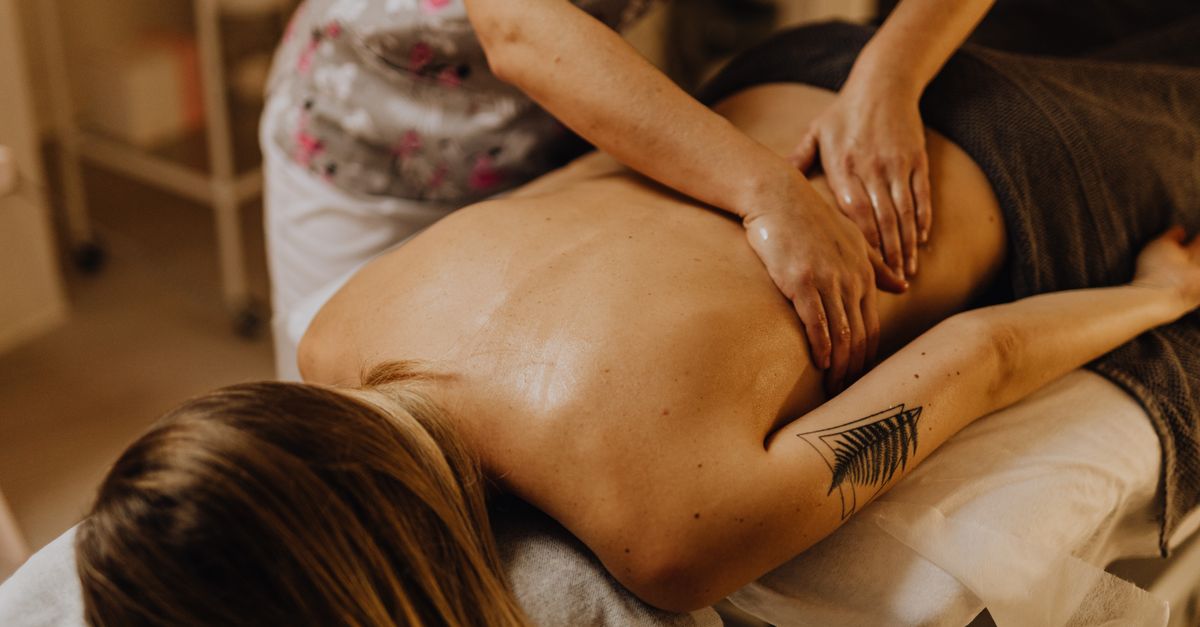
A back massager for sciatica works by targeting the secondary muscle tension in the piriformis, gluteal muscles, and lumbar paraspinals that compresses or irritates the sciatic nerve. Handheld therapeutic massagers, percussion guns, and shiatsu chair massagers each address this muscle tension differently in terms of depth, precision, and daily usability. For most people managing ongoing sciatic discomfort, a handheld oscillating massager offers the best combination of targeted pressure, reach, and consistent daily use across the gluteal and lumbar regions. No massager treats the underlying nerve impingement itself — but reducing surrounding muscle tension is a recognized component of sciatica management.
If you've been living with sciatica, you already know the pain rarely stays in one place. It radiates from your lower back into your glutes, down the back of your thigh, sometimes all the way to your foot. And while the nerve itself is the source, much of the daily ache comes from the muscles clamped around it — the piriformis, the gluteus medius, the lumbar paraspinals — all tightening in response to the irritation below. Finding the right back massager for sciatica means finding a tool that can reach those specific muscle groups reliably, without requiring a clinic visit every time the tension flares up.
This guide compares the three most common massager types people use for sciatica-related muscle tension — percussion guns, shiatsu chair massagers, and handheld therapeutic massagers — and explains which performs best for the gluteal and lumbar regions where secondary tension tends to build. If you already have a sense of your sciatica triggers, this is the practical buying guide to help you choose the right daily-use tool.
Why Sciatica Creates Secondary Muscle Tension
Understanding why certain massagers work better for sciatica starts with understanding what's actually happening in the surrounding tissue. Sciatica itself is a symptom — caused by compression or irritation of the sciatic nerve, most often at the lumbar spine (L4–S1) or where the nerve passes beneath the piriformis muscle in the gluteal region.
The Piriformis and Gluteal Involvement
The piriformis is a small, deep muscle running from the sacrum to the top of the femur. In a significant portion of people, the sciatic nerve passes either through or directly beneath it. When this muscle tightens — from prolonged sitting, overuse, or postural imbalance — it can compress the sciatic nerve or amplify existing nerve irritation. This presentation is sometimes called piriformis syndrome, though it often coexists with lumbar disc-related sciatica rather than replacing it.
The surrounding gluteal muscles — gluteus maximus and medius — also commonly develop reactive tightness. They brace involuntarily around the pain source, which further restricts blood flow through the region and increases pressure on underlying structures.
The Lumbar Paraspinals
The paraspinal muscles run along both sides of the spine and are responsible for stabilizing the lumbar vertebrae. With sciatica originating from lumbar disc herniation or degenerative disc disease, these muscles frequently go into a sustained guarding state. Research in spine-focused rehabilitation literature suggests prolonged paraspinal guarding can increase compressive load on the lumbar discs — potentially worsening the condition that started the cycle.
The practical consequence: even on days when your nerve pain is manageable, tight paraspinals and a clenched piriformis keep the pressure on. This is the muscle tension that a back massager for sciatica is realistically addressing — not the nerve impingement itself.
Why Targeted Muscle Relief Matters
Physical therapists and sports medicine physicians frequently incorporate soft tissue work into sciatica management for this reason. Loosening the piriformis, gluteals, and lumbar paraspinals through massage or manual therapy can reduce the compressive load on the nerve pathway without touching the nerve directly. The goal is mechanical: increase blood flow to tight muscle tissue, reduce guarding tone, and restore more normal movement patterns.
- Piriformis tightness — compresses the sciatic nerve pathway in the gluteal region
- Gluteus medius tension — restricts hip mobility, altering gait and lumbar load
- Lumbar paraspinal guarding — increases disc compression at L4–S1
- Hamstring tightness — secondary tension that pulls on the pelvis and sacrum
Comparing Massager Types for Sciatica
Not all massagers are built for the same job. For sciatica-related muscle tension in the glutes and lumbar region, three types dominate the market: percussion guns, shiatsu chair massagers, and handheld oscillating therapeutic massagers. Each has real strengths — and real limitations for this specific use case.
Percussion Guns
Percussion devices deliver rapid, piston-like strikes into muscle tissue — typically at frequencies between 1,750 and 3,200 percussions per minute. They are excellent for post-exercise muscle recovery in large, superficial muscle groups and have become a standard tool among athletes and physical therapists.
For sciatica-related piriformis and gluteal tension, percussion guns can be effective but come with two practical limitations. Self-application to the gluteal region is awkward — the angle required to reach the piriformis directly is difficult to sustain, and most users can't apply consistent pressure without assistance. High-frequency percussion near active nerve irritation also requires caution; the rapid strike pattern may be too aggressive on days when the area is already inflamed.
Best use case: occasional deep tissue work after acute flares have settled, ideally with a partner or physical therapist applying the device.
Shiatsu Chair Massagers
Shiatsu massage chairs and seat cushions use rolling nodes to simulate a kneading motion across the back. They're convenient and cover a broad surface area across the lumbar and thoracic spine.
The limitation for sciatica is specificity. Chair massagers follow a fixed path and apply generalized pressure across the entire back rather than targeting the piriformis or gluteal region where much of the sciatica-related tension lives. They rarely reach below the lumbar spine into the glutes at all. For someone whose secondary tension is concentrated in the gluteal region, a shiatsu chair massager may address the wrong area entirely.
Best use case: general lumbar tension relief and daily relaxation — useful as a complement, not a primary tool for piriformis or gluteal work.
Handheld Oscillating Therapeutic Massagers
Handheld therapeutic massagers use oscillating motion — a controlled back-and-forth movement — to penetrate deep muscle layers with consistent, sustained pressure. Unlike percussion guns, oscillation doesn't strike the tissue repeatedly; it moves with it, maintaining contact and gradually increasing blood flow through the target area.
For sciatica-related muscle tension, this matters for two reasons. Oscillation at lower intensity is gentler on sensitized tissue near an irritated nerve pathway. A handheld format also gives you genuine positional control — you can apply targeted pressure directly to the piriformis, the gluteus medius, and the lumbar paraspinals independently, adjusting pressure and position in real time.
The MedMassager Body Massager operates at variable speeds from 1,000 to 4,000 RPM, delivering deep oscillating vibration across a wide surface head. This oscillating action penetrates deep muscle layers, increasing local blood flow in muscles affected by prolonged sitting — exactly the mechanism relevant to paraspinal guarding and piriformis tightness. For daily use on the gluteal and lumbar regions, it's the format most people managing ongoing sciatica find practical and sustainable.
What to Look for in a Back Massager for Sciatica
If you're shopping specifically for sciatica-related muscle tension in the lower back and glutes, a few features separate useful tools from generic options.
Variable Speed Control
Sciatica symptoms fluctuate. On higher-pain days, you need lower intensity that loosens muscle without aggravating the area. On better days, deeper pressure is more useful for breaking up chronic piriformis tension. A massager with a wide speed range — not just two or three settings — gives you meaningful control across that spectrum. The MedMassager Body Massager's 11-speed range from 1,000 to 4,000 RPM covers this spread explicitly.
Surface Area and Head Design
The gluteus maximus is a large muscle. A massager with a broad contact head covers more tissue per pass, which matters for consistent results across the gluteal region. Narrow percussion gun heads are precise but require more passes to cover the same area — increasing the time and effort required for self-treatment.
Self-Application Ergonomics
Reach matters. A handheld massager you can grip and position yourself — without assistance — is fundamentally more useful for daily use than a device that requires another person to apply correctly. When evaluating any tool for sciatica, consider how easily you can position it on your own lower back and gluteal region.
Intensity Appropriate for Sensitized Tissue
Not every massager type is appropriate for tissue near an irritated nerve pathway. Here's how the three main options compare on this dimension:
- Oscillating handheld massagers: Sustained contact, adjustable depth, gentler on sensitive tissue at lower speeds
- Percussion guns: High-impact strike pattern — useful for deep work but potentially too aggressive near active nerve irritation
- Shiatsu cushions: Fixed rolling pattern, minimal gluteal reach, better for general back relaxation
- Heat-combined devices: Useful adjunct for muscle relaxation, but heat alone doesn't address mechanical muscle tension
For most people managing daily sciatica-related tension, the combination of variable speed oscillation and a broad contact head in a handheld format covers the most ground. Explore the full range of professional-grade body massagers built for this kind of targeted therapeutic use.
How to Use a Back Massager for Sciatica
Technique matters as much as tool selection. Using a massager incorrectly on the sciatica region can irritate rather than relieve. The guidelines below cover the gluteal and lumbar areas specifically — the two regions where sciatica-related secondary tension is most concentrated.
Lumbar Paraspinals
- Position the massager on either side of the spine — never directly on the vertebrae themselves
- Start at the lowest speed setting and assess how the tissue responds before increasing intensity
- Work slowly along the paraspinal muscle from the mid-lumbar to the sacrum over 2–3 minutes per side
- If sharp or radiating pain increases during application, stop immediately
Gluteal Region and Piriformis
- Lie on your side or sit with the massager positioned at the center of the glute, working toward the hip
- The piriformis lies beneath the gluteus maximus — sustained moderate pressure is more effective for reaching it than rapid percussion
- Work for 2–3 minutes on each side, using a slow pass pattern rather than holding one point
- Combine with a seated or supine piriformis stretch immediately after to extend the benefit
Frequency and Duration
Daily use at low to moderate intensity is generally more effective for chronic muscle tension than infrequent high-intensity sessions. Most people managing sciatica-related paraspinal and gluteal tightness find 5–10 minutes once or twice daily produces noticeable reduction in resting muscle tension over one to two weeks. Avoid using a massager during acute flares involving significant numbness, tingling, or sharp radiating pain — consult your healthcare provider before resuming.
Sciatica-Specific Populations
Sciatica doesn't affect everyone the same way. Your daily routine, history of symptoms, and whether you're between PT sessions all shape how you should approach massage as a management tool.
Prolonged Sitters and Desk Workers
Prolonged sitting is one of the most consistent aggravators of piriformis and paraspinal tension. The hip flexors shorten, the glutes disengage, and the lumbar paraspinals work overtime trying to stabilize a pelvis that's been in posterior tilt for hours. For desk workers managing sciatica, a handheld therapeutic body massager kept at the workstation can provide targeted end-of-day relief that interrupts this cycle before the tension becomes entrenched.
People Managing Chronic or Recurring Sciatica
For those with recurring sciatica — particularly from degenerative disc disease or chronic piriformis syndrome — a daily-use massager is a maintenance tool, not a treatment. Think of it the way you'd think about daily stretching: it doesn't fix the underlying structural issue, but it consistently reduces the secondary muscle tension that amplifies symptoms. Many people managing chronic sciatica find that consistent soft tissue work in the gluteal and lumbar regions reduces the frequency and severity of flares over time.
Post-Physical Therapy Maintenance
Physical therapists often work on the piriformis, glutes, and paraspinals directly during sciatica treatment. A handheld oscillating massager like the MedMassager Body Massager lets you replicate some of that soft tissue work at home between sessions, extending the benefit of clinical treatment into your daily routine. Always confirm with your PT which areas are appropriate for self-treatment and at what intensity.
Frequently Asked Questions
Can a back massager help with sciatica pain?
A back massager can help reduce the secondary muscle tension in the piriformis, gluteal muscles, and lumbar paraspinals that commonly aggravates sciatic nerve pain. It does not treat the underlying nerve impingement or structural cause of sciatica. Consistent soft tissue work in these areas can reduce the compressive load on the nerve pathway and lower resting muscle tension, which many people managing sciatica find noticeably helpful for daily comfort.
Where should I use a massager for sciatica?
The most effective target areas for sciatica-related muscle tension are the lumbar paraspinals (on either side of the spine, not on the vertebrae themselves), the gluteus maximus, the gluteus medius, and the piriformis in the deep gluteal region. Many people also find that massaging the upper hamstrings helps, as these muscles attach near the ischial tuberosity and commonly tighten with piriformis involvement. Avoid applying a massager directly over the spine or during acute flares with significant numbness or radiating pain.
Is a percussion gun or oscillating massager better for sciatica?
For most people managing sciatica-related muscle tension, an oscillating handheld massager offers better daily usability than a percussion gun. Oscillation maintains consistent contact with the muscle and is generally gentler on tissue near an irritated nerve pathway, especially at lower speeds. Percussion guns deliver high-impact strikes that work well for athletic muscle recovery but can be too aggressive near sensitized sciatic tissue, particularly during flares.
How often should I use a massager for sciatica?
For chronic sciatica-related muscle tension, daily use at low to moderate intensity is generally more effective than infrequent high-intensity sessions. Most people find 5–10 minutes once or twice daily on the affected gluteal and lumbar areas reduces resting muscle tension meaningfully over one to two weeks. Avoid use during acute flares involving significant numbness, sharp radiating pain, or increased weakness — consult a healthcare provider before resuming massage during those episodes.
Should I use heat or massage for sciatica muscle tension?
Heat and massage address different components of sciatica-related muscle tension and work well in combination. Heat increases superficial tissue temperature and can help relax muscle guarding before massage, making the tissue more receptive to deeper pressure. Using heat for 10–15 minutes before a massage session on the lumbar and gluteal region is a commonly recommended sequence in physical therapy settings.
Can massage make sciatica worse?
Massage applied incorrectly or during an acute flare can temporarily aggravate sciatic symptoms. Applying high-intensity percussion directly over an acutely inflamed nerve pathway, massaging directly over the spine, or working too aggressively on inflamed tissue can all increase irritation. The risk is significantly lower with oscillating massage at low intensity applied to the surrounding muscle tissue rather than directly over the nerve path. If massage consistently produces increased numbness, tingling, or sharp radiating pain, stop and consult a healthcare provider.
What is the piriformis muscle and why does it matter for sciatica?
The piriformis is a small, deep muscle in the gluteal region that runs from the sacrum to the top of the femur. In many people, the sciatic nerve passes directly beneath or through this muscle, meaning piriformis tightness can compress or irritate the nerve independently of lumbar disc involvement. Prolonged sitting is a primary cause of piriformis tension, and targeted soft tissue work on this muscle is a standard component of sciatica management in physical therapy and rehabilitation settings.
The Bottom Line
For people managing sciatica, the secondary muscle tension in the piriformis, glutes, and lumbar paraspinals is often where daily pain actually lives — and that's where a well-chosen back massager for sciatica makes a real difference. Shiatsu chair massagers offer general lumbar relaxation but lack gluteal reach. Percussion guns go deep but are difficult to self-apply precisely and can be too aggressive near sensitized nerve tissue. Handheld oscillating therapeutic massagers give you the combination of targeted pressure, variable intensity, and daily usability that this specific use case demands.
The MedMassager Body Massager is built for exactly this kind of sustained, targeted soft tissue work — with an 11-speed range that lets you match intensity to how your body feels on any given day. It's an FDA-registered Class I medical device designed for people who need more than a casual consumer massager can deliver.
Used consistently and correctly, it won't fix the nerve impingement at the root of your sciatica — but it can meaningfully reduce the muscle tension that makes every day harder. That's a realistic, practical goal worth pursuing.
This content is for informational purposes only and is not intended as medical advice, diagnosis, or treatment. Always consult a qualified healthcare professional before starting any new treatment or therapy. MedMassager products are FDA-registered Class I medical devices.


