
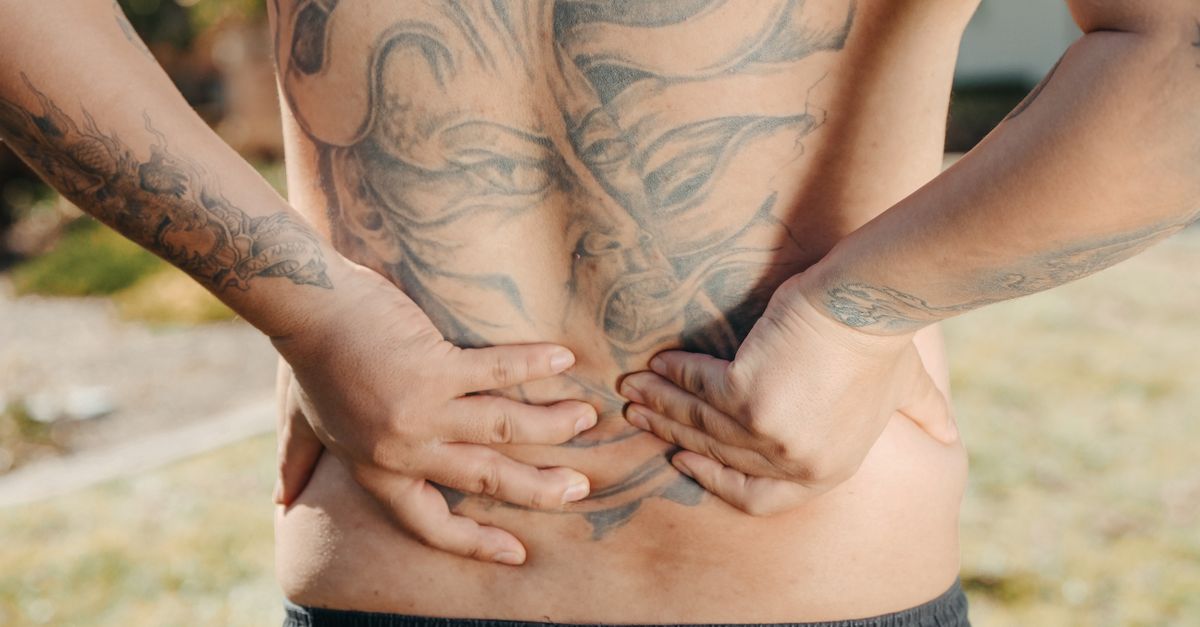
Glute massage for sciatica focuses specifically on the piriformis muscle, a small but powerful hip rotator that sits directly over the sciatic nerve in the gluteal region. When the piriformis spasms or tightens, it can compress the sciatic nerve and produce pain, numbness, or tingling that closely mimics disc-related sciatica. Effective technique targets the piriformis separately from the larger gluteus maximus, using sustained pressure tools like a tennis ball against a wall, partner pressure, or an oscillating body massager applied to the gluteal mass. Massage addresses muscular tightness and local blood flow — it does not treat underlying nerve impingement or disc pathology.
The burning, radiating discomfort that runs from your lower back through the glute and down the leg is one of the most recognizable pain patterns people deal with — and glute massage for sciatica is one of the most commonly searched self-care approaches for it. But not all gluteal massage is equal. Pressing a massage head against the broad, fleshy gluteus maximus is one thing. Getting sustained pressure into the piriformis — the deeper, smaller muscle that sits directly on top of the sciatic nerve — is a fundamentally different technique, and it's the one that tends to matter most for sciatica-pattern symptoms.
This post covers the anatomy behind piriformis involvement in sciatica, why standard glute massage often misses the target, and specific techniques for reaching the piriformis effectively — including a tennis ball against the wall, partner-applied pressure, and using an oscillating body massager on the gluteal mass.
Why the Piriformis Drives Glute Pain
Understanding the piriformis's location and function explains why it's so frequently involved in sciatica-pattern pain — and why it's easy to overlook with generic massage approaches.
Anatomy: A Small Muscle in a Critical Location
The piriformis is a flat, pear-shaped muscle that originates at the front surface of the sacrum and attaches to the top of the femur. Its job is to externally rotate the hip, stabilize the sacroiliac joint, and assist with abduction when the hip is flexed. Despite being relatively small, it occupies some of the most anatomically crowded real estate in the body.
The sciatic nerve — the longest and widest nerve in the human body — exits the pelvis through the greater sciatic foramen, a bony opening just below the piriformis. In most people, the nerve passes beneath the muscle. In a meaningful percentage of the population, one or both divisions of the nerve pass directly through the piriformis muscle belly. This anatomical variation, documented in cadaveric and imaging studies, makes those individuals significantly more vulnerable to piriformis-mediated nerve compression.
How Piriformis Spasm Mimics Disc Sciatica
When the piriformis tightens, shortens, or goes into spasm — from prolonged sitting, overuse, direct trauma, or postural imbalance — it can press against the sciatic nerve and produce symptoms nearly identical to lumbar disc herniation: radiating pain down the leg, numbness, tingling, and a deep aching in the glute that is hard to localize.
This is sometimes called piriformis syndrome, and distinguishing it from true disc-origin sciatica typically requires a clinical evaluation. Key differentiators include pain that worsens specifically with sitting rather than with spine flexion, tenderness deep in the gluteal region rather than the lumbar spine, and relief with hip external rotation. Piriformis tightness and lumbar disc issues can and frequently do coexist — tightening in the piriformis can be a secondary response to altered gait or movement patterns caused by lumbar pain.
Why the Gluteus Maximus Gets the Massage Instead
The gluteus maximus is the largest muscle in the body. It's superficial, easy to access, and responds visibly to pressure — which is why most massage approaches, foam rolling protocols, and seat cushion devices target it by default. The piriformis lies underneath it, roughly in the middle of the gluteal mass, angled diagonally from the sacrum toward the outer hip.
- Standard foam rolling primarily loads the gluteus maximus and gluteus medius
- Broad massage heads disperse pressure across the superficial glute rather than concentrating it on the deeper layer
- The piriformis's diagonal orientation means it's easy to roll over without ever applying sustained perpendicular pressure to it
- Its depth — covered by the gluteus maximus — requires either a small, firm contact point or sufficient force to transmit through the overlying tissue
This is why targeting technique matters. Reaching the piriformis requires intentionality about contact point size, body position, and pressure angle in a way that reaching the gluteus maximus simply does not.
How Massage Helps Piriformis-Related Sciatica
Massage does not treat the underlying sciatic nerve impingement. It does not repair disc herniation, reduce bony stenosis, or permanently resolve piriformis syndrome. What targeted massage can do is address the muscular component — the tightness, spasm, and restricted local blood flow — that is contributing to compression at the nerve.
The Mechanism: Blood Flow and Muscle Release
A muscle in sustained spasm or chronic tension is also a muscle with restricted circulation. Blood flow into a tight, contracted muscle is reduced, metabolic waste accumulates, and the tissue becomes increasingly sensitive and resistant to lengthening. Sustained mechanical pressure — applied correctly — helps interrupt the spasm cycle by stimulating blood flow back into the tissue and encouraging the muscle to release its contracted state.
For people managing sciatica-pattern pain, an oscillating body massager applied to the gluteal mass uses deep oscillation to penetrate through the gluteus maximus and move surrounding muscle tissue, helping increase blood flow in areas that are stiff or overused. This is not a superficial surface effect — oscillation at sufficient depth moves through tissue layers in a way that broad surface vibration does not. MedMassager's Body Massager delivers oscillating motion rather than simple vibration, producing a deeper, more sustained mechanical input into the muscle tissue.
Piriformis Massage Versus General Glute Massage
The distinction between massaging the gluteus maximus and actually reaching the piriformis is not just anatomical — it produces genuinely different outcomes for someone experiencing sciatic pain in the glute.
Massaging the gluteus maximus improves surface tissue circulation and can reduce general glute tension, which has value. But if the piriformis is the primary source of nerve compression or irritation, mass-tissue massage of the glute may produce temporary comfort without addressing the structure that matters. Piriformis-specific technique delivers sustained pressure to the correct location, at sufficient depth, to actually engage the target muscle.
What Massage Cannot Do
Massage does not decompress the spine. It does not resolve nerve damage. It does not substitute for physical therapy, appropriate imaging, or physician evaluation when symptoms are significant. Progressive weakness, loss of bladder or bowel function, or bilateral leg symptoms are red flags that require immediate medical evaluation — massage is not an appropriate primary response to those presentations.
Locating the Piriformis Before You Start
Effective piriformis massage starts with knowing where the muscle actually is. Because it's deep and not palpable through casual touch, most people work in the right general region but never isolate the specific tissue.
A reliable landmark: place your thumb on your posterior superior iliac spine (the bony prominence at the back of your pelvis) and your fingers on the greater trochanter (the bony bump at the outer top of your thigh). The piriformis runs roughly along the line between these two points — diagonally, from the sacrum toward the outer hip. The belly of the muscle sits approximately in the middle of the gluteal mass, slightly above the midpoint between the sitting bone and the outer hip.
- Too high and medial: you're on the sacrum or gluteus medius origin
- Too low: you're likely on the lower gluteus maximus fibers or approaching the ischial tuberosity (sitting bone)
- Correct zone: mid-glute, slightly closer to the outer hip than the sacrum, where sustained pressure may reproduce a familiar deep ache or radiating sensation
Mild reproduction of familiar symptoms with direct pressure — a "yes, that's the spot" sensation — is a reasonable confirmation that you've located the piriformis. Sharp, electric pain or strong radiating symptoms with light pressure warrant a pause and medical consultation before continuing.
Techniques for Piriformis-Targeted Massage
Three approaches work consistently well for reaching the piriformis with meaningful depth. Each has different tradeoffs in terms of control, effort, and accessibility.
Tennis Ball Against the Wall
This is the most accessible technique and the easiest to modulate. It requires only a tennis ball (or a slightly firmer lacrosse ball for greater depth) and a wall.
- Stand facing away from the wall, approximately one foot away
- Place the tennis ball between your glute and the wall, in the piriformis target zone described above
- Lean back into the wall to apply pressure — your body weight controls the intensity
- Hold sustained pressure on the tender point for 30–60 seconds without rolling
- Make small, slow circular movements to work through the tissue, or return to a sustained hold
- Shift the ball slightly to explore neighboring tissue within the piriformis region
- Work for 2–3 minutes per side before switching
The wall version is preferred over the floor version for people managing active sciatica, because the wall allows you to quickly reduce pressure by standing more upright — whereas on the floor, removing weight requires physically lifting yourself. Start with lighter pressure and progress gradually across sessions.
Partner-Applied Pressure
A partner using their elbow or thumb can apply more precisely directed pressure than any self-massage tool. The tradeoff is that it requires communication and a degree of body positioning that some people find awkward.
Lie face down with the target glute relaxed. The partner identifies the piriformis landmark zone and applies slow, gradually increasing pressure using their elbow (for broad contact) or supported thumb (for more specific contact). Sustained holds of 30–90 seconds are more effective than rapid movement across the tissue. The person receiving should communicate intensity — pressure that produces a strong ache at the site is productive; pressure that immediately causes shooting leg pain should be reduced or redirected.
Partner-applied technique is particularly useful for people who have difficulty weight-bearing through the glute due to active pain, or who find floor-based self-massage uncomfortable to set up.
Body Massager on the Gluteal Mass
An oscillating body massager used on the gluteal region can transmit deep mechanical force through the superficial glute tissue to engage the piriformis layer below. This approach is less precise than a tennis ball or partner elbow, but it covers more of the muscle region and requires less physical effort to sustain.
Position yourself lying face down, or seated slightly forward with the massager applied to the posterior glute. Use the massager head directly over the piriformis target zone, applying consistent pressure rather than moving rapidly across the surface. Slow, deliberate positioning allows the oscillation to work through tissue layers rather than dissipating at the surface. The MedMassager Body Massager is built for this type of deep tissue application — its oscillating motion penetrates through the gluteus maximus and engages the deeper muscle layers, helping move blood through tissue that has tightened from sustained spasm or overuse.
A practical approach is to use the Body Massager to broadly warm and loosen the gluteal mass for 3–4 minutes, then follow with a tennis ball for more targeted piriformis-specific pressure. The two techniques work well in sequence.
Building a Consistent Piriformis Massage Routine
Sporadic, high-intensity sessions are less effective than shorter, consistent work. Muscle tissue responds better to repeated moderate input than to occasional aggressive treatment, particularly when an irritated nerve is nearby.
Frequency and Duration
During active symptom periods, once daily is a reasonable target. For maintenance, four to five sessions per week is sufficient. Each session needs only 5–10 minutes total — two to three minutes per side gets the job done without overdoing it. Timing matters too: working after light movement or gentle hip stretching produces better results than going straight from a long period of sitting, when tissue is at its stiffest and most reactive.
Start lighter in the first week and increase pressure gradually as tissue tolerance improves. Progressing too quickly — especially with an irritated nerve nearby — tends to increase symptoms rather than reduce them.
Pairing Massage With Stretching
Piriformis massage is more effective when followed immediately by a piriformis stretch, while the tissue is still responding to the mechanical input. The figure-four stretch (lying on your back, crossing one ankle over the opposite knee and pulling the thigh toward your chest) is the most direct approach. Hold for 30–60 seconds per side.
The combination of massage followed by stretch is more effective than either alone because the mechanical pressure from massage begins to release muscle spasm, and the subsequent stretch lengthens the tissue while it is in a more receptive state. Many physical therapists use this sequencing deliberately in manual therapy protocols for piriformis syndrome.
When to Scale Back
If a session produces significantly increased leg symptoms that persist for more than 30 minutes afterward, reduce pressure intensity in subsequent sessions. Some mild local soreness in the glute after targeted piriformis work is normal. Worsening or prolonged radiating symptoms are a signal to reduce intensity and, if they persist, to consult a healthcare provider before continuing.
Frequently Asked Questions
How do I know if my sciatica is coming from my piriformis or my lower back?
Piriformis-related sciatica typically produces pain that is most intense with sitting — particularly on hard surfaces — and tends to come with deep gluteal tenderness rather than prominent lumbar pain. Disc-origin sciatica more commonly worsens with lumbar flexion and is associated with low back pain. These presentations overlap significantly, and a definitive distinction requires clinical examination, including imaging, nerve tension tests, and provocation testing performed by a physician or physical therapist.
Can glute massage make sciatica worse?
Overly aggressive pressure directly over an actively irritated sciatic nerve can temporarily increase radiating symptoms, and this is most likely when pressure is applied too forcefully during an acute flare. Start with moderate pressure, stop if direct contact immediately produces strong shooting pain down the leg, and avoid high-force techniques when nerve irritation is at its worst. Gradual, sustained pressure is consistently safer than rapid or aggressive input when the nerve is involved.
How long does it take for piriformis massage to help sciatica symptoms?
Most people notice some reduction in local gluteal tightness within the first few sessions, but meaningful symptom change typically develops over two to four weeks of consistent work. Piriformis syndrome that has been present for months may require longer treatment timelines, and cases involving significant sciatic nerve irritation often benefit from concurrent physical therapy alongside self-massage techniques.
What is the difference between a piriformis stretch and piriformis massage?
Massage applies mechanical pressure to the muscle tissue to address spasm, restricted blood flow, and myofascial tightness within the muscle belly itself. Stretching lengthens the muscle under tension, improving range of motion and reducing its resting tone over time. The two approaches target related but different aspects of piriformis dysfunction, and they work best together — massage first to address the spasm, followed immediately by stretching while the tissue is more pliable.
Does a body massager reach deep enough to help the piriformis?
An oscillating body massager applied with consistent pressure to the gluteal region can transmit mechanical force through the superficial gluteus maximus to engage the piriformis layer below. The depth of effect depends on the massager's output and how it is applied — sustained pressure over the target zone is more effective than rapid surface movement. Using a body massager to warm and loosen the broader gluteal region, followed by more targeted tennis-ball pressure on the piriformis specifically, combines the strengths of both approaches.
Should I see a doctor before doing piriformis massage for sciatica?
If you have not received a diagnosis and are experiencing new or worsening leg pain, numbness, or weakness, a medical evaluation should come before self-treatment — especially if you have symptoms in both legs, any change in bladder or bowel function, or pain following a specific injury or fall. For people with a known history of piriformis tightness or previously evaluated sciatica-pattern symptoms, self-massage within comfortable pressure limits is generally appropriate, but always follow your healthcare provider's guidance for your specific situation.
The Bottom Line on Glute Massage for Sciatica
Glute massage for sciatica is most useful — and most precise — when it targets the piriformis specifically, rather than the broad gluteal mass. The piriformis sits directly over the sciatic nerve, and when it tightens or spasms, it can produce or amplify sciatica-pattern symptoms in a way that responds meaningfully to targeted mechanical pressure.
Tennis ball work against the wall, partner-applied elbow pressure, and an oscillating body massager used on the gluteal region each offer a viable route to the piriformis, with different tradeoffs in precision, effort, and accessibility. Used consistently — and followed by piriformis stretching — these techniques address the muscular layer of the problem without requiring specialized equipment or professional access for every session.
Massage addresses muscular tightness and local circulation. It does not treat the underlying nerve impingement, decompress a herniated disc, or substitute for proper clinical evaluation when symptoms are significant or worsening. Use it as one tool in a broader management approach, ideally one guided by a physical therapist or physician who has evaluated your specific presentation.
For those looking for a consistent tool to support this kind of targeted work, explore MedMassager's therapeutic body massagers — built for deep tissue application and designed for people managing musculoskeletal pain in daily life. You can also browse the full MedMassager product collection to find the right tool for your specific needs.
This content is for informational purposes only and is not intended as medical advice, diagnosis, or treatment. Always consult a qualified healthcare professional before starting any new treatment or therapy. MedMassager products are FDA-registered Class I medical devices.


