
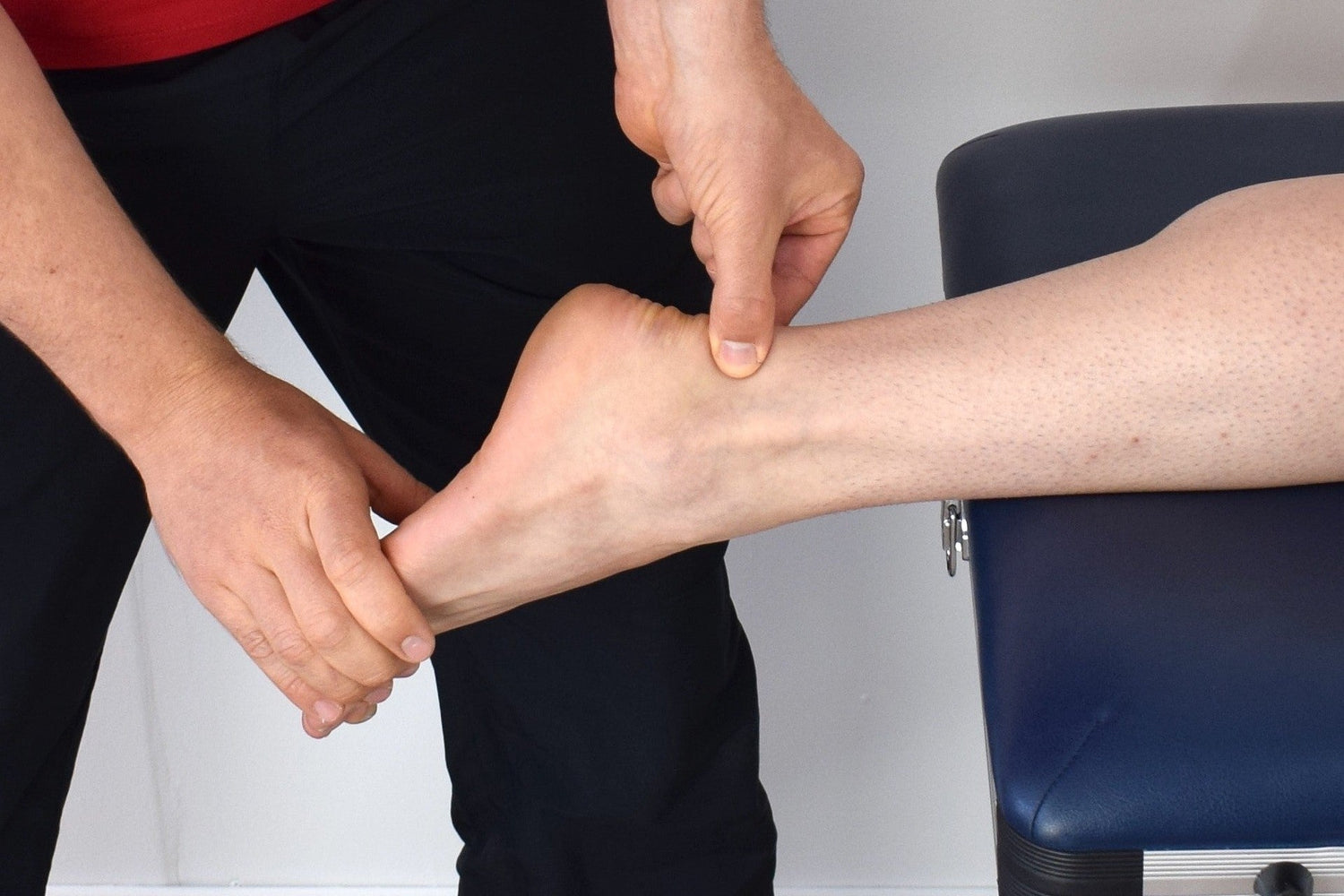
If the outside of your ankle has been hurting lately, it might be due to a condition called peroneal tendonitis. Your peroneal tendons are thick bands of tissue that run along the groove behind your outer ankle bone, and they’re responsible for stabilizing, guarding, and adding balance to every step you take.
These tendons are resilient. But if they don’t get enough time to heal between activities (or are hurt in a workout gone wrong), they can become painful and inflamed. When this happens, the best course of action is usually to give your ankle some time to rest — but in the meantime, could a massage bring extra relief?
Here’s what to know about peroneal tendonitis massage, including its benefits, how it works, and what to consider before you try it.
What Is Peroneal Tendonitis?
Your peroneal muscles make up the outer side of your calf. These muscles attach to two peroneal tendons that connect your lower fibula (the thinner bone in your calf) to your foot, through the groove near your outer ankle.
Tendonitis (also spelled tendinitis) is a condition that can affect any of the 4,000 tendons in your body, including the peroneals. It occurs when these tendons become inflamed, whether it’s from a sudden mishap — like a hard fall — or from long-term activities, like sprinting or jump-focused workouts.
With that said, peroneal tendonitis doesn’t just happen to athletes. As you age, your tendons can start to lose strength, receive less blood flow, or simply become less resistant to the wear and tear of daily life. This means that anyone can end up with peroneal tendonitis, whether you’re training for a triathlon or are simply getting older.
Who Gets Peroneal Tendonitis?
As noted earlier, you might end up with peroneal tendonitis after long-term strain or high-impact activities. But for some folks, it could be linked to other factors that aren’t always in your control.
Generally, people who get peroneal tendonitis may:
- Be middle or older-aged
- Work a job that puts a lot of strain on the feet and ankles
- Have conditions that affect joints and circulation, like diabetes or arthritis
- Have genetically tighter tendons, higher arches, or other unusual foot mechanics
- Smoke
- Be overweight or obese
- Have had ankle tendon injuries in the past
One more factor that can increase your odds of peroneal tendonitis is whether or not you warm up before exercise — especially if you’re new to working out. Gentle active stretches can boost blood flow and pliability of the tendons before you start any activity. But if you dive right into movements like sprinting or jump squats without warming up, your tendons might be “colder,” tighter, and less prepared to absorb the shock.
What Are the Symptoms?
Peroneal tendonitis pain can vary depending on how recent your injury is. It might also depend on whether the injury happened slowly over time, or quickly and suddenly during a painful movement.
With that in mind, peroneal tendonitis can make your outer ankle feel:
- Achy, inflamed, or painful along the tendons
- Worse after bearing weight or other physical activity
- Swollen, warm, or red
- Painful when turning the foot inward or outward
Treatments
When it comes to treating peroneal tendonitis, the best first steps often include resting and stopping any activities that may be straining your tendons. But beyond that, your doctor may recommend treatments like:
- Using ice or cold packs to ease inflammation
- Elevating the affected foot
- Using immobilization (like a soft cast or brace)
- Over-the-counter pain meds to bring relief as needed
In addition, your doctor might let you know if you’re a good candidate for physical therapy. A physical therapist can give you personalized exercises and stretches to ensure that your tendons heal properly, and they may even help you find ways to make your ankles stronger than they were before.
Peroneal Tendonitis Massage as a Complementary Therapy
For hundreds of years, people have used massage as a complementary therapy for pain — whether it be mild muscle soreness, sports injuries, or other chronic issues. But did you know that it could be helpful for those with peroneal tendonitis?
Not all cases of tendonitis are made equal, and it’s important not to massage injuries that are acute or inflamed, since it may increase pain or discomfort. That said, massage can often fit into a long-term recovery plan for many with peroneal tendonitis.
With the right timing and techniques, a good ankle massage could help:
1. Support Circulation
A light, rhythmic massage can be an easy way to temporarily improve circulation and blood flow around sore, achy tendons. This is because heat and friction can both encourage the dilation of blood vessels, making it easier for blood to make its way into the tissue.
Besides massaging around the ankle itself, targeting the foot and calf muscles can also be a good way to bring a circulation boost to the lower body.
2. Break Up Adhesions and Tension
Did you know that there’s a type of massage that massage therapists sometimes use specifically for tendonitis? It’s called cross-friction massage, and it involves applying moderate pressure across tendons and muscle fibers. It’s used to help break up scar tissue and adhesions that may have formed over long-term, repetitive stress and strain.
When done properly, this technique may reduce the tension in the muscles surrounding the tendon, ease pain and stiffness, and support overall tendon health.
3. Soothe Pain While Healing
While massage isn’t able to cure or heal peroneal tendonitis, it can be a useful tool for easing pain while you recover. Soothing techniques like vibration or simple, circular motions can help relax the muscles while triggering feel-good endorphins in your body.
On top of that, some experts theorize that the reason we have the urge to massage achy joints and muscles is because massage has a natural pain-relieving mechanism. It’s thought that by stimulating the pressure receptors, it’s able to help you temporarily tune out painful signals, all while encouraging whole-body relaxation.
4. Complements Physical Therapy Exercises
If your peroneal tendonitis has persisted for a long time — or is on the more painful side of what’s normal — your doctor may refer you to a physical therapist. The bulk of physical therapy typically involves stretches and exercises to loosen and strengthen the outer ankle tendons, but it might also include certain massage techniques to aid in the process.
Often, a physical therapist will apply manual techniques to help with:
- Mobility of the peroneal tendons
- Breaking up scar tissue
- Boosting blood flow and range of motion (ROM) before certain exercises
5. Boosts Range of Motion
Because massage is sometimes used in physical therapy for ankle injuries, it probably comes as no surprise that it may also be able to help with range of motion, too. In a small 2022 study involving 10 participants, researchers looked at the effects of calf foam rolling — a type of massage involving myofascial release — on ankle mobility.
Remarkably, they found that a short calf foam rolling session improved ankle dorsiflexion (the ability of the ankle joint to rotate upward).
Self-Massage Methods for Peroneal Tendonitis

Before using self-massage for peroneal tendonitis, it’s key to check with your doctor or physical therapist first. They can help ensure that you’re far enough along in the healing process that it’s safe to try. Plus, they may be able to give you tips on massage techniques that might bring you more relief.
With their OK, here are some simple, easy ways to soothe the muscles around your outer ankles at home:
1. Fibularis Massage Ball Roll
The fibularis muscles are three muscles that make up the lateral side of your calf, and they play a big role in the way your ankles function. You can find these muscles by feeling along the outside of your shin or calf — the soft tissue here is made up of your fibularis muscles.
If you have a tennis ball or massage ball on hand, rolling out these muscles can help ease tension that might be extending down into your peroneal tendons. Simply:
- Grab your massage ball and lie sideways, with your affected ankle closer to the ground.
- Bend your arm, and use the elbow that is closest to the ground to support your upper body. (You can also use your other hand and leg for extra stability.)
- Place the ball underneath the side of your affected leg’s calf muscles.
- Begin to roll your knee up and down with slow, moderate pressure to massage the fibularis muscles.
- Repeat for 1–2 minutes.
2. Calf Massage Using Massage Gun
Thanks to its speed and pressure, a massage gun is an ideal tool for massaging your outer calf muscles in a few minutes or less. (Just be sure to avoid massaging the ankle joint directly, as the pressure can be intense or even painful on bony spots.)
Remember the fibularis muscles on the outer edge of the shin? For this technique, you’ll also be focusing on these muscles. To try it:
- Attach the round ball attachment to your massage gun.
- Set the device to your desired intensity.
- At an angle, glide the massage gun along the outer calf muscles for 60 seconds.
- Tip: Allow the massage gun’s power to do the work here; avoid pushing or pressing in with the massage head.
3. Light Finger Massage
For some people, moderate or deep massage can feel overpowering in delicate areas like the ankle — especially when the tendons are achy or inflamed. In these cases, you can try using your hands and fingers to deliver a light, soothing massage to the muscles around the outer ankle.
This technique is incredibly simple and can be done whenever you have a few extra moments for self-care. Simply:
- Start by using your pointer, index, and middle finger to gently massage the outer ankle in circular motions. Repeat for 1–2 minutes.
- Then, use your pointer finger and thumb for a gliding technique. Place each finger on either side of your ankle near your heel. From there, gently glide up into the calf muscle. Each finger should be on either side of your Achilles tendon.
- If it feels good to you, you can also try a cross-fiber massage. Use your pointer or middle finger to rub across the tendon region with gentle, focused, side-to-side motions. (Note: Avoid this technique if it causes or worsens pain.)
4. Calf Foam Rolling
Calf foam rolling is a perfect everyday massage option to help you stretch and soothe your outer calf muscles. To try it:
- Sit up with your legs extended, and place your foam roller underneath your affected leg’s calf, just above the ankle.
- Use your arm strength and opposite leg to lift your body off the ground.
- Begin to roll up and down the length of the calf muscle with moderate pressure. Repeat for 1–2 minutes.
- Gently rotate your leg to the side so that your outer calf muscles are now resting on the roller. Repeat the rolling motion for another 1–2 minutes.
5. Using a Foot Massager
In the later stages of the healing journey — and for simple everyday soreness — an FDA-certified foot massager may be worth asking your doctor or physical therapist about.
Options like the MedMassager Foot Massager Plus come equipped with an oscillating massage surface and arch bar for deep relief from foot and ankle aches. A bonus is that its slanted surface makes it easy to use for the calf muscles when they could also use some extra TLC.
These tools can be the perfect option when you need a simple and effortless foot massage at home. However, it’s important to start light and increase the intensity after 1–2 minutes to help ensure your muscles have a chance to warm up before using deep pressure.
Types of Professional Peroneal Tendonitis Massage
If you’re an athlete or have otherwise dealt with chronic ankle issues, you might be interested in making professional massage a part of your recovery regimen. And if prescribed by your doctor, you may even be able to save money on massage (and massage tools!) with an FSA/HSA account.
If your focus is specifically on peroneal tendonitis recovery, here are two main types of massage to ask about:
- Sports massage, which uses a blend of stretches and deeper massage techniques to improve recovery and muscle function.
- Cross-friction massage. As mentioned earlier, this type of massage is often used for tendonitis, and it involves breaking up scar tissue to improve healing and mobility.
Other Treatments and Remedies
Chances are, massage won’t be the only tool you’ll use while healing from peroneal tendonitis. Since the recovery can span anywhere from a few weeks to a few months or more, there are other remedies that are just as important to keep in mind.
As you heal, here are three main options your doctor might recommend to manage ankle pain and boost recovery:
Physical Therapy Exercises
Physical therapy is often the best option for improving peroneal tendon strength and mobility as you heal. Depending on your unique case, your PT might recommend exercises like:
- Calf stretches, including towel stretches or standing calf stretches
- Calf and ankle strengthening exercises using resistance bands or dumbbells
- One-leg balance exercises to improve ankle stability
Heat and Ice
Bold cold and heat can be soothing while healing from any type of tendonitis. Early on, you can use cold to help minimize swelling and inflammation around your ankle joint. But as you move further along in your recovery, a heating pad or warm compress can help relax the muscles and tendons, all while boosting blood flow to encourage healing.
Braces, Casts, and Other Supportive Tools
Sometimes, soft casts and braces can be used to add structure and support around your ankle joint when you have peroneal tendonitis. In milder cases, you can even use simple KT tape to provide extra stability to your tendons before working out, walking, or other activities.
The Takeaway
When you’re dealing with outer ankle pain due to peroneal tendonitis, massage is one remedy that could bring you some daily relief. With your doctor’s green light, options like foam rolling your calf muscles, cross-fiber massage, or even using your hands for a lighter touch can soothe pain and support mobility as you heal.
And if you’re looking for daily, soothing ankle massage without the hassle of hands-on techniques, the tools from MedMassager can help. Pick up the MedMassager Foot Massager Plus today, or learn more about its restorative uses here.


