
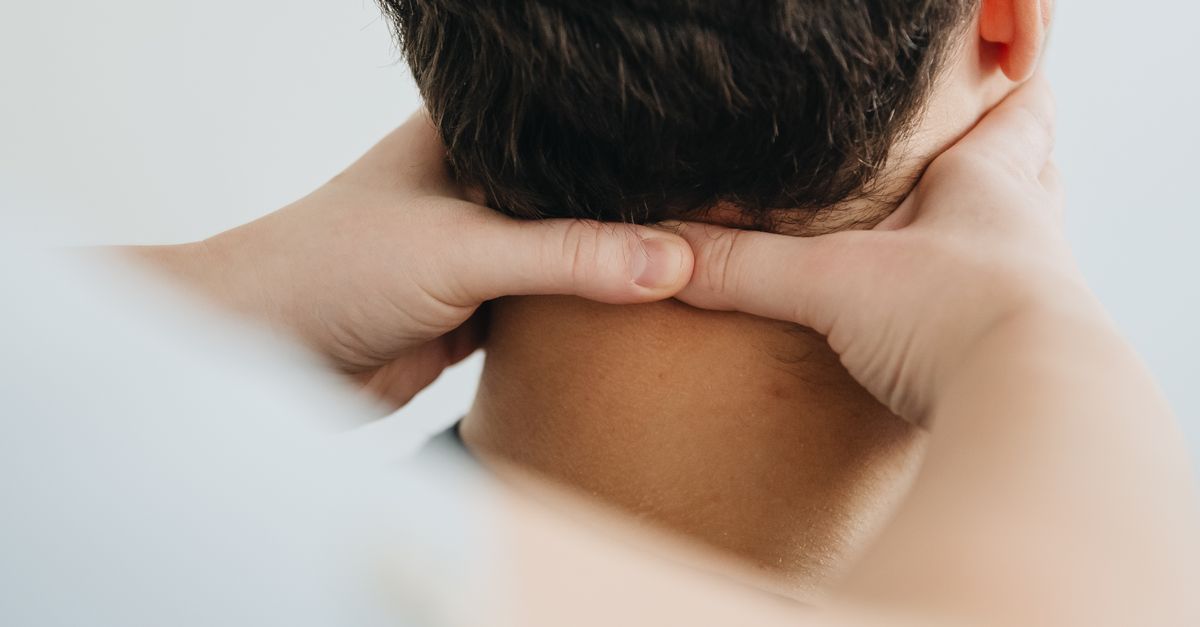
La douleur du muscle semi-épineux de la tête est une douleur sourde ou une tension profonde à l'arrière du cou, qui se manifeste fréquemment par un mal de tête en bande à la base du crâne et à l'arrière de la tête. Le muscle semi-épineux de la tête s'étend verticalement des vertèbres thoraciques supérieures et cervicales jusqu'à l'os occipital, ce qui en fait l'un des principaux contributeurs aux douleurs sous-occipitales et postérieures de la tête. La surcharge de ce muscle due à une posture de la tête penchée en avant, un travail prolongé devant un bureau ou une extension soutenue du cou le soumet à une tension excentrique continue. Un massage doux, des étirements ciblés et la thermothérapie sont couramment utilisés pour soulager la tension dans ce muscle et réduire les symptômes de maux de tête associés.
La douleur sourde et en bande qui s'installe à l'arrière de la tête après une longue journée devant un écran est rarement un simple mal de tête de tension. Pour beaucoup de gens, la source est plus profonde qu'ils ne le pensent — un muscle épais et vertical qui remonte le long de la nuque, appelé le muscle semi-épineux de la tête. La plupart des gens n'en ont jamais entendu parler, pourtant c'est l'un des muscles les plus constamment surchargés chez quiconque travaille à un bureau, conduit de longues distances ou passe des heures à regarder un téléphone. Comprendre la douleur du semi-épineux de la tête — d'où elle vient, pourquoi elle se manifeste ainsi et comment la traiter réellement — change la façon dont vous abordez cette douleur chronique à la base de votre crâne. Cet article aborde l'anatomie, le schéma de projection de la douleur, comment elle diffère de la douleur des muscles voisins, et une approche pratique du soulagement incluant l'auto-massage et le rôle de la thérapie ciblée du cou.
Qu'est-ce que le muscle semi-épineux de la tête ?
Pour comprendre pourquoi ce muscle cause tant de problèmes, il faut comprendre ce qu'il fait et où il se situe exactement dans l'architecture superposée du cou.
Anatomie et localisation
Le semi-épineux de la tête est un long muscle en forme de sangle qui appartient à la couche profonde de la nuque. Il prend son origine sur les processus transverses des six ou sept premières vertèbres thoraciques et sur les processus articulaires des quatrième, cinquième et sixième vertèbres cervicales. De là, il s'étend vers le haut et s'insère directement sur l'os occipital — l'os plat à l'arrière du crâne, entre les lignes nuchales supérieure et inférieure.
Ce site d'attache est important. Parce que le muscle relie la colonne vertébrale au crâne, il agit comme un extenseur principal de la tête, tirant la tête en arrière et la maintenant droite. Il aide également à faire pivoter la tête du même côté. Il se situe plus profondément que le splénius de la tête et le trapèze supérieur, c'est pourquoi une douleur provenant de cette zone peut ressembler moins à une douleur superficielle qu'à une douleur profonde et interne difficile à localiser.
Comment il diffère des muscles voisins
Le semi-épineux de la tête est fréquemment confondu avec deux muscles voisins qui partagent un territoire chevauchant — le splénius de la tête et le trapèze supérieur — mais les trois sont anatomiquement distincts et produisent des schémas de douleur différents.
- Le trapèze est le plus superficiel des trois. Ses fibres supérieures s'étendent de l'os occipital et des processus épineux cervicaux jusqu'à l'épaule et la clavicule. Les points gâchettes du trapèze projettent généralement la douleur sur le côté du cou et la région temporale, produisant souvent un schéma qui imite un mal de tête de tension d'un côté de la tête.
- Le splénius de la tête se situe dans la couche intermédiaire, s'étendant en diagonale des processus épineux cervicaux inférieurs et thoraciques supérieurs jusqu'au processus mastoïde et à l'os occipital latéral. Les points gâchettes du splénius de la tête ont tendance à projeter la douleur au sommet de la tête — parfois décrite comme une douleur "à travers" le crâne vers la zone oculaire.
- Le semi-épineux de la tête est le plus profond et le plus vertical des trois. Son schéma de projection est distinct : une pression en bande ou une douleur lancinante à l'arrière de la tête et dans la région sous-occipitale, parfois décrite comme un halo autour de l'arrière du crâne. Contrairement aux schémas du splénius ou du trapèze, la projection du semi-épineux reste principalement postérieure et ne irradie pas couramment vers la tempe ou le vertex.
Identifier le muscle impliqué est important car l'approche de traitement diffère. Appliquer un massage large du trapèze supérieur alors que le semi-épineux est la source réelle ne cible pas du tout la bonne couche.
Pourquoi le travail de bureau et la posture de la tête penchée en avant surchargent ce muscle
Le muscle semi-épineux de la tête est constamment sollicité lorsque la tête n'est pas parfaitement équilibrée sur la colonne cervicale. Des recherches en biomécanique vertébrale ont montré que pour chaque centimètre que la tête se déplace en avant de sa position neutre, la charge effective sur les extenseurs cervicaux augmente considérablement. Une tête déplacée de plusieurs centimètres en avant peut exercer un poids beaucoup plus important sur les structures postérieures du cou qu'une tête positionnée de manière neutre — un concept que les physiothérapeutes utilisent régulièrement pour expliquer pourquoi les employés de bureau et les utilisateurs de smartphones développent si régulièrement des douleurs cervicales postérieures chroniques.
Parce que le muscle semi-épineux de la tête est le plus profond des extenseurs cervicaux responsables du maintien du crâne droit, il est recruté en continu pendant la posture de la tête penchée en avant. Contrairement au trapèze, qui peut être mis au repos en haussant ou en roulant les épaules, le semi-épineux n'a pas de bouton d'arrêt compensatoire facile. Il reste simplement contracté — en effort isométrique soutenu de faible intensité — tant que la tête est déplacée en avant.
Après des heures passées devant l'écran, cet effort soutenu entraîne une tension ischémique, où la restriction du flux sanguin dans le muscle chroniquement contracté contribue à l'accumulation de déchets métaboliques et, finalement, à des points de déclenchement et à des douleurs référées.
Le schéma de douleur projetée du muscle semi-épineux de la tête
La douleur projetée de ce muscle a un schéma caractéristique qui la distingue des autres sources de maux de tête et de la douleur provenant du trapèze ou du splénius de la tête.
La bande de la tête postérieure
La caractéristique la plus reconnaissable de la douleur du semi-épineux de la tête est une douleur ou une pression en forme de bande qui s'enroule sur l'arrière de la tête d'un côté à l'autre. Les gens la décrivent souvent comme un casque pressant sur l'occiput, ou comme un anneau douloureux autour de la partie inférieure et arrière du crâne. La région sous-occipitale — la zone juste en dessous de l'endroit où le crâne rencontre le cou — est généralement le point de plus grande sensibilité à la palpation.
Contrairement à une migraine, cette douleur est généralement bilatérale, sourde à lancinante plutôt que pulsatile, et ne s'accompagne pas de nausées ni de sensibilité à la lumière. Contrairement à un mal de tête de tension provenant des muscles frontaux, cette douleur reste postérieure. Elle s'aggrave souvent au cours de la journée à mesure que la charge posturale s'accumule et se soulage partiellement en position couchée, ce qui réduit la demande gravitationnelle sur les extenseurs cervicaux.
Contribution nerveuse sous-occipitale
Le muscle semi-épineux de la tête a également une relation cliniquement pertinente avec le grand nerf occipital. Ce nerf émerge entre la première et la deuxième vertèbre cervicale et traverse le muscle semi-épineux de la tête — et non pas l'entoure — sur son chemin vers le cuir chevelu. Lorsque le semi-épineux est chroniquement contracté ou contient des points de déclenchement actifs, il peut provoquer une compression ou une irritation du grand nerf occipital lorsqu'il traverse le ventre musculaire.
C'est l'un des mécanismes par lesquels la tension du semi-épineux de la tête peut produire non seulement une douleur musculaire profonde, mais aussi une douleur plus superficielle, parfois brûlante ou picotante, s'étendant jusqu'au cuir chevelu. Cette présentation est souvent appelée névralgie occipitale, bien que le terme englobe plusieurs causes potentielles au-delà de la compression musculaire.
Comment distinguer ce type de douleur des autres maux de tête
Parce que la douleur du muscle semi-épineux de la tête se présente comme une céphalée postérieure, elle chevauche symptomatiquement la céphalée de tension, la céphalée cervicogénique et la névralgie occipitale. Quelques caractéristiques distinctives méritent d'être notées :
- La douleur s'aggrave avec une flexion prolongée du cou (regarder un téléphone, lire à un bureau)
- La palpation profonde de la nuque entre la colonne cervicale et la crête occipitale reproduit ou intensifie le mal de tête
- La douleur est principalement postérieure — les céphalées frontales ou temporales sont moins susceptibles d'avoir le semi-épineux comme seule source
- La correction posturale ou l'extension du cou modifie brièvement la qualité ou la localisation de la douleur
- Le mal de tête s'installe progressivement au cours d'une journée de travail plutôt que d'apparaître soudainement
Si un mal de tête apparaît soudainement, est sévère ou s'accompagne de symptômes neurologiques tels que des changements de vision, un engourdissement facial ou une faiblesse, consultez immédiatement un médecin. Les caractéristiques ci-dessus décrivent uniquement un schéma musculo-squelettique, et les maux de tête persistants ou s'aggravant justifient toujours une évaluation médicale pour exclure les causes non musculaires.
Comment le massage et la chaleur aident la tension du muscle semi-épineux de la tête
Le problème principal de la douleur du semi-épineux de la tête est la contraction musculaire soutenue entraînant une réduction du flux sanguin, la formation de points gâchettes et une douleur référée à l'occiput. Le massage et la chaleur abordent ce problème par des mécanismes complémentaires — et lorsqu'ils sont combinés, ils agissent plus efficacement que l'un ou l'autre seul.
Le rôle du massage mécanique
La pression manuelle appliquée sur la nuque augmente la circulation locale en déformant mécaniquement le tissu musculaire et en stimulant le flux sanguin à travers le lit capillaire. Pour un muscle profond comme le semi-épineux de la tête, un toucher superficiel atteint rarement efficacement le tissu. Ce à quoi le muscle répond, c'est à une pression soutenue et rythmique qui traverse les couches superficielles du trapèze et du splénius pour atteindre le semi-épineux lui-même.
Le massage agit également en perturbant le cycle des points gâchettes — la boucle de rétroaction auto-entretenue dans laquelle un nodule musculaire contracté génère une douleur référée, ce qui produit une protection musculaire, ce qui perpétue la contraction. La stimulation mécanique de la zone des points gâchettes interrompt temporairement ce cycle et permet au muscle de revenir à une base plus détendue. Pour le semi-épineux de la tête, les points d'accès les plus efficaces sont les bandes de tissu musculaire adjacentes à la ligne médiane, s'étendant verticalement de chaque côté des processus épineux cervicaux, et la zone juste en dessous de la crête occipitale où le muscle s'insère.
Pourquoi la chaleur est importante pour ce muscle
La chaleur augmente l'extensibilité des tissus et favorise la vasodilatation dans la zone traitée. Pour le semi-épineux de la tête, qui se trouve sous deux autres couches musculaires et est continuellement sollicité par les exigences posturales, l'application de chaleur avant ou pendant le massage réduit la résistance mécanique des tissus sus-jacents — permettant à la pression d'atteindre plus efficacement les couches profondes. La chaleur aide également à briser le cycle douleur-spasme-douleur en réduisant le seuil de relaxation musculaire.
Utiliser un masseur de cou pour soulager la nuque postérieure
Atteindre le muscle semi-épineux de la tête par soi-même est vraiment difficile. Le muscle est situé profondément le long de l'arrière du cou, et utiliser ses propres mains pour appliquer une pression soutenue à cet endroit nécessite une position inconfortable qui, elle-même, crée une tension au niveau du cou. Un appareil mains libres positionné sur la nuque postérieure permet une pression constante et bilatérale sans que vous ayez à maintenir une posture qui sollicite les muscles mêmes que vous essayez de détendre.
Le MedMassager Neck Massager utilise des nœuds de massage rotatifs bidirectionnels combinés à une chaleur intégrée pour travailler sur la région cervicale postérieure sans aucun effort manuel. Pour les maux de tête de tension provenant du semi-épineux de la tête, les nœuds rotatifs ciblent directement les couches du trapèze et du splénius de la tête — et la pression soutenue, combinée à la chaleur, encourage le tissu plus profond du semi-épineux à se relâcher à mesure que les couches environnantes se détendent. La composante thermique est particulièrement pertinente ici, car la combinaison du mouvement mécanique et de l'apport thermique traite à la fois le déficit circulatoire et la protection musculaire qui maintient la tension du semi-épineux de la tête.
Pour toute personne gérant une douleur chronique à la nuque postérieure ou des maux de tête postérieurs récurrents dus au travail de bureau, explorer la gamme de masseurs thérapeutiques MedMassager est un excellent point de départ pour des soins de la nuque cohérents à domicile.
Techniques d'auto-massage et d'étirement
Une approche structurée d'auto-soin combine la pression manuelle, la libération basée sur la position et l'étirement dans une séquence qui cible progressivement le muscle de la surface vers l'intérieur.
Technique de libération sous-occipitale
- Position : Allongez-vous sur le dos sur une surface ferme. Placez vos deux pouces ou deux balles de tennis dans une chaussette à la base de votre crâne, juste latéralement à la ligne médiane où les muscles cervicaux s'attachent à l'os occipital.
- Pression : Laissez votre tête reposer de tout son poids sur les points de contact. N'appuyez pas — la gravité fournit la pression. L'objectif est une compression douce et soutenue au point d'insertion du muscle.
- Durée : Maintenez pendant 60 à 90 secondes par côté. Vous pourriez ressentir le schéma de douleur référée s'activer initialement, suivi d'un soulagement progressif à mesure que le tissu réagit.
- Fréquence : Une fois par jour, de préférence après avoir appliqué de la chaleur pendant 5 à 10 minutes pour réchauffer d'abord le tissu de la nuque.
Massage de la nuque postérieure en position assise
Asseyez-vous droit, le cou en position neutre. Portez vos deux mains derrière votre cou de manière à ce que vos doigts entrent en contact avec les bandes musculaires situées de chaque côté des processus épineux cervicaux. Appliquez une pression modérée vers l'intérieur et effectuez des mouvements lents et ascendants, du milieu du cou vers la crête occipitale. Travaillez lentement — 2 à 3 centimètres par seconde — plutôt que de frotter rapidement. Répétez 5 à 8 passages par côté.
La distinction clé entre cette technique et l'auto-massage général du trapèze est la direction et la profondeur. Travaillez verticalement, près des processus épineux, et non latéralement vers l'épaule. Gardez vos doigts médialement et appliquez une pression ferme mais non aiguë. Si le mouvement reproduit votre mal de tête postérieur habituel, vous êtes au bon endroit.
Étirement en flexion cervicale pour l'allongement du semi-épineux
Étant donné que le semi-épineux de la tête étend la tête, la flexion cervicale est l'étirement principal pour l'allonger.
- Asseyez-vous droit, les épaules détendues.
- Baissez doucement le menton vers votre poitrine, permettant à l'arrière du cou de s'allonger. Ne tirez pas votre tête en avant — laissez la gravité faire le travail.
- Maintenez pendant 30 à 45 secondes, en respirant lentement. Vous devriez ressentir un étirement à l'arrière du cou et éventuellement à la base du crâne.
- Pour une spécificité accrue, faites pivoter légèrement le menton vers une épaule tout en maintenant la flexion. Cela introduit un léger étirement de rotation qui cible le semi-épineux unilatéralement du côté opposé à la rotation.
- Effectuez 3 répétitions par côté, 2 à 3 fois par jour.
Réajustement postural : l'étape la plus importante à long terme
Les étirements et les massages soulagent les symptômes. Le facteur sous-jacent — la posture de la tête penchée en avant maintenue pendant des heures par jour — doit être abordé pour prévenir le retour rapide des symptômes. Commencez par ces ajustements ergonomiques :
- Réglez votre moniteur au niveau des yeux afin que votre regard soit horizontal, et non vers le bas
- Rapprochez votre écran suffisamment pour ne pas avoir à vous pencher en avant pour le lire
- Utilisez une chaise avec un soutien adéquat du haut du dos qui empêche votre colonne thoracique de s'arrondir
- Définissez un rappel pour effectuer un exercice de rentrée du menton (ramener la tête en arrière sur les épaules, sans rentrer le menton vers la poitrine) toutes les 30 à 45 minutes
- Si vous utilisez beaucoup votre téléphone, levez-le à hauteur des yeux plutôt que de baisser la tête pour le regarder
Les exercices de stabilisation cervicale qui renforcent les fléchisseurs profonds du cou — le groupe musculaire directement antagoniste au muscle semi-épineux de la tête — sont également précieux. Un physiothérapeute peut guider un programme progressif si l'auto-correction posturale n'a pas résolu la douleur.
Quand consulter un médecin pour une douleur à la nuque postérieure
La douleur du muscle semi-épineux de la tête est un problème musculo-squelettique pour la plupart des gens, et elle répond bien aux interventions décrites ci-dessus. Cependant, la douleur postérieure de la tête et du cou peut dans certains cas refléter des affections qui nécessitent une évaluation médicale plutôt qu'un auto-traitement.
Consultez rapidement un médecin si vous ressentez l'un des symptômes suivants en même temps que votre douleur postérieure à la tête :
- Début soudain et sévère ("céphalée en coup de tonnerre" qui atteint son paroxysme en quelques secondes)
- Maux de tête accompagnés de fièvre, de raideur de la nuque et de sensibilité à la lumière — une combinaison qui justifie une évaluation urgente
- Symptômes neurologiques, notamment des changements visuels, un engourdissement ou une faiblesse faciale, des difficultés d'élocution ou une faiblesse du bras
- Maux de tête s'aggravant progressivement sur plusieurs jours ou semaines sans explication posturale
- Douleur qui ne répond à aucun changement de position ou qui vous réveille du sommeil
- Traumatisme récent à la tête ou au cou précédant l'apparition des maux de tête
Les maux de tête persistants — même ceux qui semblent d'origine musculaire — méritent d'être discutés avec un médecin s'ils surviennent plus de 15 jours par mois, ne répondent pas aux soins conservateurs après plusieurs semaines ou interfèrent considérablement avec la fonction quotidienne. Un médecin peut écarter les causes cervicogéniques, l'atteinte des facettes articulaires, l'instabilité atlanto-axiale ou d'autres facteurs structurels qui nécessitent une gestion différente.
Questions fréquemment posées
Qu'est-ce que la douleur du muscle semi-épineux de la tête ?
La douleur du muscle semi-épineux de la tête se manifeste généralement par une douleur ou une pression profonde, en forme de bande, à l'arrière de la tête et dans la région sous-occipitale — la zone juste en dessous de l'endroit où le crâne rencontre le cou. Elle est généralement bilatérale, sourde plutôt que pulsatile, et a tendance à s'accumuler progressivement au cours de la journée plutôt que d'apparaître soudainement. De nombreuses personnes la décrivent comme une lourdeur ou une tension persistante à la base du crâne qui s'aggrave avec une position assise prolongée ou l'utilisation d'écrans.
Comment savoir si mon mal de tête provient du muscle semi-épineux de la tête ?
Une céphalée provenant du muscle semi-épineux de la tête a tendance à se situer à l'arrière de la tête plutôt qu'aux tempes ou au front, et elle s'aggrave généralement avec une posture de la tête penchée en avant ou une flexion prolongée du cou. Une palpation profonde des muscles postérieurs du cou de chaque côté de la colonne cervicale — en particulier près de la base du crâne — reproduit ou intensifie souvent la céphalée lorsque ce muscle est impliqué. Si des changements posturaux ou l'application d'une pression sur la nuque modifient temporairement la douleur, le muscle semi-épineux de la tête est un contributeur probable.
La posture de la tête penchée en avant peut-elle provoquer des maux de tête à l'arrière de la tête ?
Oui. La posture de la tête penchée en avant soumet le muscle semi-épineux de la tête et d'autres extenseurs cervicaux postérieurs à une charge excentrique soutenue, car ils doivent travailler continuellement pour empêcher la tête de tomber plus en avant. Au fil du temps, cette contraction soutenue entraîne une tension ischémique dans le muscle, la formation de points gâchettes et une douleur référée qui se projette communément à l'arrière de la tête. La correction de l'ergonomie du poste de travail et l'exécution de réajustements posturaux réguliers figurent parmi les stratégies à long terme les plus efficaces pour réduire les maux de tête postérieurs liés à la posture.
Quelle est la différence entre la douleur du semi-épineux de la tête et celle du splénius de la tête ?
Le semi-épineux de la tête et le splénius de la tête sont des muscles voisins de la nuque, mais ils produisent des schémas de douleur référée différents lorsqu'ils sont irrités. Les points gâchettes du semi-épineux de la tête réfèrent généralement la douleur sous forme de bande à l'arrière de la tête et dans la région sous-occipitale, restant principalement postérieure. Les points gâchettes du splénius de la tête réfèrent plus couramment la douleur au sommet de la tête et parfois derrière un œil, créant un schéma qui peut donner l'impression de traverser le crâne. L'identification du muscle impliqué guide des techniques de massage et d'étirement plus ciblées.
Combien de temps faut-il pour que la douleur du semi-épineux de la tête s'améliore ?
Avec des soins personnels constants — y compris des étirements quotidiens, une libération sous-occipitale et une correction posturale — de nombreuses personnes remarquent une amélioration significative en une à deux semaines. Les points gâchettes plus anciens ou les cas avec une plus grande implication du nerf grand occipital peuvent nécessiter quatre à six semaines de gestion constante pour être résolus. Si les habitudes posturales sous-jacentes qui ont créé la surcharge ne sont pas abordées, les symptômes réapparaissent généralement, quelle que soit la diligence avec laquelle les autres techniques sont appliquées.
La chaleur ou la glace est-elle préférable pour les douleurs cervicales postérieures provenant de ce muscle ?
Pour une tension chronique ou récurrente du semi-épineux de la tête — celle qui s'accumule au cours d'une journée de travail et n'est pas liée à une blessure aiguë — la chaleur est généralement plus efficace que la glace. La chaleur augmente le flux sanguin vers le muscle chroniquement contracté, réduit la raideur des tissus et améliore l'efficacité des étirements ou des massages ultérieurs. La glace est plus appropriée immédiatement après une blessure aiguë ou une entorse. Si vous n'êtes pas sûr de ce qui s'applique à votre situation, un professionnel de la santé peut vous guider vers l'approche appropriée.
Un masseur de nuque peut-il aider à soulager la tension du semi-épineux de la tête ?
Un masseur de nuque qui applique une pression soutenue sur la région cervicale postérieure combinée à de la chaleur peut aider à traiter les couches musculaires superficielles et intermédiaires qui recouvrent le semi-épineux de la tête, ce qui permet au muscle plus profond de se relâcher plus facilement. La combinaison de la stimulation mécanique et de la chaleur favorise la circulation sanguine dans la nuque et aide à rompre le cycle tension-douleur associé aux points gâchettes dans cette zone. Pour un entretien quotidien en complément de la correction posturale, un appareil mains libres est particulièrement pratique car il ne nécessite aucun effort manuel qui pourrait lui-même solliciter les muscles du cou.
Le mot de la fin sur la douleur du semi-épineux de la tête
Le semi-épineux de la tête est l'un des muscles les plus constamment surchargés pour quiconque passe beaucoup de temps devant un bureau, et son emplacement — profondément dans la nuque, directement attaché à l'os occipital — en fait un moteur principal des maux de tête postérieurs en bande que tant de travailleurs de bureau ressentent quotidiennement. Comprendre que cette douleur provient d'un muscle spécifique et identifiable avec un schéma de douleur référée distinct, plutôt que d'un vague "mal de tête de tension", ouvre la porte à un soulagement plus ciblé et efficace.
L'approche de base est multicouche : chaleur et massage pour relâcher les tissus, étirements pour restaurer la longueur du muscle, et correction posturale pour éliminer la surcharge soutenue qui perpétue le problème. Chaque élément renforce les autres, et sauter le travail postural signifie que les deux autres sont appliqués à un problème qui est continuellement recréé.
Pour des soins quotidiens constants de la nuque sans la contrainte de l'auto-massage, le masseur de nuque MedMassager — avec ses nœuds bidirectionnels et sa chaleur intégrée — est conçu exactement pour ce type de tension profonde de la nuque. Il agit sur la chaîne cervicale postérieure, ciblant les muscles sus-jacents pour favoriser le relâchement des tissus plus profonds, tandis que la composante thermique traite le déficit circulatoire à la racine de la douleur chronique du semi-épineux de la tête. Si les maux de tête postérieurs font régulièrement partie de votre journée, explorez la gamme complète de masseurs thérapeutiques MedMassager et envisagez d'associer un appareil à la routine d'étirements et de posture décrite ci-dessus pour une approche complète de la gestion de ce type de douleur cervicale.
Si la douleur postérieure à la tête persiste malgré des soins personnels constants, s'aggrave ou s'accompagne de symptômes neurologiques, consultez un professionnel de la santé qualifié avant de poursuivre l'auto-traitement.
Ce contenu est à titre informatif uniquement et n'est pas destiné à servir de conseil médical, de diagnostic ou de traitement. Consultez toujours un professionnel de la santé qualifié avant de commencer tout nouveau traitement ou thérapie. Les produits MedMassager sont des dispositifs médicaux de classe I enregistrés auprès de la FDA.


