
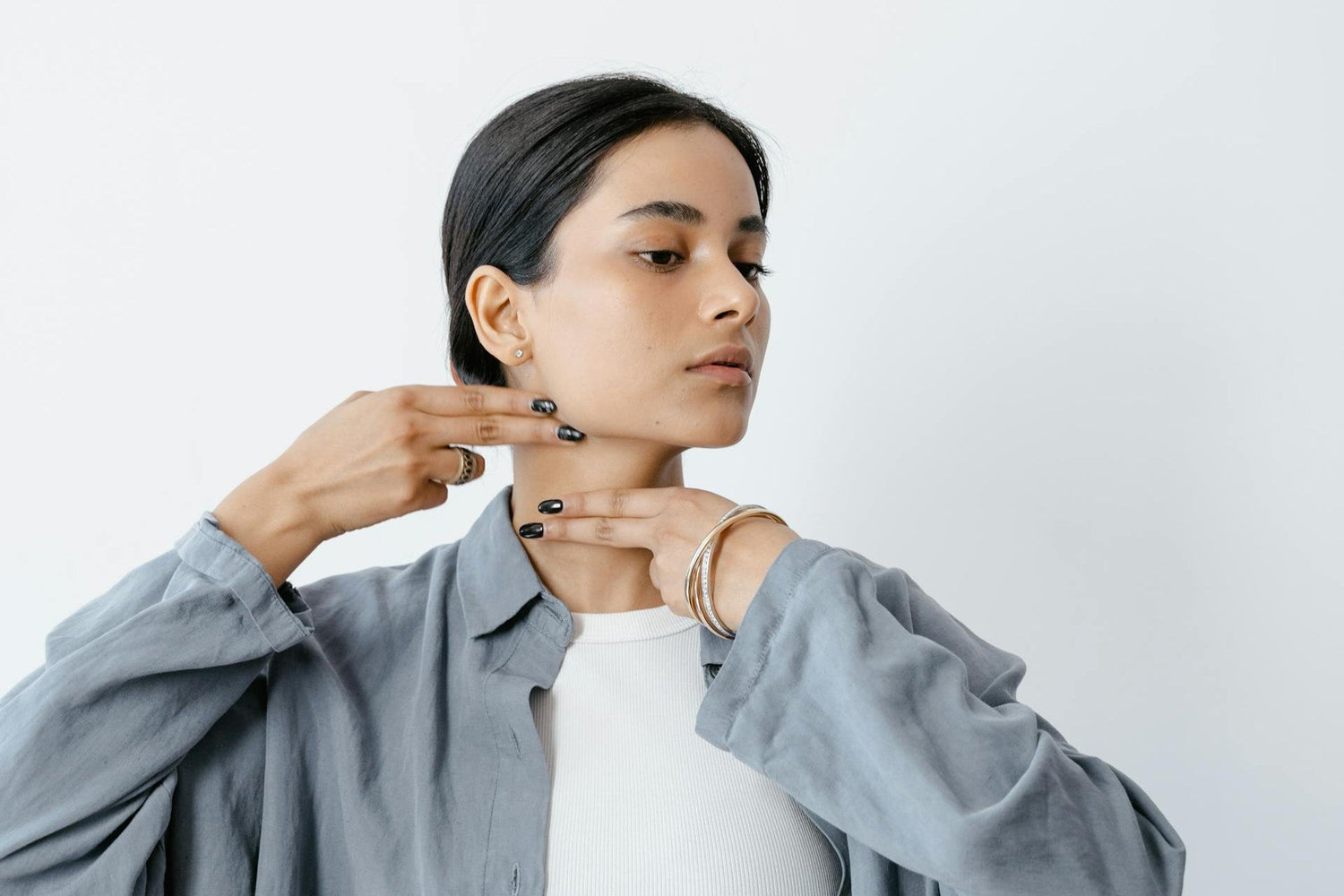
Avez-vous la nuque raide ou tendue lorsque vous tournez la tête ? Le sternocléidomastoïdien (SCM), ce grand muscle situé sur le côté du cou, pourrait être en cause. Muscle essentiel à la rotation et à l’inclinaison de la tête, sa taille et son emplacement font qu’il est constamment sollicité lorsque vous regardez autour de vous, faites défiler des pages ou maintenez votre posture. Cette sollicitation permanente peut en faire un point d’ancrage fréquent pour les tensions.
Heureusement, si vous cherchez à soulager les tensions et à améliorer la mobilité de votre cou, quelques conseils simples peuvent vous aider. Poursuivez votre lecture pour découvrir les causes les plus fréquentes de la tension des muscles sterno-cléido-mastoïdiens (SCM), ainsi que six remèdes pour vous soulager.
Aperçu du sternocléidomastoïde
Le sternocléidomastoïdien, l'un des muscles les plus volumineux et les plus puissants du cou, intervient dans de nombreux mouvements quotidiens de la tête et du cou. Il se situe de chaque côté de la partie antérieure du cou, à la base du crâne, derrière l'oreille, et descend vers la clavicule.
Pour faciliter la compréhension du SCM, il peut être utile de le décomposer en trois parties :
- Sternum (qui signifie sternum) : C'est là que se fixe une extrémité du SCM.
- Cleido (signifiant clavicule) : L'autre extrémité du SCM s'attache ici, au niveau de la clavicule.
- Mastoïde : Cela fait référence à l'apophyse mastoïde, ou à la protubérance osseuse située à la base du crâne, derrière l'oreille, où se fixe la partie supérieure du muscle.
À quoi sert le muscle SCM ?
Le SCM, l'un des muscles les plus actifs du cou, est impliqué dans d'innombrables mouvements que vous effectuez tout au long de la journée, notamment :
- Tourner ou incliner la tête en conduisant dans la circulation, en parlant à d'autres personnes ou en consultant des écrans.
- Stabiliser votre cou lors de petits mouvements répétitifs
- Hocher la tête ou la pencher en avant tout en se concentrant sur son téléphone, ses livres ou ses papiers.
- Les habitudes quotidiennes déséquilibrées , comme porter un sac lourd
- Les mouvements de la mâchoire, comme mâcher du chewing-gum ou serrer les dents en raison du stress
Qu'est-ce qui provoque le resserrement du SCM ?
Certains experts considèrent le SCM comme l'un des muscles les plus complexes du corps, tout simplement parce qu'il comporte de nombreux segments. Les facteurs qui peuvent l'influencer, et les manifestations de la tension de multiples façons, sont nombreux. Voici donc quatre causes fréquentes de tension du SCM qu'il est bon de connaître :
Posture penchée vers l'avant entraînant une augmentation de l'activité du SCM
L'une des principales causes de la tension ou de la contraction des muscles sterno-cléido-mastoïdiens (SCM) est la posture de la tête en avant. Avancer ou arrondir la tête vers l'avant, par exemple en lisant un livre ou en regardant son téléphone, exerce une pression supplémentaire sur tous les muscles stabilisateurs du cou, y compris le SCM. Cela peut entraîner une hyperactivité et des déséquilibres généraux dans le fonctionnement de ces muscles lors des mouvements de la tête et du cou.
Dans une étude de 2020 , des chercheurs ont examiné les différences d'activation de certains muscles du haut du corps chez des personnes ayant une posture normale par rapport à celles ayant une posture de la tête projetée vers l'avant. Ils ont constaté que, chez le groupe ayant une posture de la tête projetée vers l'avant, l'activité des muscles du cou était modifiée : les muscles sterno-cléido-mastoïdiens et trapèzes supérieurs présentaient une activité plus élevée au repos que chez les personnes ayant une posture plus droite.
Positionnement latéral de la tête
Tourner la tête d'un côté ou de l'autre raccourcit naturellement le muscle sterno-cléido-mastoïdien du côté correspondant. Cependant, si cette position est prolongée (par exemple, en calant son téléphone contre son épaule ou en dormant sur le ventre), elle peut engendrer des tensions importantes. De plus, tourner la tête de façon répétée pour des tâches quotidiennes – comme consulter un deuxième écran, conduire ou effectuer plusieurs tâches simultanément – peut accentuer la tension musculaire et, à terme, provoquer une inflammation et une raideur.
Stress chronique
Il est bien connu que le cortisol et d'autres hormones du stress peuvent provoquer des tensions musculaires. Et même si le stress se manifeste surtout dans la nuque ou les épaules, il s'avère que le muscle sterno-cléido-mastoïdien (SCM) peut également le ressentir.
Le stress peut parfois être la seule cause de la douleur du SCM, mais il peut souvent s'ajouter à d'autres types de tensions et aggraver les symptômes.
Conditions de santé
La plupart du temps, une légère tension du SCM n'est pas inquiétante et est généralement liée à une activité ou une habitude quotidienne qui sollicite les muscles du cou. Cependant, dans de rares cas, un problème de santé sous-jacent peut être en cause. Parmi les affections pouvant se manifester par une douleur ou une tension du SCM, on peut citer :
- Le syndrome du sternocléidomastoïdien est une affection caractérisée par une raideur et des douleurs cervicales aiguës (ou chroniques). Il peut également s'accompagner de points de déclenchement douloureux au niveau du muscle sternocléidomastoïdien.
- Le torticolis (cou tordu) est une affection dans laquelle un SCM raccourci ou tendu provoque une légère inclinaison de la tête d'un côté.
- Un coup du lapin, une élongation musculaire ou toute autre blessure due à des mouvements brusques, à une surutilisation ou à un autre traumatisme musculaire.
- Les troubles de l'articulation temporo-mandibulaire sont dus aux voies nerveuses communes et aux interactions entre le SCM et la mâchoire.
Cela dit, n'hésitez pas à consulter votre médecin si vos douleurs cervicales sont intenses ou persistantes, si elles s'accompagnent d'autres symptômes ou si elles ne s'améliorent pas après quelques jours de repos et de soins personnels.
Effets secondaires d'un SCM serré
Étant donné que les muscles SCM sont impliqués dans une grande variété de mouvements, leur tension peut affecter bien plus que la seule nuque. Par exemple, les points de déclenchement du SCM provoquent souvent des douleurs « référencées », c’est-à-dire une gêne qui se manifeste ailleurs, comme au niveau des tempes, de la base du crâne ou même de la mâchoire. Mais ce n’est pas tout ; la tension du SCM peut également entraîner d’autres symptômes tels que :
- Céphalées de tension (souvent du côté affecté)
- Changements de posture
- Amplitude de mouvement réduite ou raideur se propageant à la mâchoire ou aux épaules
- Une sensation de déséquilibre ou de vertige (souvent mineure, mais qui doit toujours faire l'objet d'un examen médical si elle persiste ou est grave)
7 remèdes simples pour un muscle SCM tendu

Comme les tensions au niveau du SCM sont souvent dues à des mouvements répétitifs, à de mauvaises postures et au stress quotidien, les meilleurs remèdes visent généralement à soulager ces douleurs accumulées et à favoriser des mouvements plus sains. Voici sept options simples à essayer :
Remarque : Certains types de douleurs cervicales peuvent être graves. Consultez un médecin avant d’essayer de nouveaux exercices ou remèdes, surtout si vous présentez des symptômes importants ou si vous souffrez d’une affection sous-jacente.
Étirement doux du SCM
Si vous cherchez une méthode douce pour étirer et détendre vos muscles, un simple étirement du SCM peut vous aider. ( Conseil : il est important de s’arrêter dès que vous ressentez un léger étirement, sans douleur, et de le répéter plusieurs fois par jour selon vos besoins.) Voici comment procéder :
- Tenez-vous droit, avec une posture saine et alignée.
- Avec le bras opposé à votre muscle SCM affecté, placez votre main derrière votre nuque. Votre coude doit être pointé vers le haut.
- Placez vos doigts en haut du tissu musculaire, près de la petite bosse osseuse derrière votre oreille.
- Maintenez délicatement le tissu musculaire en place et pliez votre autre bras derrière votre dos.
- Abaissez légèrement cette même épaule et utilisez votre main du côté du SCM pour tirer doucement votre tête sur le côté afin de ressentir un léger étirement.
- Maintenez la position pendant quelques secondes.
Pour voir à quoi ressemble cet étirement en personne, n'hésitez pas à consulter ce tutoriel étape par étape .
Rentrer le menton pour soutenir la posture
Bien que ne ciblant pas principalement les muscles sterno-cléido-mastoïdiens, la rentrée du menton est un exercice postural que beaucoup trouvent bénéfique. En effet, elle sollicite les fléchisseurs profonds du cou tout en étirant les muscles de la nuque, contribuant ainsi à corriger la posture penchée vers l'avant qui engendre souvent des tensions supplémentaires. Pour essayer cet exercice :
- Commencez par vous tenir droit, les épaules en arrière et la poitrine ouverte.
- En regardant droit devant vous, faites glisser doucement votre menton vers l'arrière, en direction de votre cou. Essayez de garder les yeux et le menton face à vous, sans arrondir la tête.
- Continuez jusqu'à ressentir un léger étirement.
- Maintenez la position pendant quelques secondes et répétez 8 à 10 fois.
Utilisez la chaleur pour détendre les muscles
Si votre principal symptôme est une tension ou une raideur sourde du SCM, la thermothérapie peut s'avérer étonnamment efficace. Appliquer une compresse chaude sur les côtés du cou pendant 15 minutes peut apporter un soulagement, et ce, plusieurs fois par jour si nécessaire. (Veillez simplement à ce que la compresse soit tiède et non brûlante pour éviter d'irriter votre peau.)
Vous pouvez aussi utiliser la chaleur humide pour un soulagement plus rapide. Appliquez une serviette chaude et humide sur les muscles au besoin, ou prenez un bain ou une douche chaude pour détendre les tensions plus directement.
Essayez la thérapie par le froid pour l'inflammation
En cas de douleur aiguë, par opposition à une tension sourde, la thérapie par le froid peut soulager. L'application d'une simple poche de glace sur le muscle sterno-cléido-mastoïdien pendant 10 à 15 minutes peut apaiser l'inflammation et le gonflement, surtout les deux premiers jours suivant une légère contracture ou une poussée inflammatoire. Cela dit, le froid est généralement plus efficace au début, mais à mesure que le muscle guérit, vous pouvez commencer à appliquer de la chaleur en alternance, selon les besoins.
Certaines personnes apprécient également le massage à la glace comme autre forme de thérapie par le froid pour soulager la douleur. Vous pouvez l'essayer en congelant un peu d'eau dans un gobelet en papier, puis en déchirant le haut pour exposer la glace. Ensuite, faites glisser délicatement la glace sur les muscles pendant quelques minutes.
Massage complet de la nuque
Le massage de la nuque peut être un excellent moyen de cibler les tensions musculaires et les points de déclenchement, notamment au niveau du SCM. Cependant, comme le SCM est situé près de structures délicates (dont des artères), il peut être plus confortable — et tout aussi apaisant — de commencer par un massage de la nuque dans son ensemble plutôt que de cibler uniquement ce muscle.
Les massages professionnels sont toujours une bonne option pour commencer, surtout si vous vous remettez d'une blessure ou si vous avez besoin de soins plus approfondis. Mais pour les tensions quotidiennes, voici une technique simple et douce à essayer :
- Asseyez-vous confortablement et placez vos deux mains derrière votre nuque.
- Commencez par 60 secondes de compressions douces et amples le long du cou pour échauffer les muscles.
- Ensuite, utilisez vos deux mains pour écarter les muscles de la nuque vers l'extérieur à partir du centre. Répétez ce mouvement de haut en bas pendant une minute.
- Terminez en exerçant une pression modérée et en faisant glisser vos pouces le long de la nuque pendant une minute supplémentaire. N'hésitez pas à insister quelques secondes de plus sur les zones particulièrement tendues.
Version SCM
Si vous vous sentez à l'aise avec cette technique, cette douce technique de relâchement du SCM peut également être utile pour soulager les tensions quotidiennes :
- Tournez la tête sur le côté pour faciliter l'accès au muscle.
- Saisissez délicatement le muscle situé près de la base du cou, sous l'oreille. ( Conseil : procédez lentement pour vous assurer de cibler le bon point. Visez à étirer doucement le muscle vers l'extérieur, plutôt que d'appuyer fortement sur le cou.)
- Tout en maintenant le muscle, inclinez lentement la tête vers l'avant et vers l'arrière pour l'étirer et le détendre.
Masseur de cou à domicile
Bien que le massage du cou ne soit pas toujours axé sur le SCM (muscle sternocléido-mastoïdien), il peut être très efficace pour soulager les douleurs quotidiennes et améliorer la mobilité musculaire. Pour faciliter le massage, un appareil de massage de qualité comme le masseur cervical MedMassager peut être une solution intéressante.
Cet appareil agit en enveloppant délicatement la nuque, épousant confortablement la courbure naturelle des muscles, puis en diffusant une chaleur douce et en effectuant des pétrissages pour soulager les tensions et les douleurs. Voici comment l'utiliser :
- Utilisez les sangles pour enrouler l'appareil de massage autour des muscles de votre cou.
- Réglez l'appareil de massage sur sa position la plus légère.
- Laissez vos muscles s'échauffer au massage pendant une minute.
- Augmentez la pression au besoin, en activant éventuellement la fonction chauffante pour un soulagement accru.
Prévenir les tensions sur la chaîne d'approvisionnement à l'avenir
Que la tension au niveau du SCM soit ponctuelle ou persistante, la bonne nouvelle est que quelques gestes simples peuvent souvent prévenir sa réapparition une fois guérie. En voici quelques-uns :
Petits changements posturaux
Adopter une bonne posture tout au long de la journée permet de réduire les tensions cervicales et de maintenir vos muscles à la bonne longueur (ni contractés, ni étirés excessivement). À long terme, cela peut se traduire par une diminution des tensions et de l'hyperactivité musculaires. Voici quelques conseils simples pour une bonne posture :
- Portez attention à votre posture statique (assis ou debout) et dynamique (en mouvement).
- Essayez de garder votre tête alignée avec vos hanches et veillez à ne pas trop courber votre colonne vertébrale.
- Essayez de garder les épaules basses et en arrière (surtout lorsque vous êtes stressé !).
- N'oubliez pas de garder la poitrine ouverte, au lieu de vous arrondir ou de vous avachir.
Relaxation et réduction du stress
Le stress pouvant aggraver les tensions musculaires cervicales, le réduire constitue une bonne première étape. Bien sûr, il n'est pas toujours possible d'éliminer complètement les facteurs de stress, mais s'il existe des sources d'anxiété inutiles dans votre vie (comme un espace encombré ou un temps excessif passé en ligne), il peut être utile de commencer par là.
De plus, certaines techniques de relaxation peuvent vous aider à mieux gérer le stress sur les plans mental et physiologique, notamment :
- Exercice régulier (marche, musculation, sport ou autres formes de cardio)
- Pratiquer la respiration profonde pour calmer le système nerveux
- Consommer beaucoup d'aliments complets anti-inflammatoires
- Méditation, yoga ou autres techniques corporelles de pleine conscience
- Thérapie et autres formes de soutien professionnel en santé mentale si nécessaire
physiothérapie
Si vous pensez que de mauvaises postures ou des déséquilibres corporels peuvent affecter vos muscles sterno-cléido-mastoïdiens, ou si vous êtes en convalescence après une élongation ou une blessure, la kinésithérapie peut être une excellente solution. Un kinésithérapeute peut vous guider à travers des exercices ciblés pour renforcer et étirer ces muscles, tout en améliorant votre posture et votre mobilité générale.
Avec le temps, cette thérapie peut améliorer l'amplitude des mouvements et aider les muscles SCM à fonctionner avec moins d'efforts quotidiens.
À retenir
Les muscles sternocléidomastoïdiens sont deux grands muscles puissants du cou qui jouent un rôle essentiel dans les mouvements et la stabilité de la tête. Comme ils sont sollicités presque constamment, ils peuvent facilement se contracter en réaction à une mauvaise posture ou à un effort excessif, ce qui peut entraîner des tensions musculaires, des maux de tête et d'autres symptômes désagréables.
La bonne nouvelle, c'est que plusieurs remèdes peuvent apporter un soulagement, allant des étirements doux à la thérapie par la chaleur ou le froid, en passant par les massages apaisants.
Essayez dès aujourd'hui le masseur de cou MedMassager pour commencer à soulager les tensions cervicales dans le confort de votre foyer, ou découvrez la gamme complète d'outils éligibles aux comptes HSA/FSA ici .


